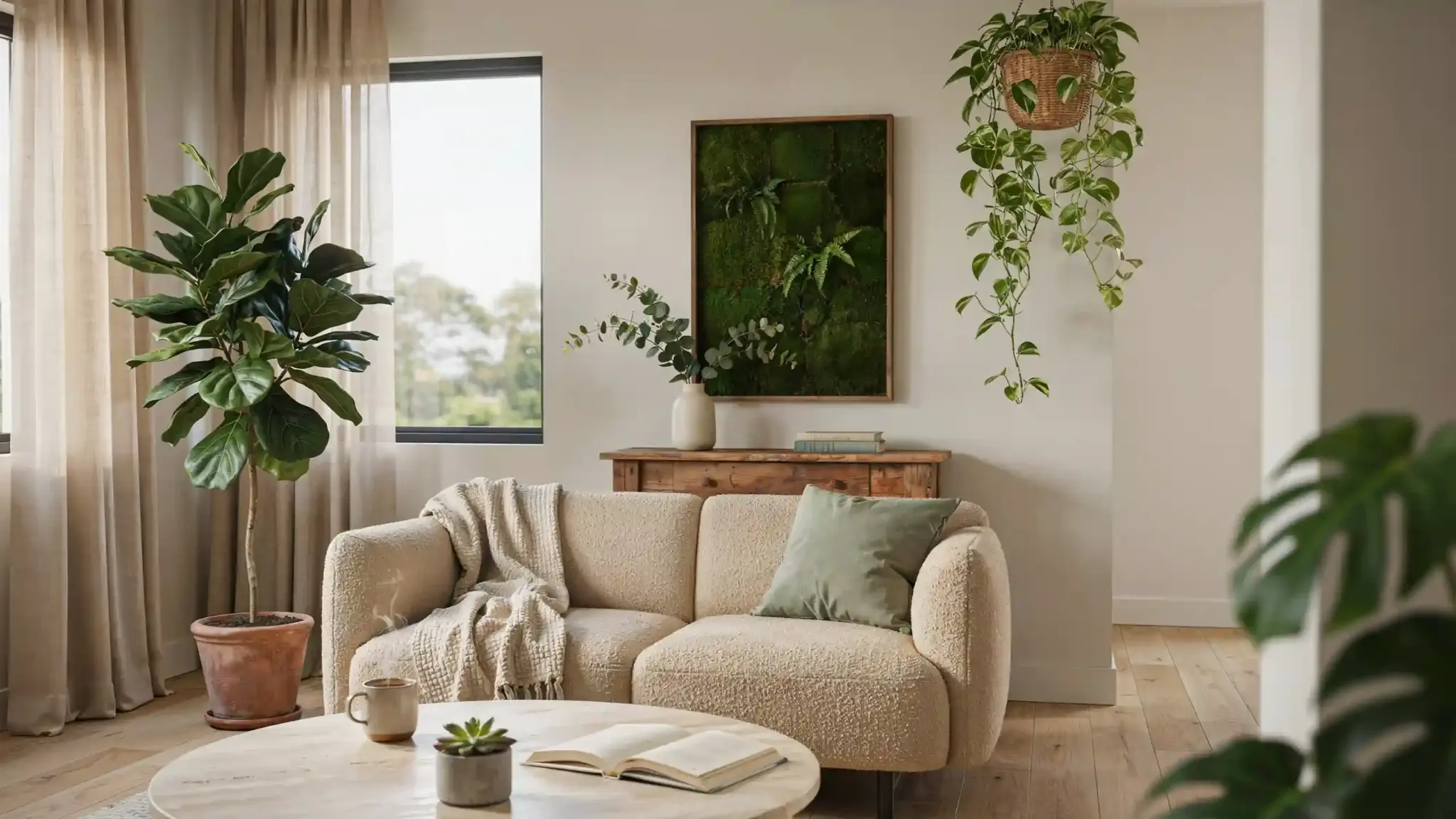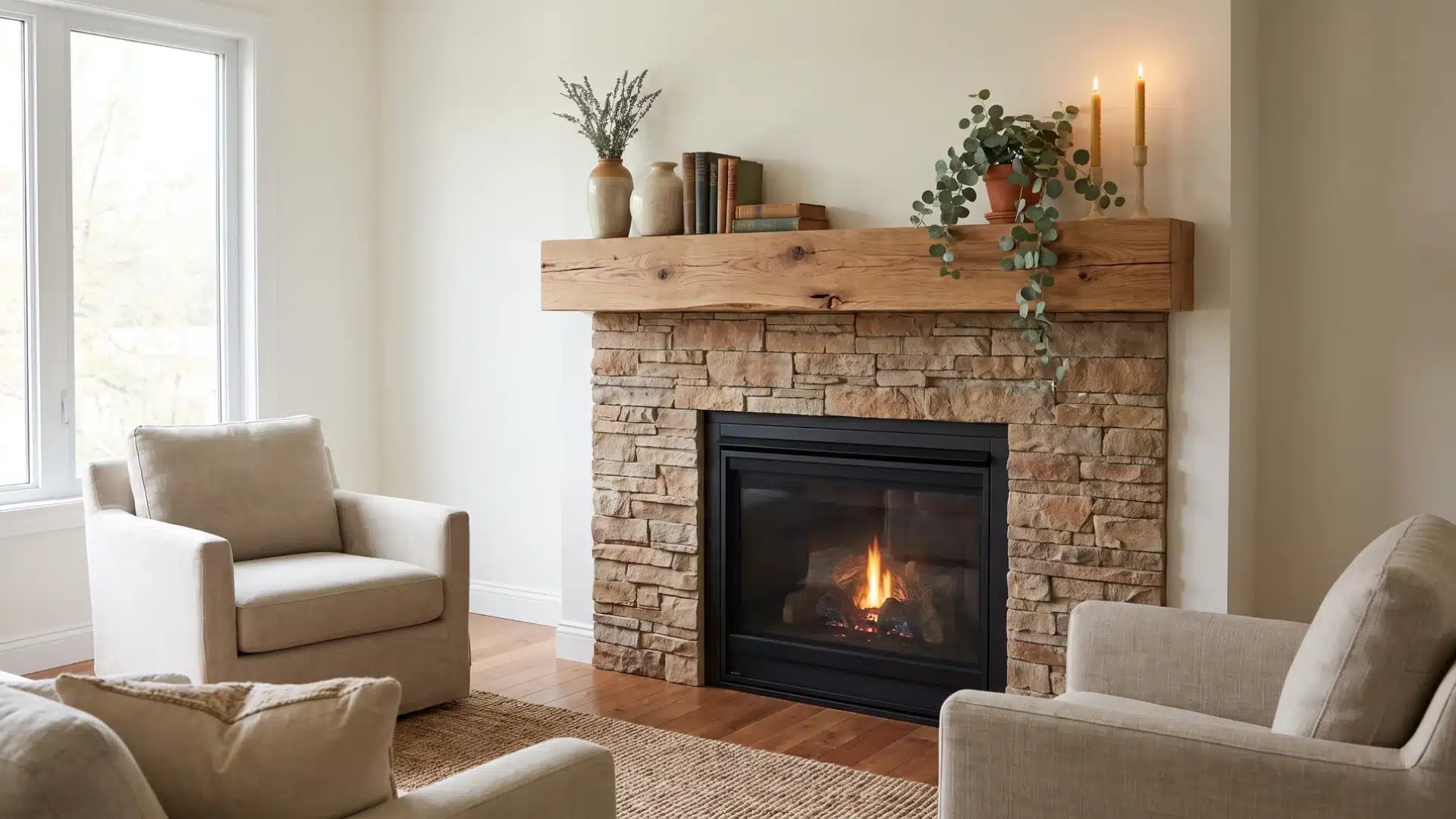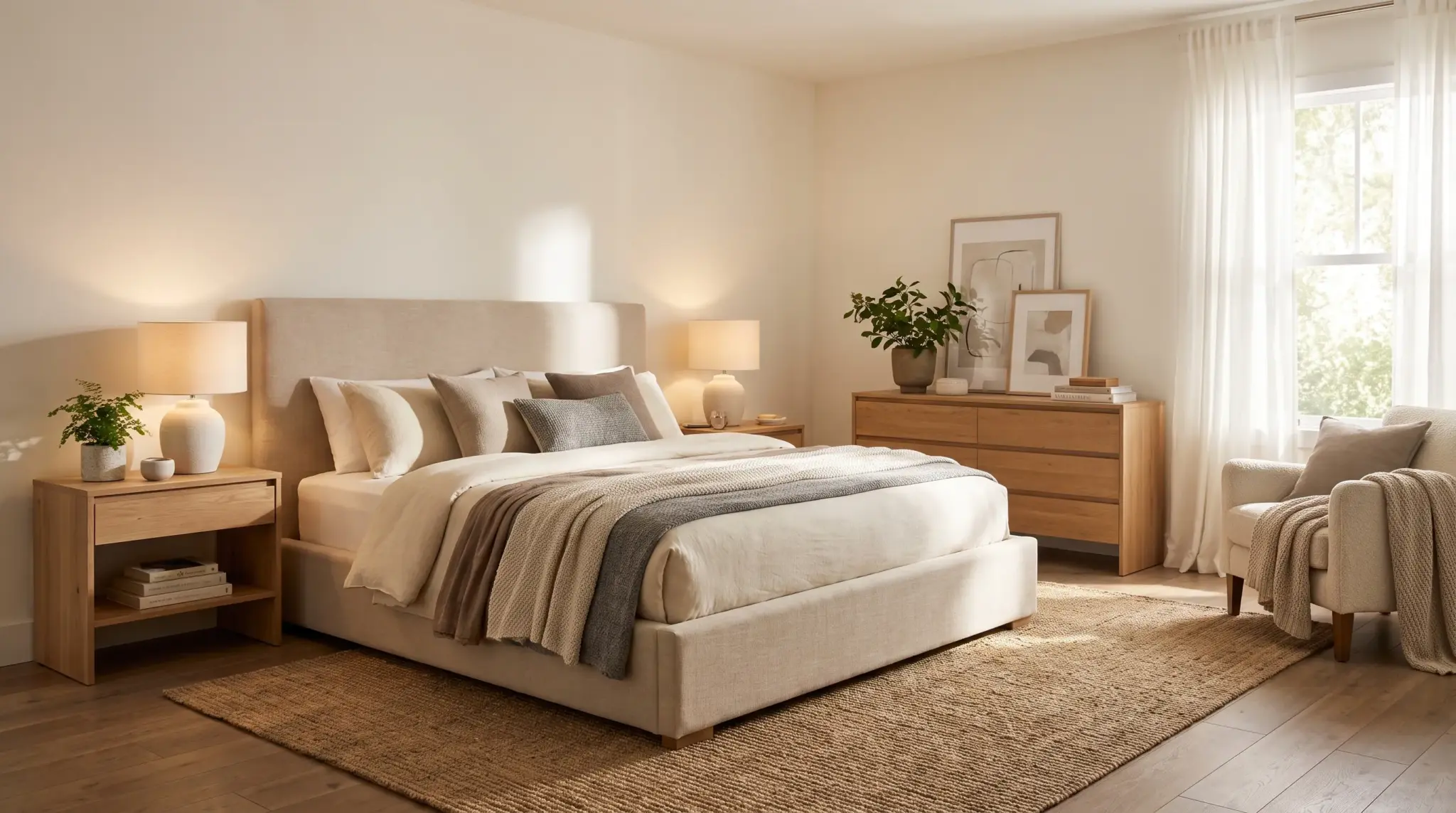
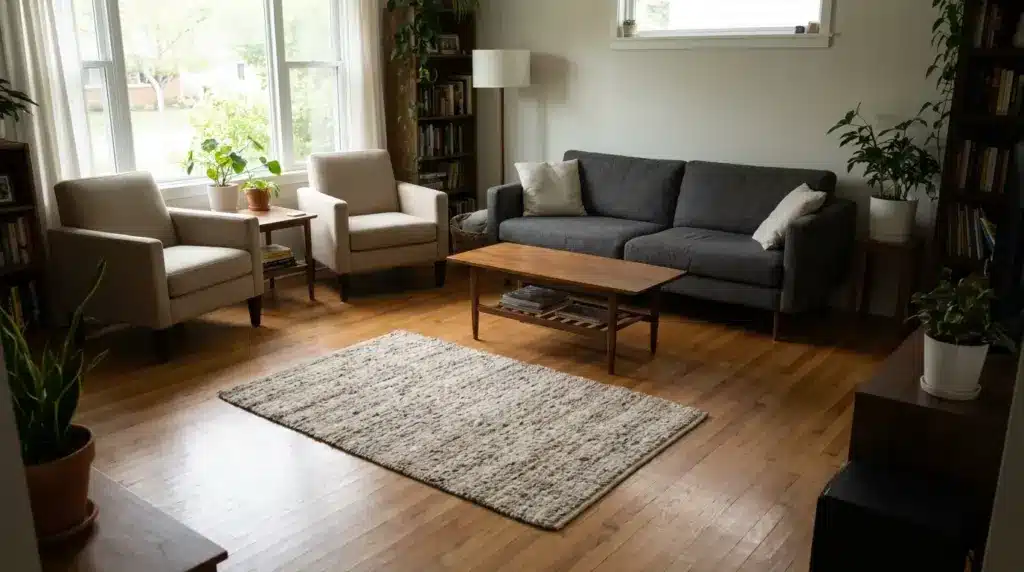
I once dragged a 6×9 rug into the middle of my living room and spent two weeks wondering why the whole room felt off.
The rug sat by itself, too small for the sofa around it and disconnected from everything else in the space. The room felt wrong. No amount of rearranging helped. The problem was never the rug. It was the size.
Getting your living room rug size right changes how the entire room feels.
Here’s how to measure your seating area, match it to the right size chart, and skip the sizing mistakes that are easiest to make before you ever walk into a store.
How to Measure Your Living Room for a Rug
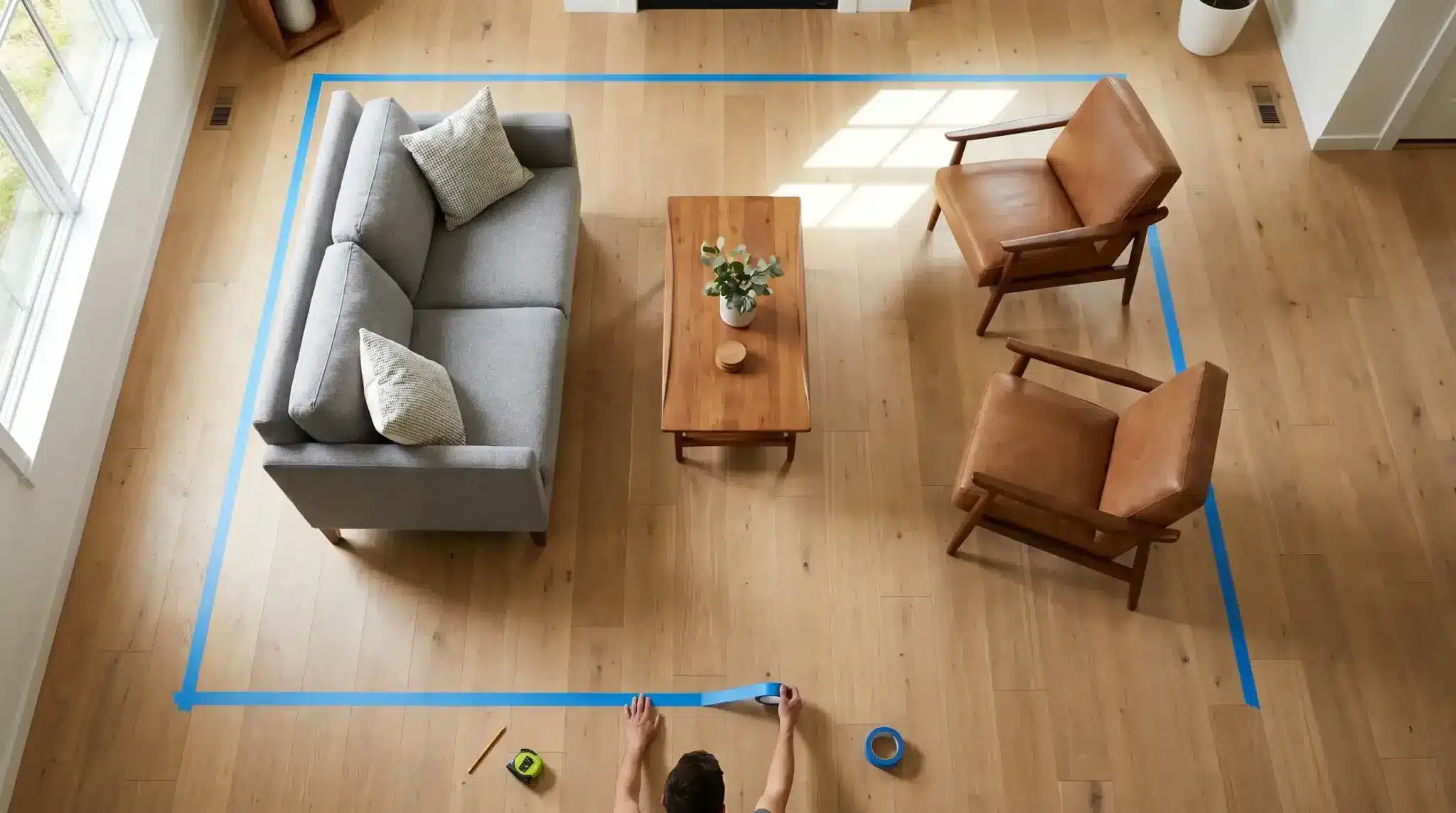
Measure your seating area. This means the combined footprint of your sofa, chairs, and coffee table. Not the room. The seating group.
Add 6 to 8 inches on each side beyond the sofa. This makes the rug feel generous rather than squeezed.
Use painter’s tape to mark the rug dimensions on your floor. Lay out the full rectangle before buying. Sit in your furniture. Walk around it. Does it feel balanced?
Check the border. Leave 12 to 18 inches of bare floor between the rug edge and the walls.
The painter’s tape step takes less than five minutes and has saved me from two bad purchases this year alone.
Living Room Rug Size Chart by Room Size
Your furniture layout matters more than raw room dimensions, but this table gives you a practical starting point.
| Room Size | Recommended Rug Size | Best Layout |
|---|---|---|
| Small (under 150 sq ft) | 5×8 or 6×9 | Front legs on rug |
| Medium (150–250 sq ft) | 8×10 | Front legs on rug |
| Large (250–350 sq ft) | 9×12 | All legs on or front legs on |
| Extra large/open plan | 10×14 or larger | All legs fully on the rug |
A few quick notes on the table:
- A 5×7 rarely works in a living room. It reads as an accent piece. Even in a small apartment, a 6×9 looks noticeably better. Choosing the right proportions is one of the simplest ways to make a small room look bigger, even without changing your furniture.
- An 8×10 is the most versatile starting point for most standard US living rooms. If you are between sizes, go to the 9×12.
- Odd room shapes may call for a non-rectangular rug. Round rugs pair well with round coffee tables. But for most rooms, a rectangle is the most reliable option.
The ideal rug size also depends on your living room layout, including where the sofa, chairs, and coffee table are positioned.
Should Furniture Legs Sit On or Off the Rug?
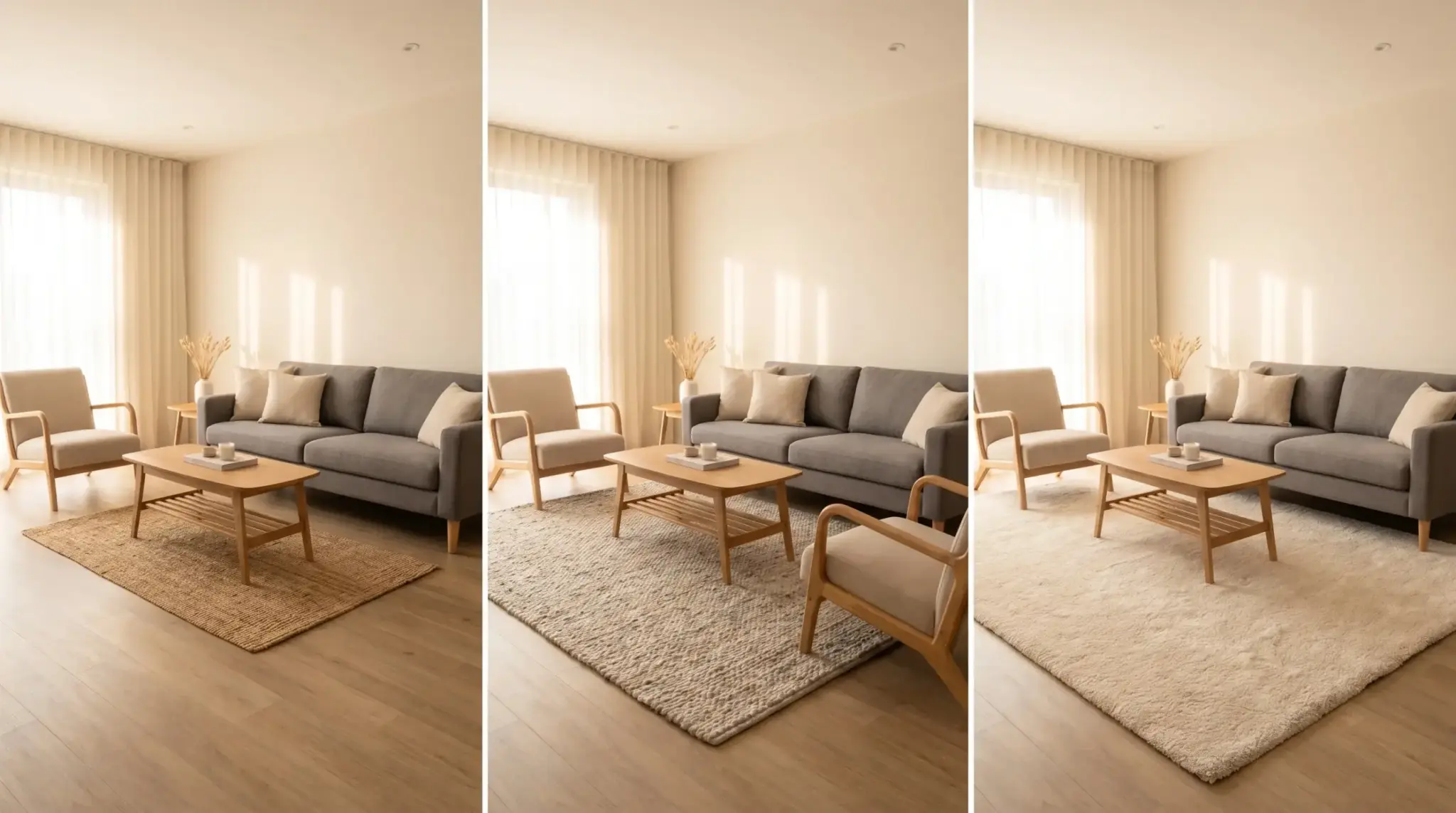
All legs on the rug create the most cohesive look. It works best in large rooms and open floor plans. You will typically need a 9×12 or larger to pull this off.
Front legs on, back legs off, is the most common setup. It works well when the sofa sits against a wall.
The front legs of the sofa and each chair rest on the rug, and the seating group reads as one area. An 8×10 is well-suited to most medium rooms.
All legs off can be intentional, but it is easy to get wrong. Most of the time, it just looks like a rug that is too small.
The rule is simple: be consistent. If your sofa’s front legs are on, your accent chairs’ front legs should be too.
Mixing creates a layout that looks unfinished, regardless of how good the individual pieces are.
What Size Rug Works with a Sectional Sofa
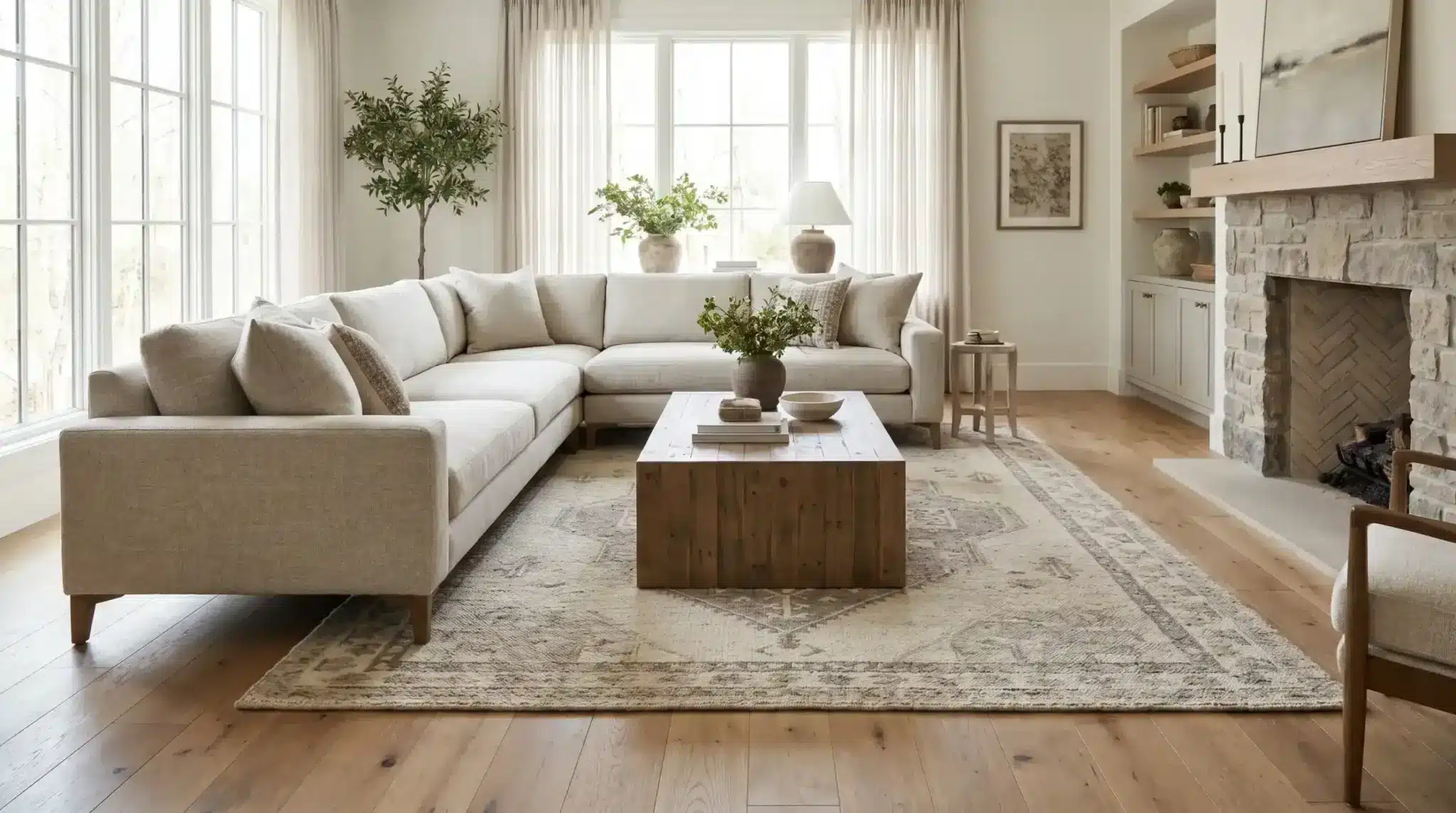
Sectionals follow slightly different rules from a standard sofa, mostly because of scale.
A rug that is too small under a sectional does not just look off. It makes the whole sofa look like it was dropped into the room by accident.
Here is a practical size guide based on sectional dimensions:
- L-shaped sectional under 10 feet: Start with an 8×10. Place the rug so the front legs of the longer side sit on it.
- Standard L-shaped sectional (around 98×127 inches): A 9×12 is the sweet spot for most configurations.
- Large sectional or U-shaped configuration: Go to a 10×14 or larger. A U-shape needs a rug that sits inside the open end of the U, not in front of it.
The rug should extend at least 8 to 12 inches beyond the open end of the sofa. Never place the rug entirely in front of a sectional with no contact at all. That is the one placement that looks wrong at every size.
Open Floor Plans Need Bigger Rugs Than You Think
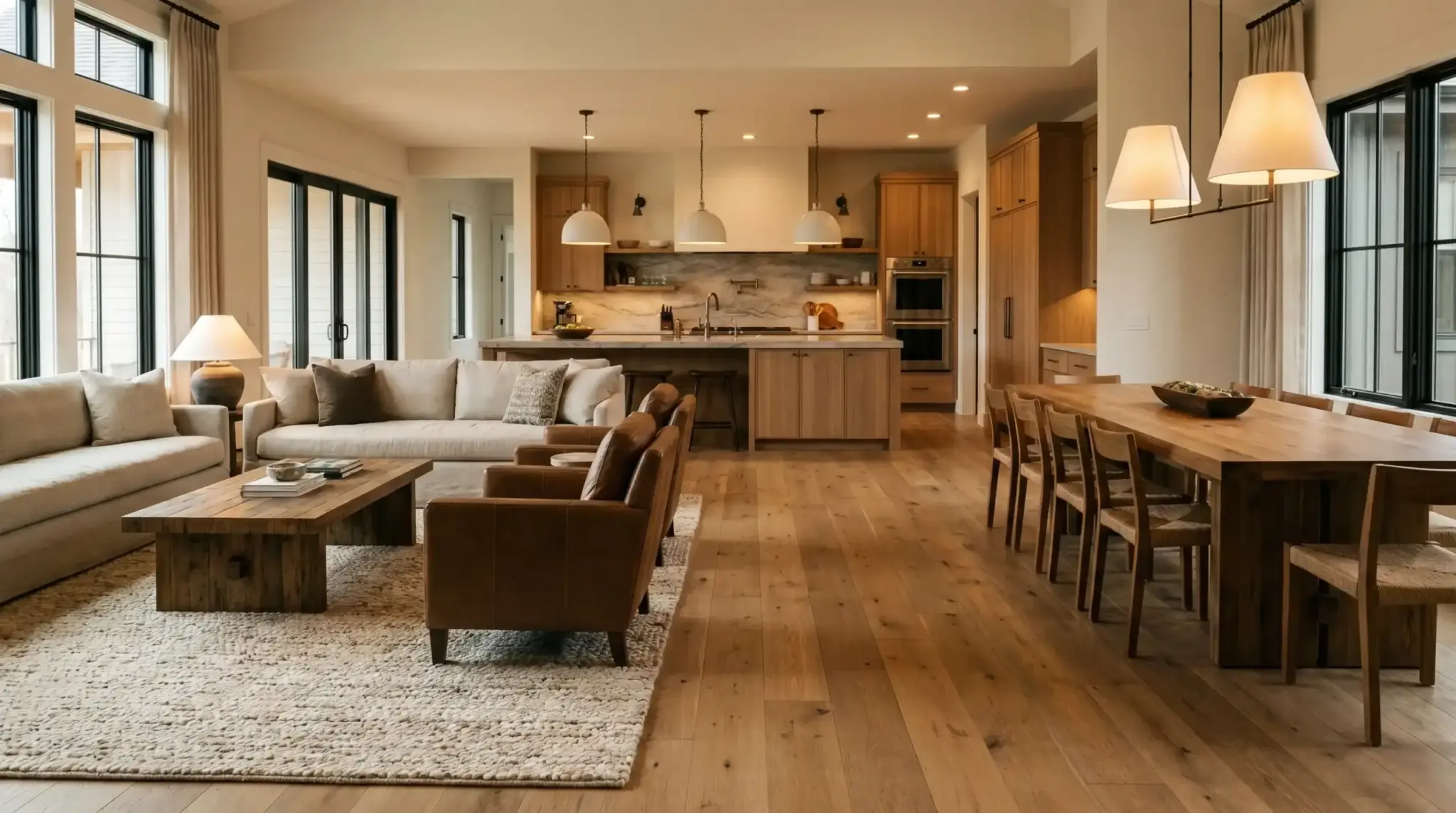
In an open-plan space, the rug has one job: to tell people where the living room is. Without a large enough rug, the seating zone bleeds into the kitchen or dining area, and the whole space feels like furniture floating in a warehouse.
For most open-plan living spaces, a 9×12 is the minimum. A 10×14 is often a better call. When all furniture legs sit fully on the rug, the seating zone becomes a defined room within the larger space.
A few things that help in open plans:
- Leave a visible gap of 12 to 18 inches of bare floor between the living room rug and the dining area. That gap is what makes both zones feel intentional.
- Do not extend the rug toward a dining table. Each zone should have its own rug.
- If in doubt, go larger. In an open plan, a slightly oversized rug almost always looks better than a slightly smaller one.
The One Rule That Changes Everything
The room should not determine your rug size. Your seating arrangement should.
The rug’s job is to anchor the furniture, not fill the floor. The right living room furniture layout determines where that rug should sit in the first place.
Here is what happens when a rug is too small. The furniture looks like it is floating above it rather than sitting on it. The room feels choppy.
That 12-inch gap between the sofa’s back legs and the rug edge makes the whole space look unfinished.
A rug that is too large is a much easier fix than one that is too small. When in doubt, go one size up.
Common Mistakes to Avoid
1. Skipping the rug pad. A rug without a pad shifts, bunches, and wears unevenly. Buy a pad about 2 inches smaller than your rug on all sides.
2. Centering the rug in the room instead of the furniture. The rug should center under your seating group. Where the walls are has nothing to do with it.
3. Picking a size based on price. A 5×7 is cheaper than a 9×12. But a 5×7 in a medium living room wastes the money you spent on it because the room never looks right. Size up and cut costs somewhere else.
4. Ignoring pile height. A thick, high-pile rug can block interior doors or make furniture legs feel unstable. For high-traffic living rooms, a low to mid-pile rug wears better and is easier to clean.
Measure Before You Fall for a Pattern
The rug decision is not really about style. Style is the easy part.
The hard part is getting the size right before you fall in love with a specific pattern and talk yourself into making it work in the wrong dimensions.
Measure your seating area. Add a little breathing room on each side. Lay the size out in painter’s tape.
Sit in your furniture and see how it feels. If you do that before you shop, the right living room rug size becomes obvious.
Frequently Asked Questions
What is the rule on rugs in a living room?
A rug should anchor the seating area. At least the front legs of sofas and chairs should rest on the rug for a cohesive, balanced layout.
Should the rug go under the TV stand?
Yes, in most cases. Placing the rug under the TV stand visually connects the furniture and defines the entertainment zone within the room.
Is an 8×10 rug big enough for a living room?
In most medium living rooms, yes. An 8×10 fits a standard sofa-and-two-chairs layout with the front legs on the rug. Larger sectionals need a 9×12.
What rugs are out of style?
Overly small rugs, low-quality faux-distressed designs, and rugs that don’t match the room’s scale tend to feel dated. Timeless, well-proportioned rugs, whether the room leans modern rustic or minimal, stay in style.