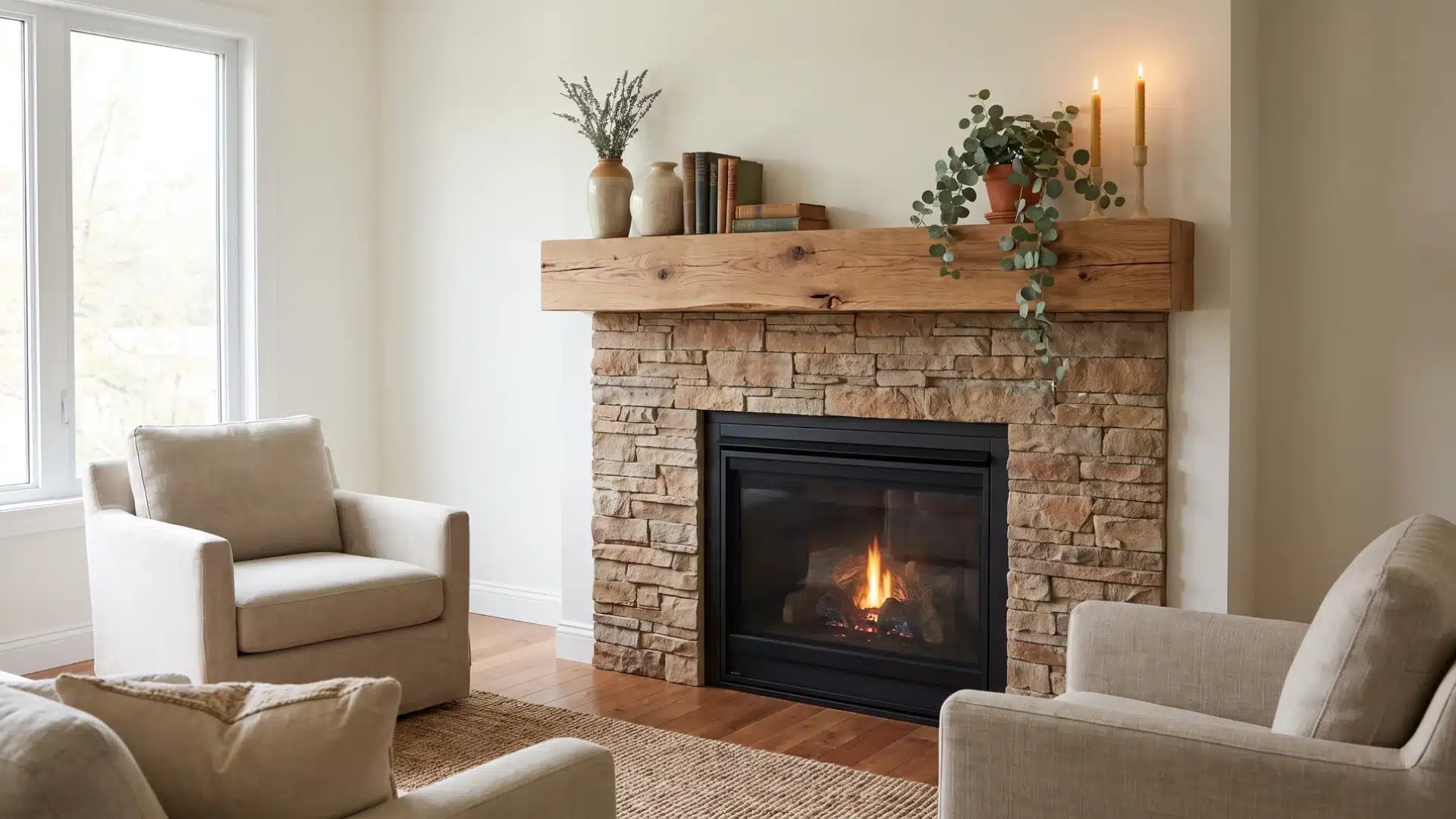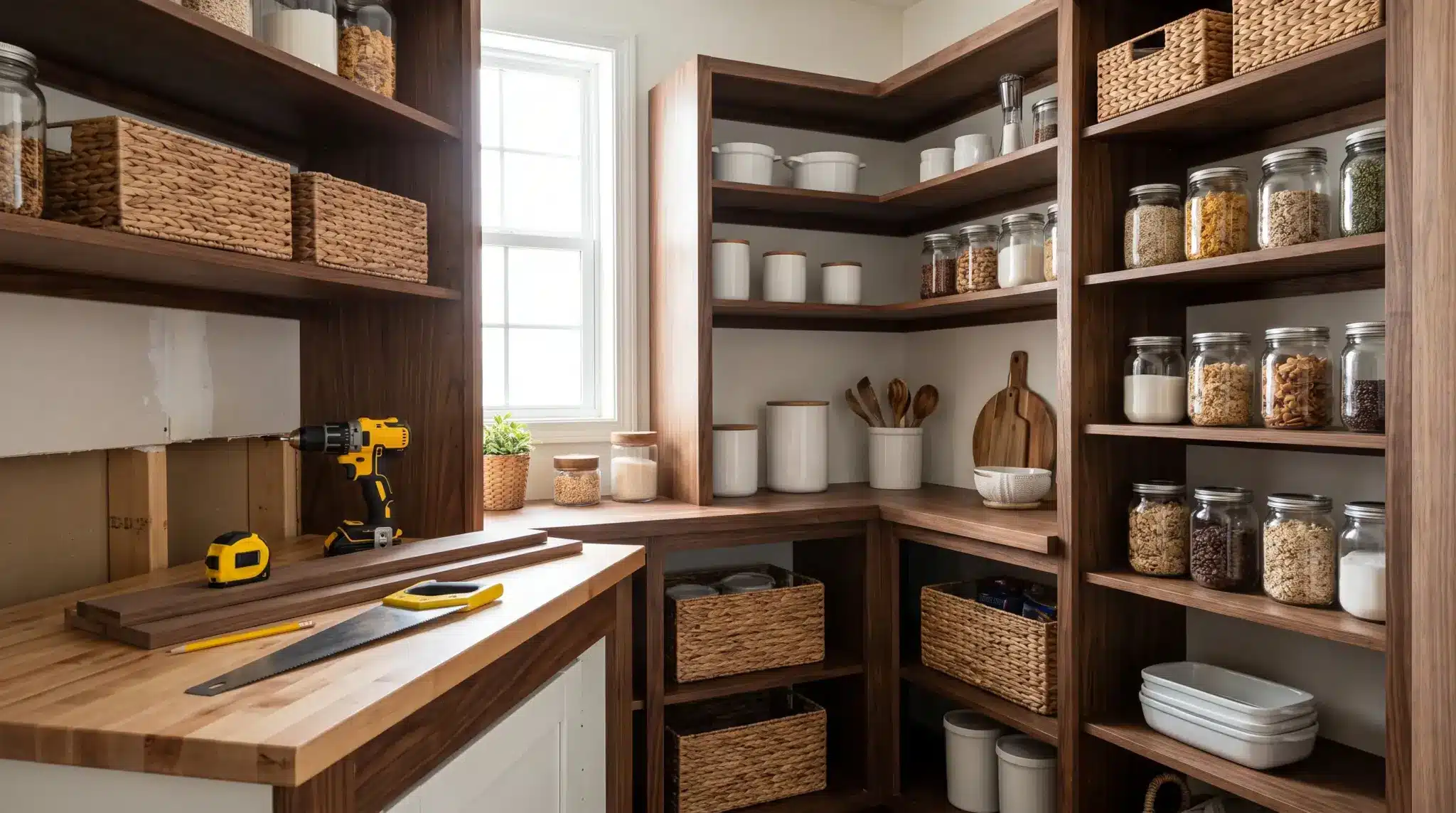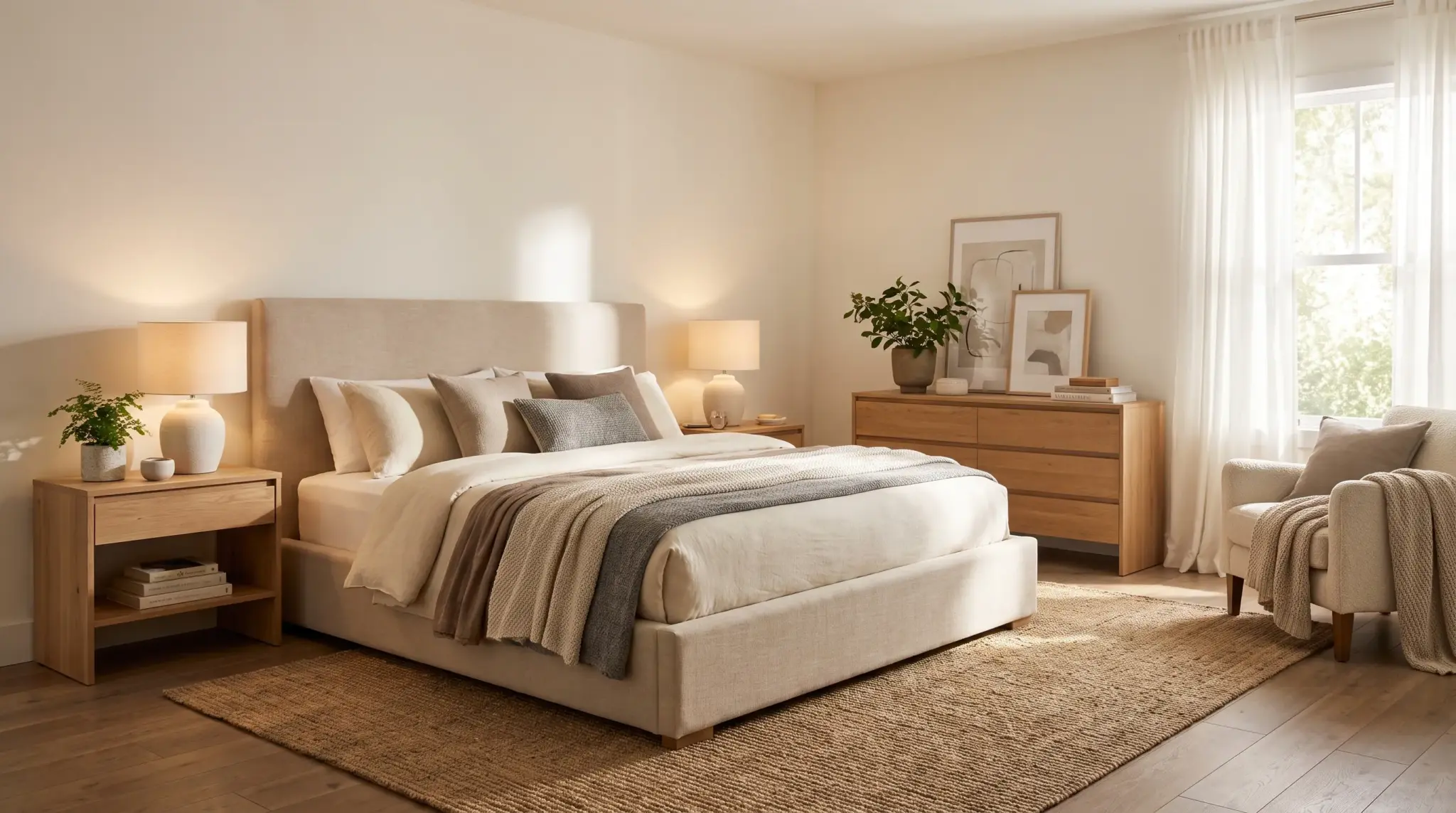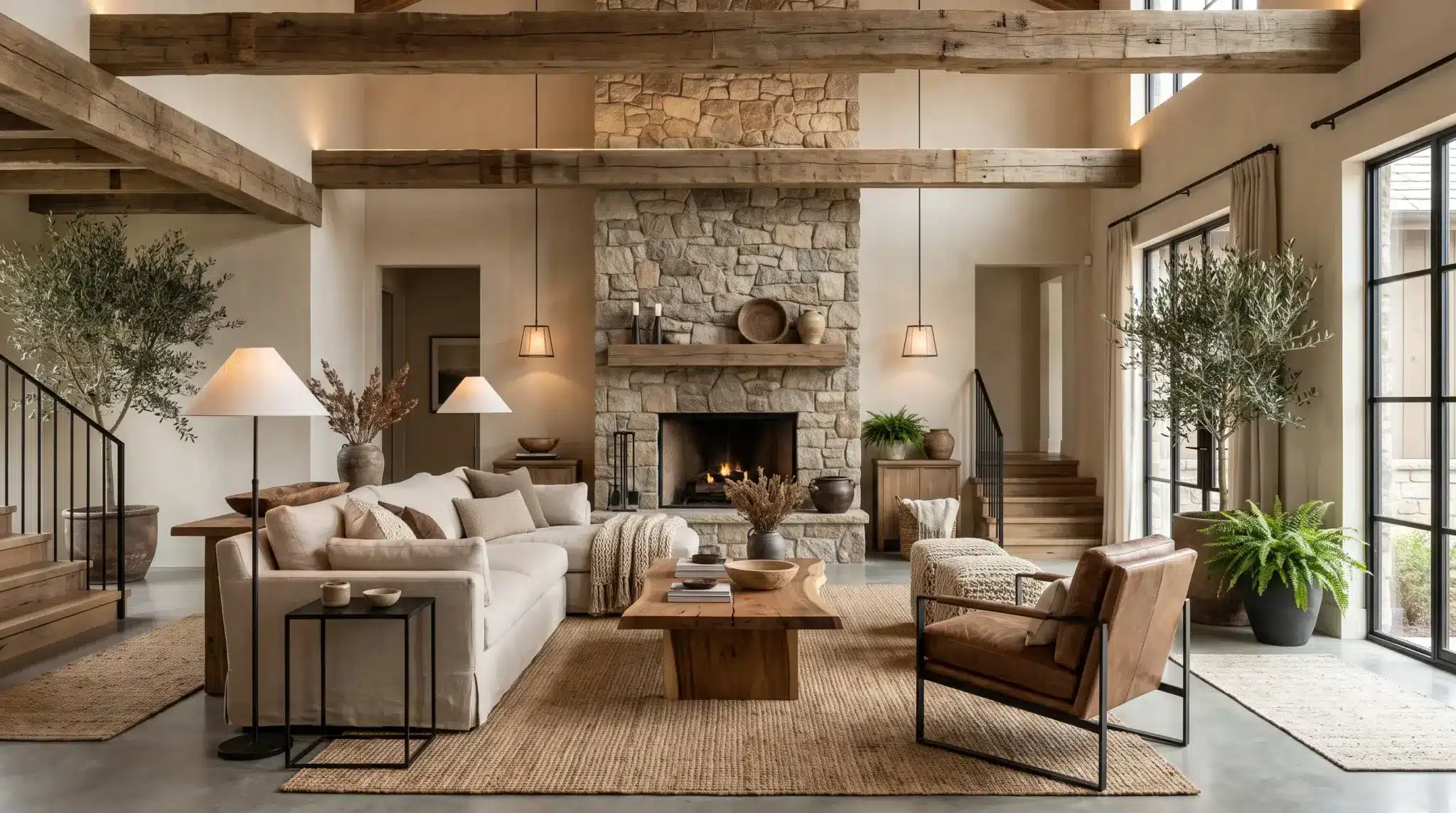
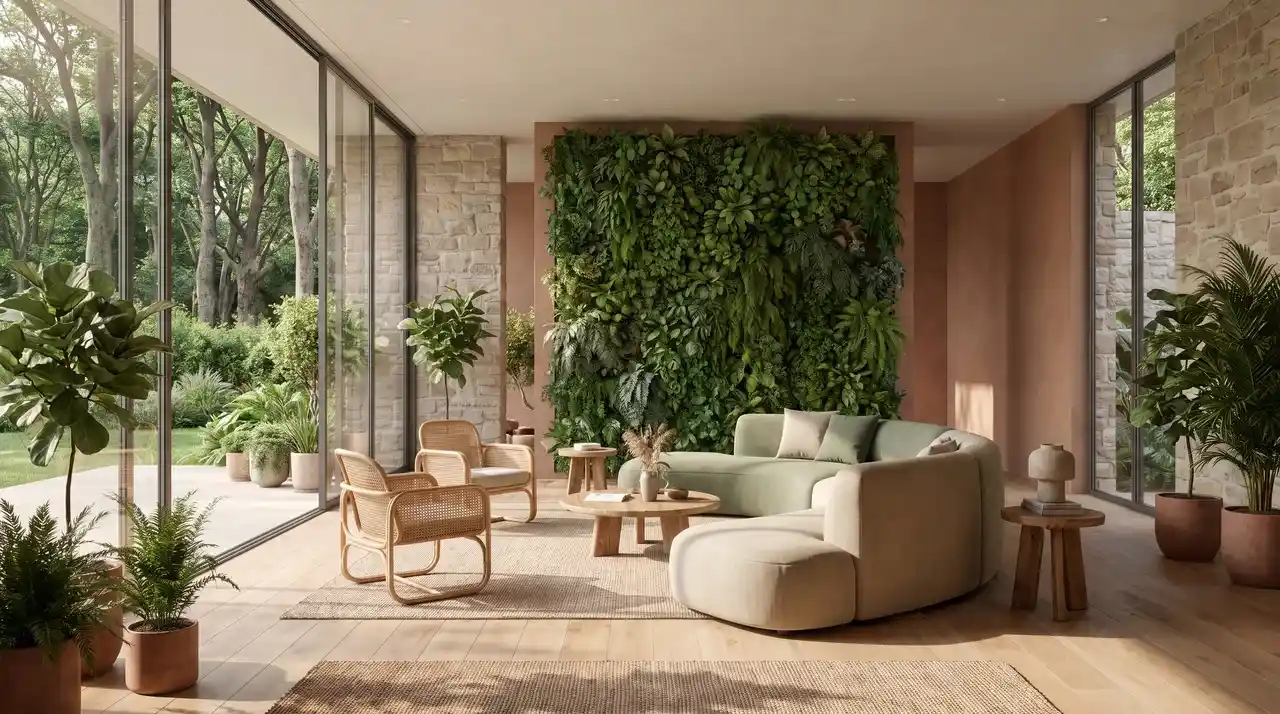
This year, I’ve rearranged my Brooklyn living room fourteen times, and the setup that finally worked wasn’t about the sofa at all.
I moved my reading chair under the south window, swapped a polyester rug for a jute one, and placed a monstera where the floor lamp used to be. By that evening, the room felt completely different.
That’s biophilic interior design in its simplest form: putting nature first with daylight, living plants, natural materials, and shapes inspired by the outdoors.
Next, I’ll explain what biophilic design means, share ten ways to use it in a real apartment, and break down the costs for each idea.
What Is Biophilic Interior Design?
Erich Fromm first used the word biophilia in 1973 to describe a love of living things. Later, Harvard biologist E.O. Wilson expanded on this idea in his 1984 book Biophilia, saying that our attraction to nature is something we’re born with, not something we learn.
Many US firms use the 14 Patterns of Biophilic Design, a framework published by Terrapin Bright Green in 2014. These patterns fall into three groups: nature in the space (like plants, water, daylight, and airflow), natural analogs (such as wood grain, stone, and curved shapes), and nature of the space (including ideas like prospect, refuge, mystery, and risk).
Most people notice the feeling of prospect and refuge without knowing the terms. For example, a wingback chair in a corner with a clear view across the room gives you both.
A 2019 review by Cummings and Waring in the Journal of Exposure Science and Environmental Epidemiology looked at decades of studies and found you’d need between 10 and 1,000 plants per square meter to match the air exchange from just one open window. Buy plants because having living things in a room makes it a nicer place to be. That’s reason enough.
The difference between a decorated room and a biophilic one isn’t about how many plants you have. A fern by the door is just decoration. But if your seating faces the light, your rug is wool or jute, your table shows its wood grain, and your plants match the light from the window, that’s biophilic design.
10 Biophilic Interior Design Ideas to Try at Home
Use these inspiring ideas to create a brighter, greener, and more comfortable home environment.
1. Add Indoor Plants as Living Decor
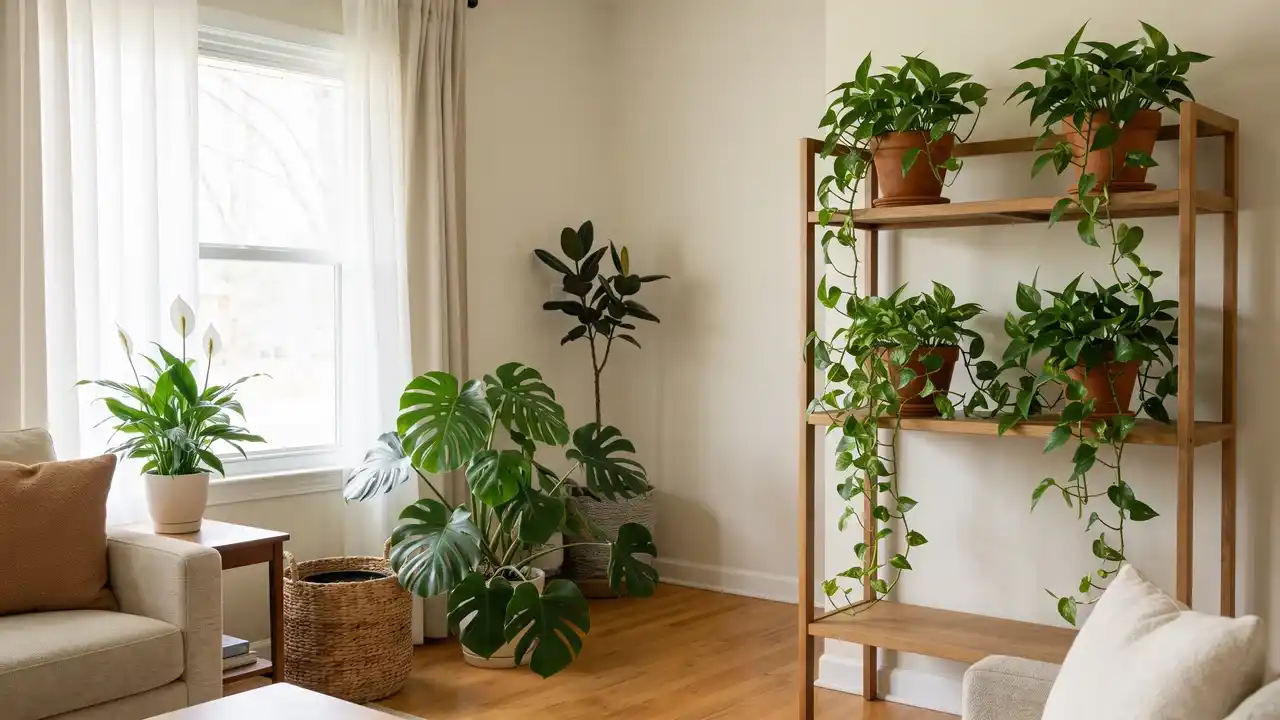
Buy for the light you have. A fiddle leaf fig wants six hours of strong light and drops leaves in a dim corner within a month, while a snake plant or a peace lily holds its shape for years where a ficus won’t.
Size matters more than the number of plants. One tall, 5-foot plant in an empty corner makes a bigger impact than seven small pots on a shelf. I always return to three spots: corners, the space beside a sofa arm, and the floor under a window. Most easy-care starter plants cost $12 to $20 for a 6-inch pot.
2. Maximize Natural Light Through Window Design
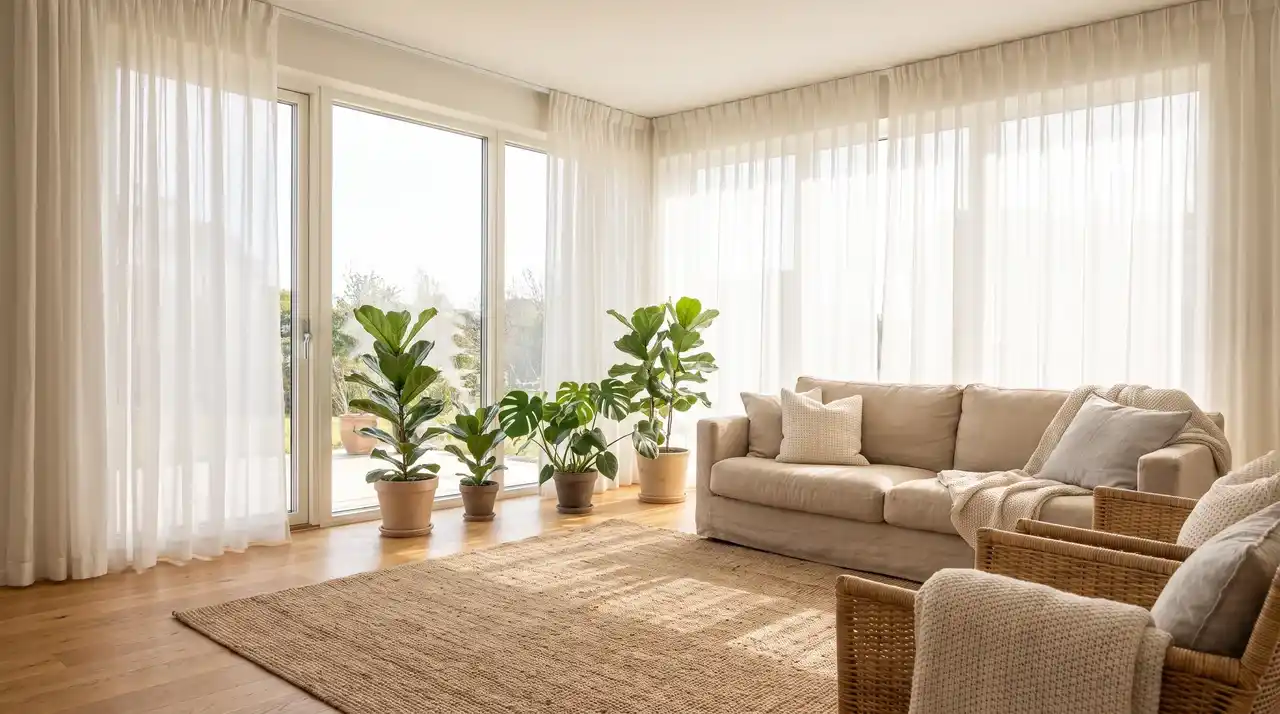
Daylight is usually the easiest and most affordable change you can make. Replace heavy drapes with unlined linen sheers, and hang the curtain rod 4 to 6 inches above the window frame, wide enough so the panels clear the glass when open. Hanging a mirror on the wall opposite the window is still the best way to make a small room feel bigger.
The direction your windows face makes a big difference. South-facing windows get the longest and strongest light. East-facing windows bring in gentle morning sun.
West-facing windows have hot afternoon light, and north-facing windows offer steady, cool light that won’t burn your plants.
3. Bring in Natural Wood Elements
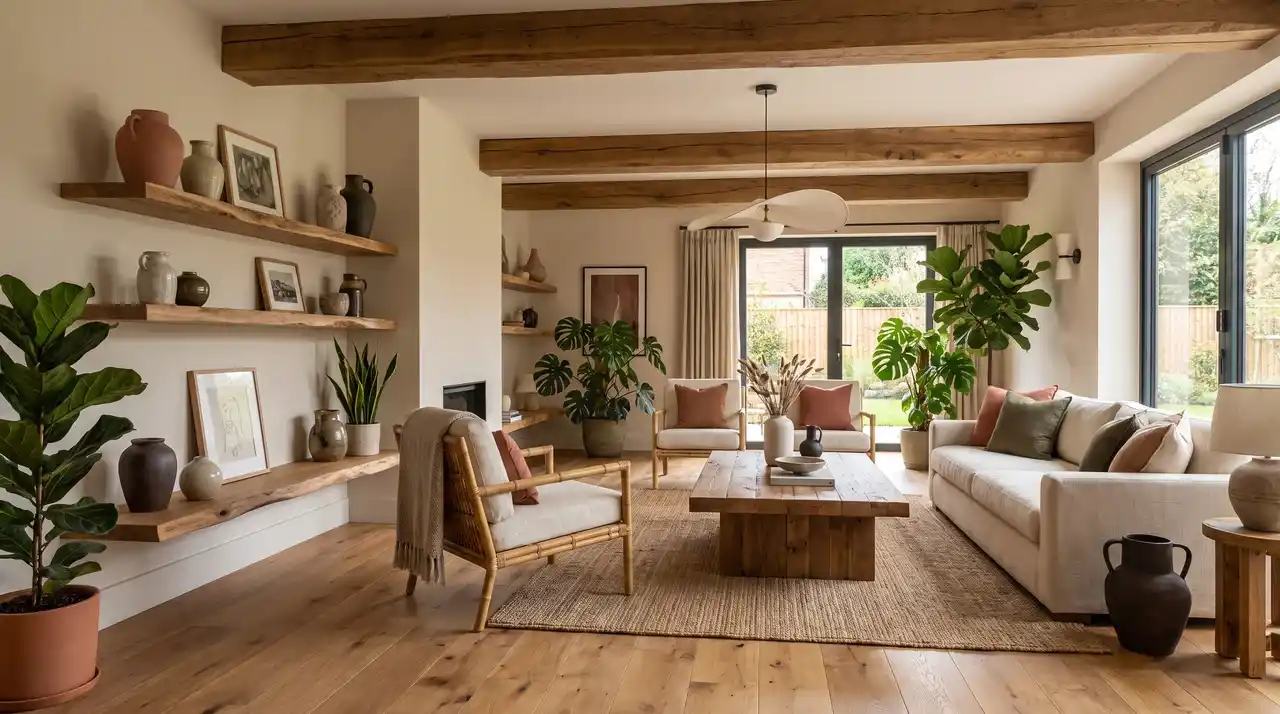
Wood adds warmth that few other materials can match. It brings texture and an organic feel into any interior.
There are many ways to use it:
- Wooden flooring
- Exposed beams
- Coffee tables
- Floating shelves
- Wooden wall panels
- Bamboo furniture
One tip that makes a big difference: mix different wood tones instead of matching everything perfectly. A slightly varied palette feels more natural, almost like a real forest.
Balance the wood with neutral colors so the room doesn’t feel too heavy or too busy.
4. Use Stone and Earth-Based Materials
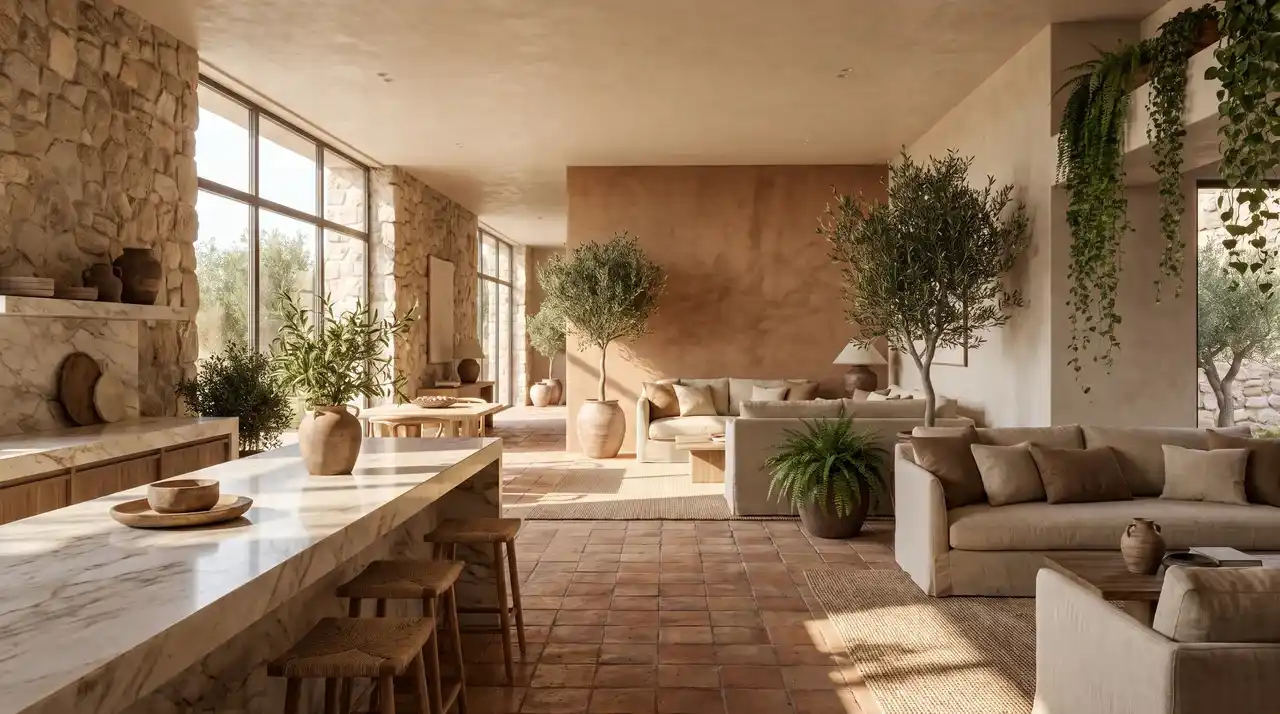
Stone and fired clay have a weight and feel that paint can’t imitate. Countertops, a limewashed wall, terracotta tiles, or river-stone details in a bathroom all add this effect.
Renters can get a similar look with smaller items: unglazed terracotta pots, a soapstone tray, and slate coasters cost less than $60 and still give the impression of stone.
Terracotta is especially useful for people who tend to overwater, since its porous clay dries soil faster than plastic.
5. Create a Nature-Inspired Color Palette
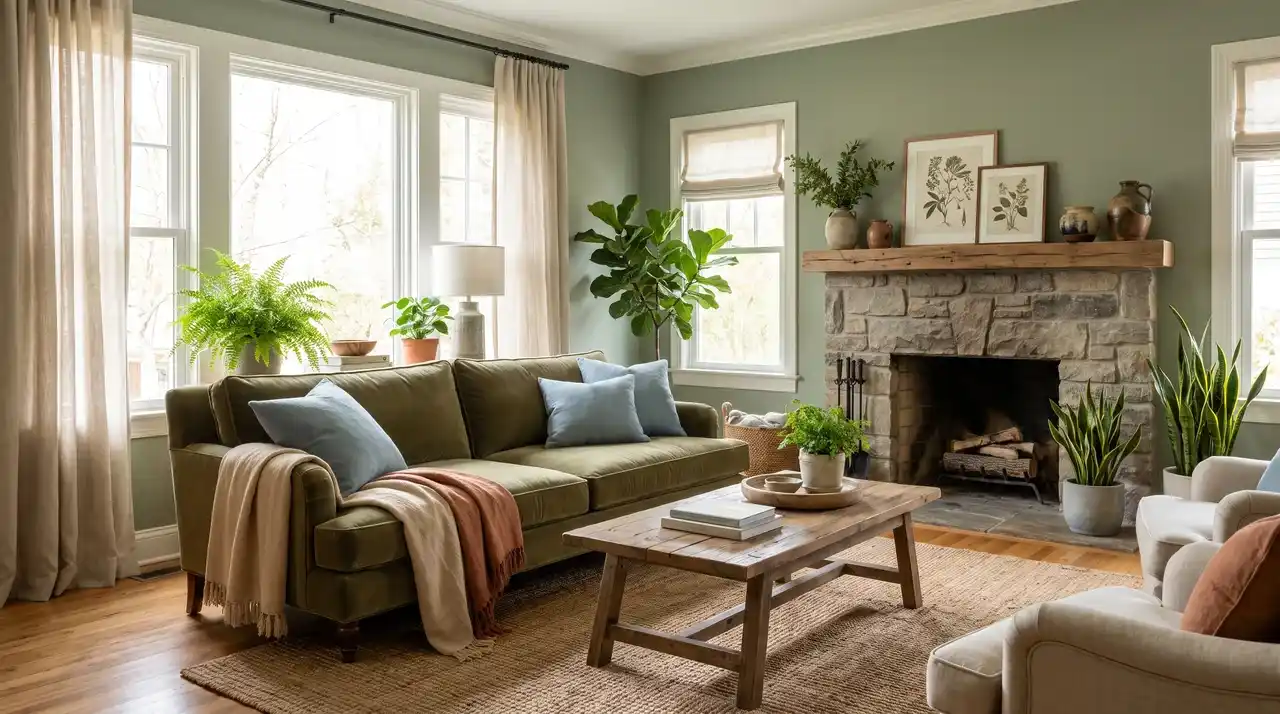
Muted, slightly grayish greens work well in almost any light in the US. My top picks are Sherwin-Williams Evergreen Fog SW 9130 and Benjamin Moore Saybrook Sage HC-114, both soft enough to look good even in a north-facing room. Warm beige, sand, terracotta, and a muted blue also fit nicely in a natural palette.
Painting every wall green is usually too much. One green accent wall or a green kitchen island with warm neutrals is enough.
Test a 2-foot sample square on two different walls first, because green can look very different in morning and evening light.
6. Add Organic Shapes and Curved Furniture
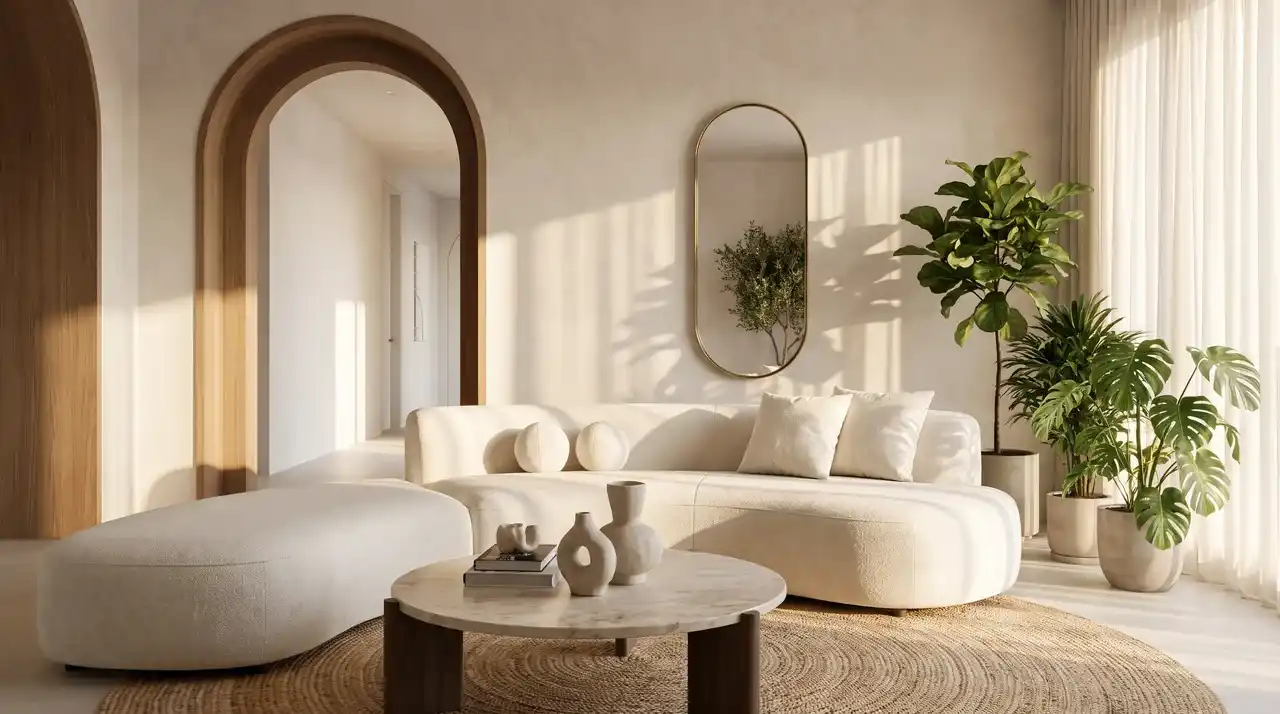
Nature rarely draws a straight line. Rivers curve. Leaves have soft edges. Hills roll instead of standing at sharp angles.
Bringing that same softness indoors can change how a room feels. Try:
- Curved sofas
- Round coffee tables
- Arched doorways
- Oval mirrors
- Wavy decor pieces
A room filled only with sharp corners and rigid shapes can feel stiff. Adding a few curved pieces softens the space and makes it feel more relaxed.
7. Include Natural Fabrics and Textures
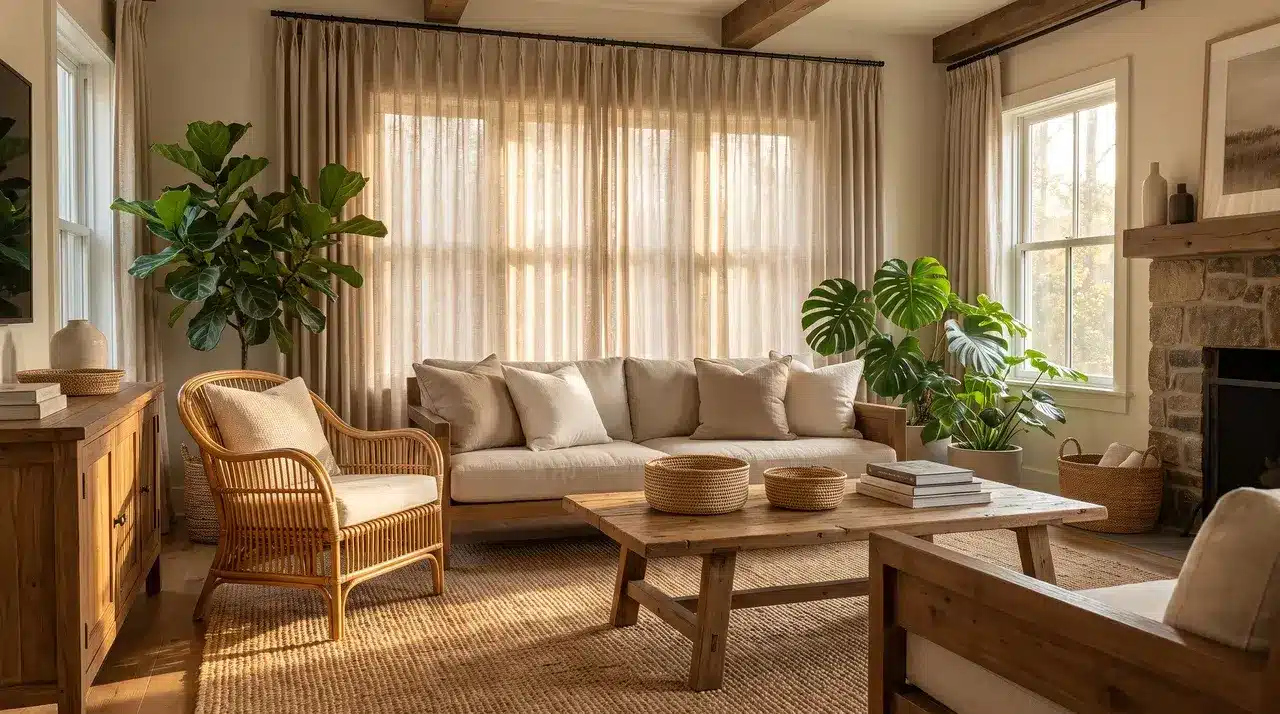
Touch matters just as much as sight. Natural fabrics recreate the feel of the outdoors in a way that synthetic materials can’t.
Look for materials like:
- Linen
- Cotton
- Wool
- Jute
- Rattan
- Hemp
Ways to bring these into your space:
- Woven rugs
- Linen curtains
- Cotton cushions
- Rattan chairs
- Handmade baskets
These small texture changes often go unnoticed at first glance, but they shape how comfortable a room feels day to day.
8. Create Indoor Views Connected to Nature
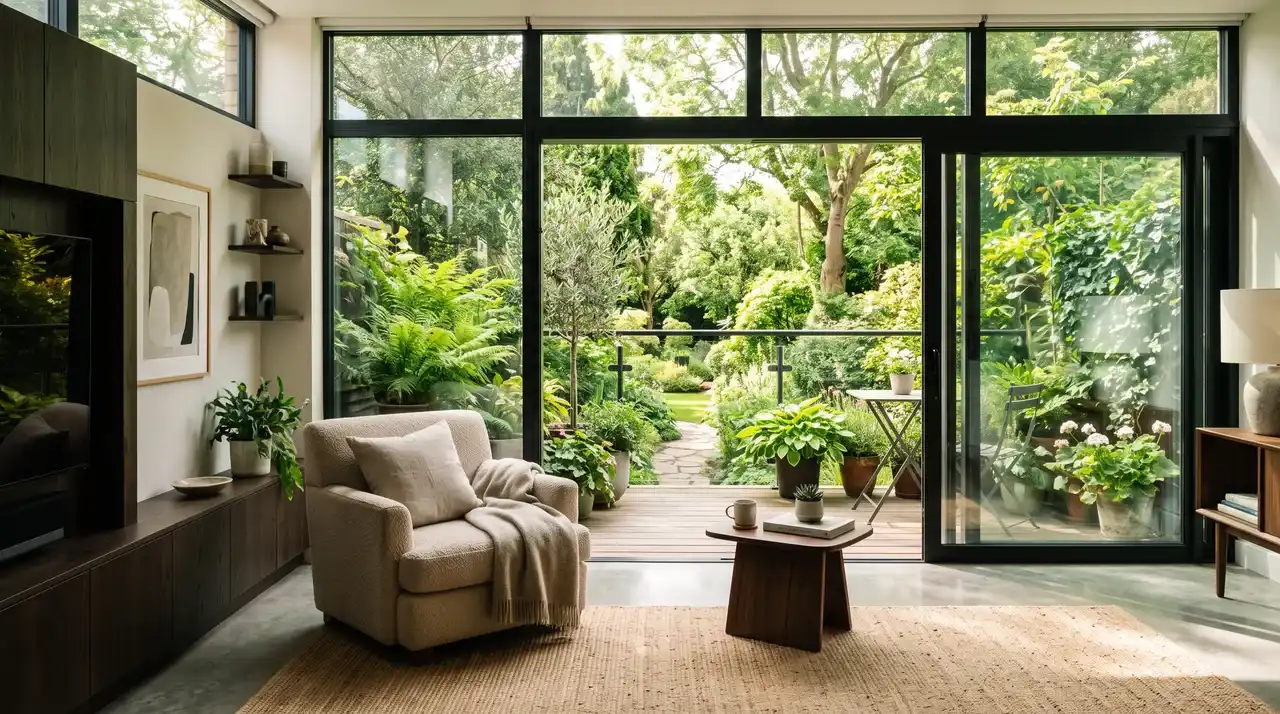
Terrapin says a good nature view means being able to look across at least 20 to 25 feet for a few minutes. That’s why a window facing a courtyard tree is better than one facing a wall just six feet away. If you have a nice view, aim your chair at it. A big part of arranging furniture is deciding what people see while they sit.
My windows look out onto a parking lot, so I created my own view: a shelf of trailing plants at eye level, a large landscape photo on the opposite wall, and a planter on the fire escape. A row of trailing indoor plants can cover a bare window frame in just one season.
9. Add Water Features and Natural Sounds
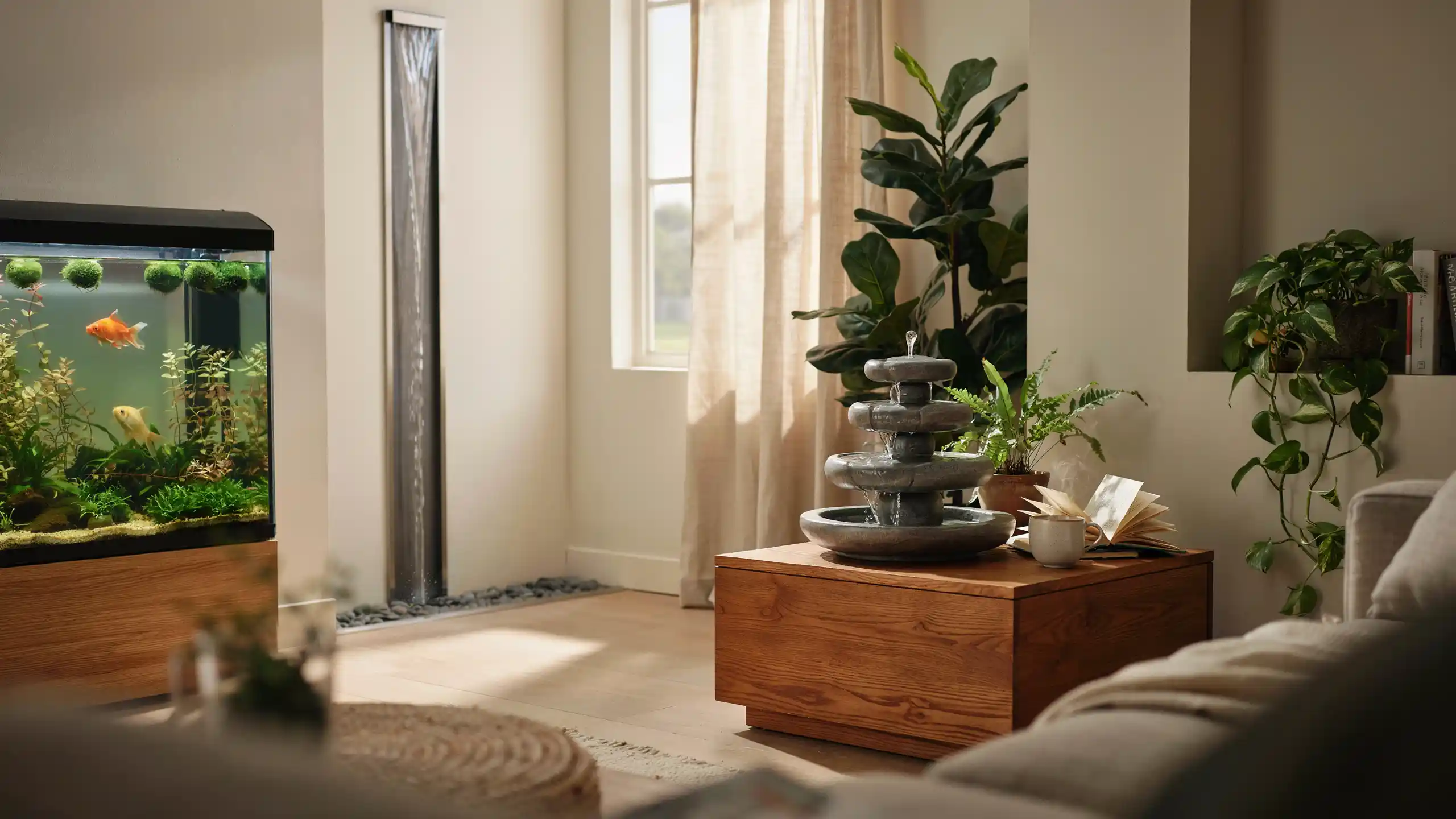
Sound is a part of nature that’s easy to forget indoors. Water features bring that missing sense back into a space.
Simple additions include:
- Small tabletop fountains
- Indoor water walls
- Aquariums
- Water-inspired decor pieces
Biophilic design isn’t only about what you see. It includes what you hear and feel too. A quiet trickle of water in the background can make a room feel more alive.
10. Design a Green Workspace or Relaxation Corner
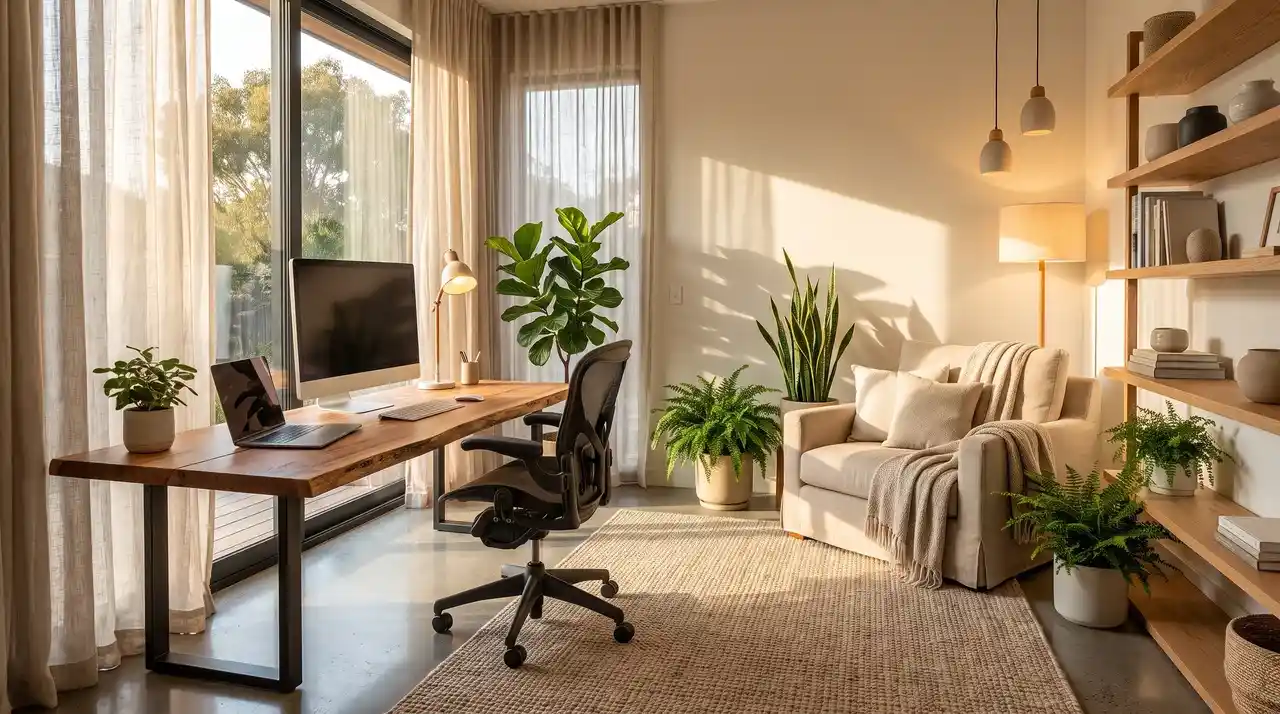
Redesigning your whole house isn’t usually the best place to start. Choose the spot where you spend most of your time and focus on that area first.
Place your desk perpendicular to the window instead of facing it to avoid screen glare and keep the view in your side vision, then add a plant at eye level. For a reading corner, use a chair with its back to a wall, add a wool throw, a lamp with a warm 2700K bulb, and a plant within arm’s reach.
Biophilic Design Room by Room
The design patterns don’t change, but which ones are worth spending money on depends on the room.
| Living room | One large plant, a jute or wool rug, seating turned toward the window |
| Bedroom | Linen bedding, muted green or clay walls, one low-light plant |
| Kitchen | A windowsill herb pot, stone or butcher-block surface, open wood shelving |
| Bathroom | A humidity-loving plant, terracotta or stone accessories, a bamboo bath mat |
| Home office | Daylight at the desk, plant at eye level, cork or wood work surface |
Bathrooms are the easiest place to add biophilic design, but they’re often overlooked. The daily humidity from showers is perfect for ferns, pothos, and calathea, which don’t do well in dry rooms. Which design elements matter most depends on how much time you spend sitting in the room.
Common Biophilic Interior Design Mistakes
It’s easy to get carried away and end up with a space that feels cluttered instead of calm. Here are common mistakes and how to fix them:
| Mistake | Better Approach |
|---|---|
| Adding too many plants | Choose plants based on space and how much upkeep you can handle |
| Using only green shades | Mix earthy colors with neutrals |
| Choosing fake materials everywhere | Prioritize authentic textures where you can |
| Ignoring natural light | Plan furniture layouts around windows |
| Creating visual clutter | Keep nature elements balanced across the room |
Good biophilic design feels calm, not busy. Every element should have a reason for being there.
Where to Start This Weekend
Curtains, a plant, a jute rug, and a gallon of paint together cost less than $300, but the two most important changes are free.
Before you buy anything, sit in the room for an hour. Notice where the sunlight falls, move a chair into that spot, and start from there.
Which room in your home gets the best natural light, and is anything blocking it? Share your answer in the comments.
Frequently Asked Questions
What Is Biophilic Design In Interior Design?
Biophilic design incorporates natural elements like plants, sunlight, wood, and stone to create healthier, calmer, more nature-connected indoor spaces.
What Is The 3-5-7 Rule In Interior Design?
The 3-5-7 rule groups décor items in odd numbers three, five, or seven to create balanced, visually appealing, and natural-looking arrangements.
What Are The 14 Patterns of Biophilic Design?
The 14 patterns include natural light, airflow, water, plants, natural materials, refuge, prospect, mystery, risk, and other nature-inspired design principles.