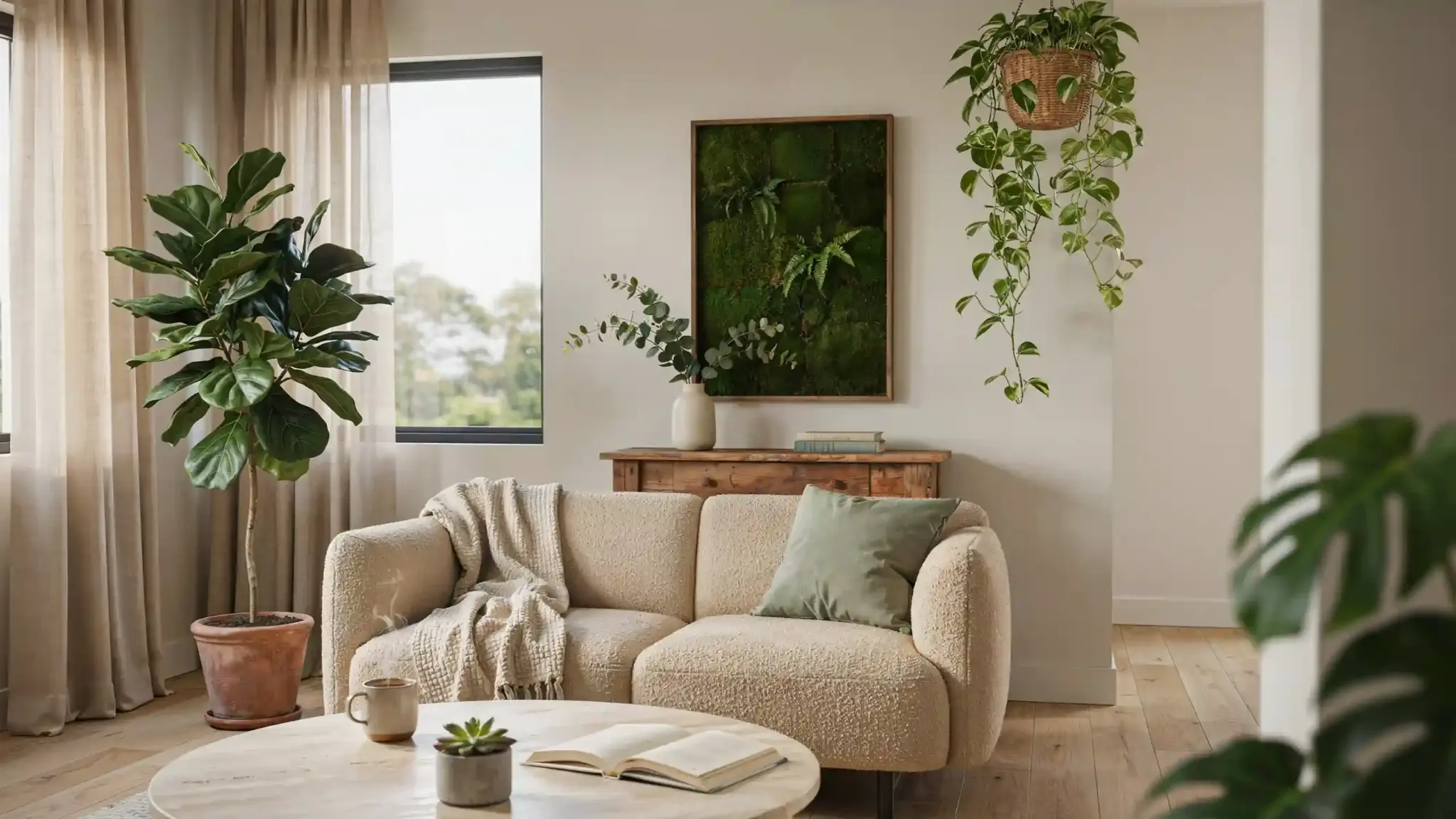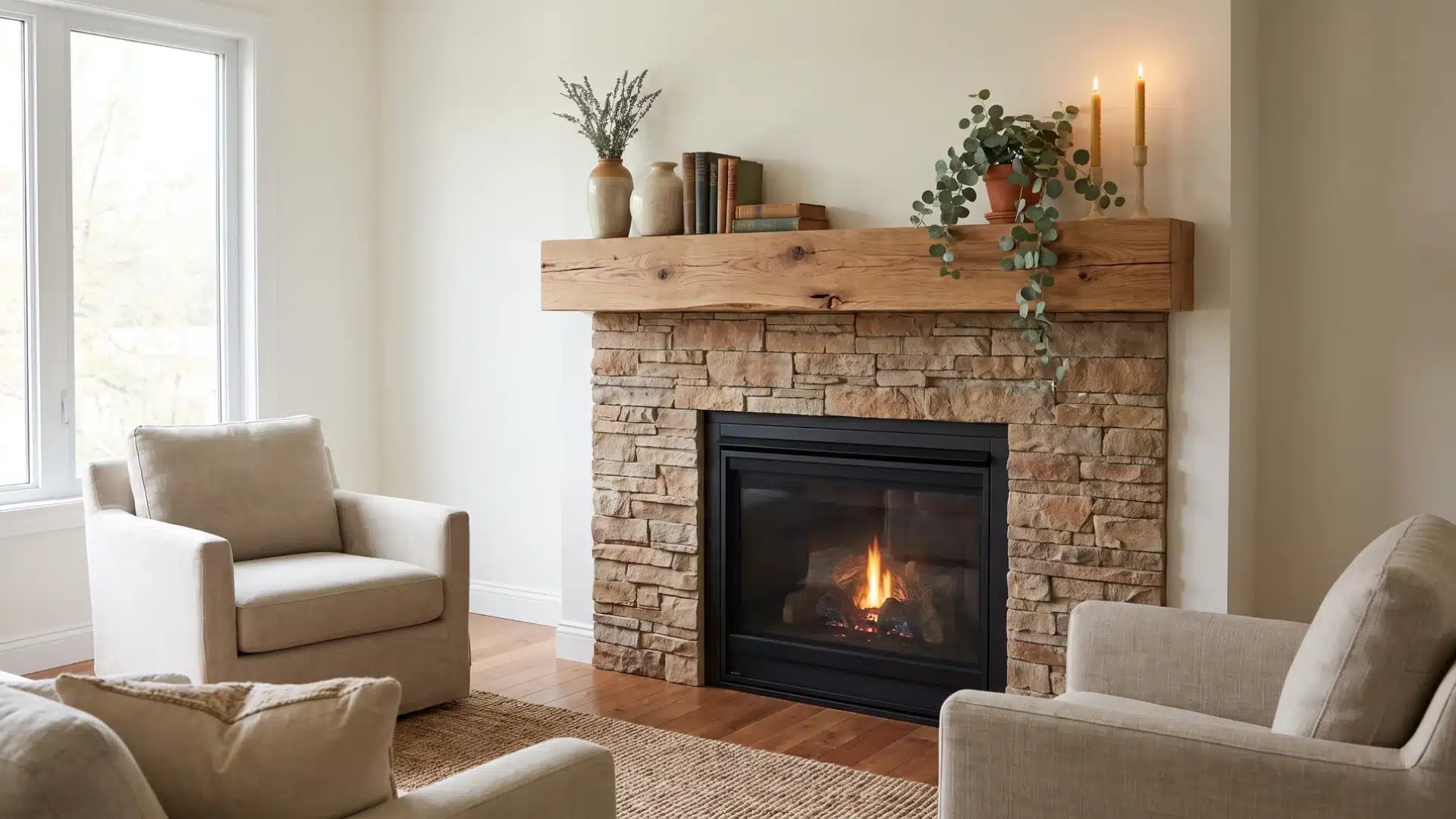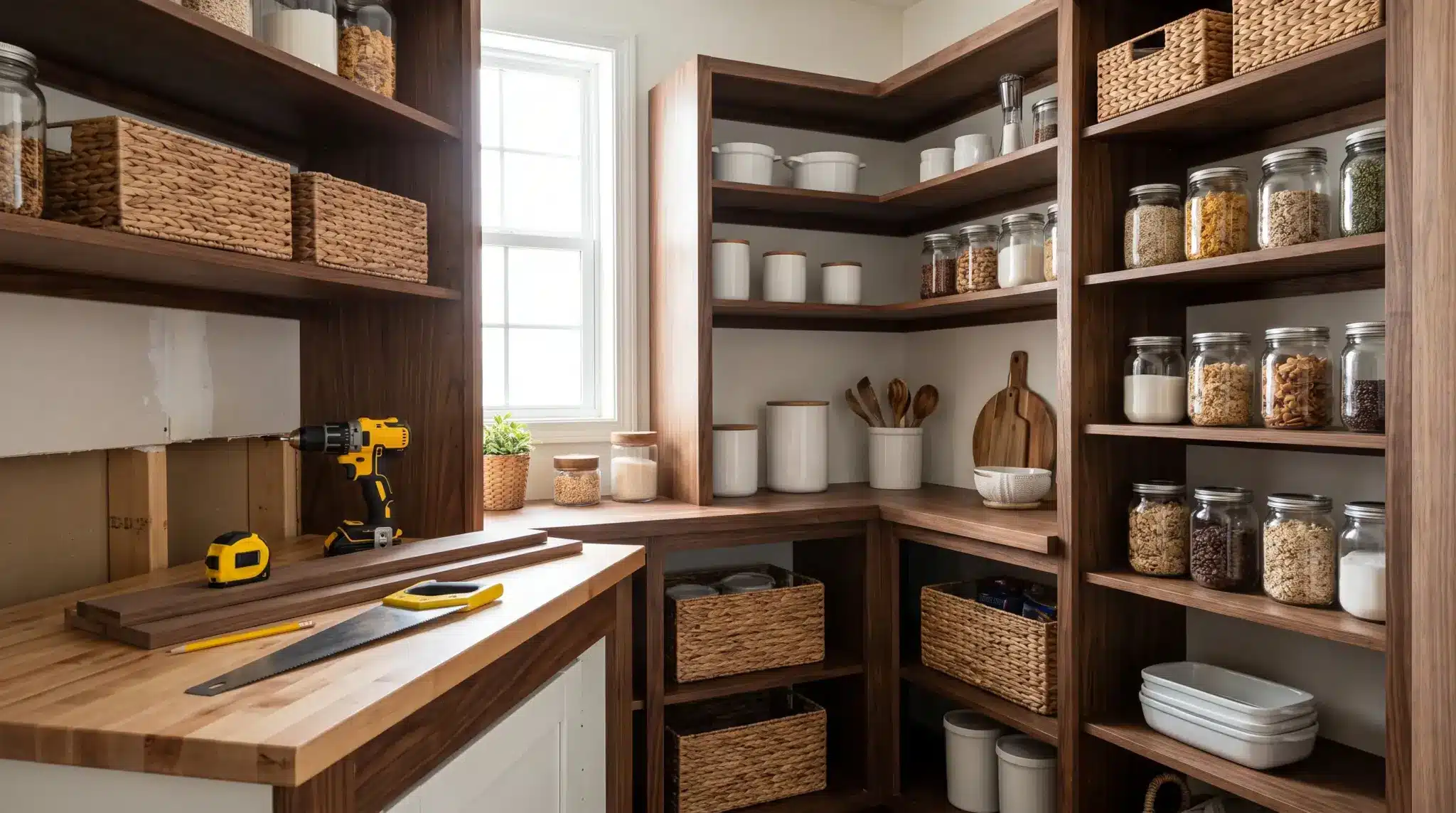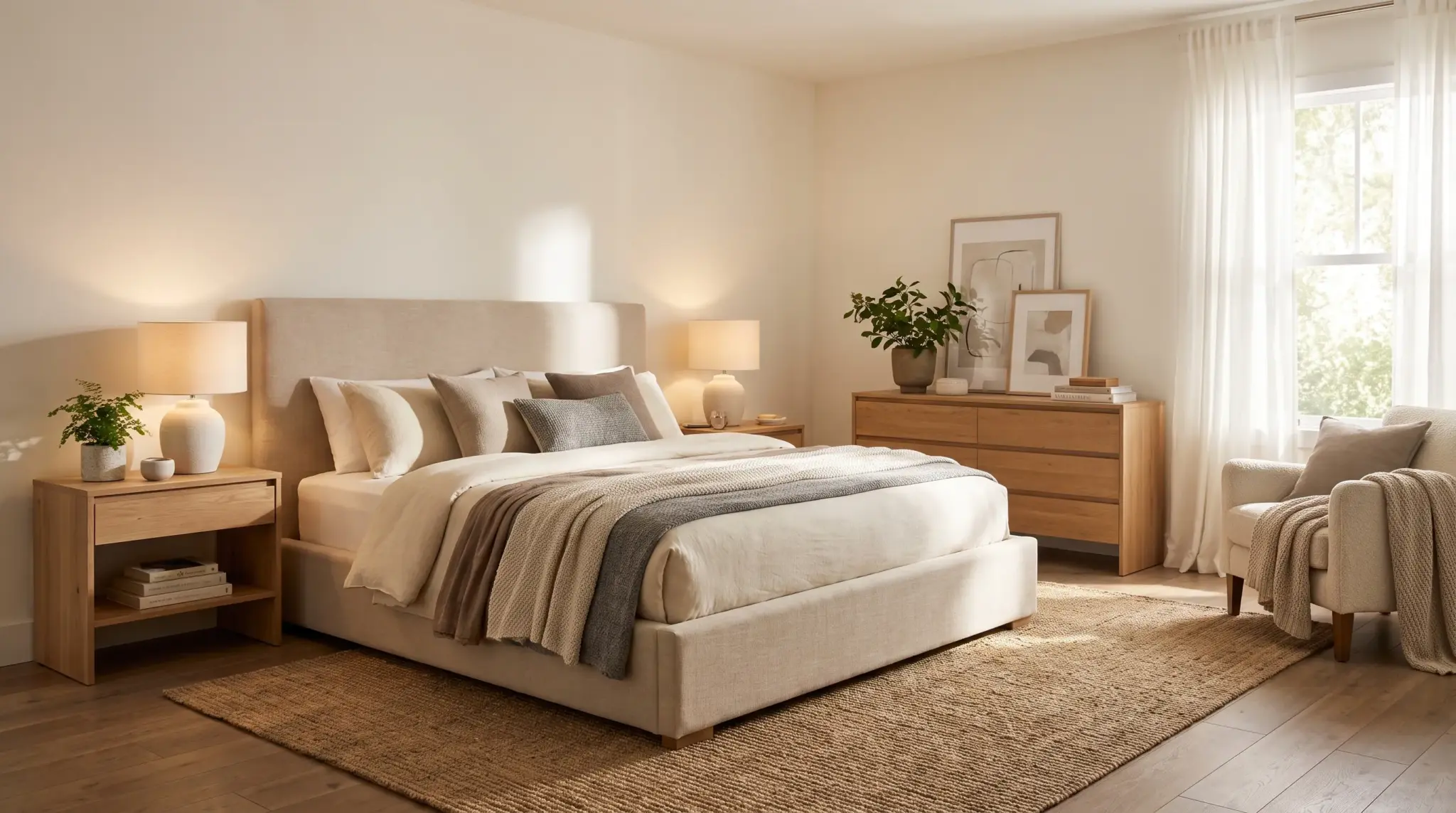
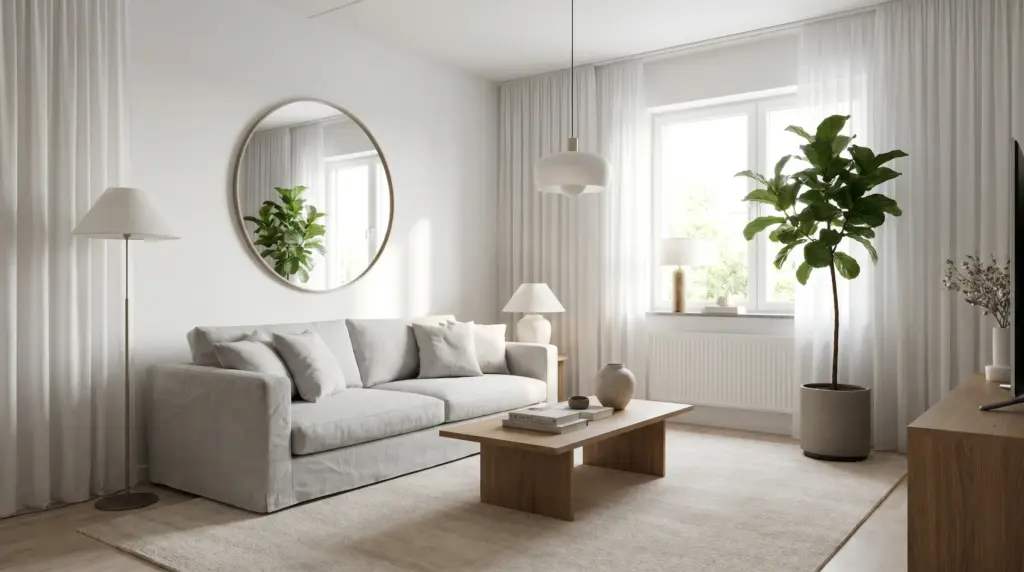
Your small living room probably has more space than it feels like. The setup is what is working against you. Furniture is crowding the walls.
Rugs too small for the seating area. Curtains hung too low to do anything useful. These are common decisions. They are also easy to reverse.
Making a small living room look bigger does not take a renovation. It takes a few changes in the right order.
This guide covers ten practical tricks that shift how a space looks and feels.
Most of them cost nothing. All of them are worth trying before you spend money on anything new.
10 Ways to Make a Small Living Room Look Bigger
After years of rearranging small spaces, one thing becomes clear: layout and design decisions matter more than room size.
1. Start With the Layout
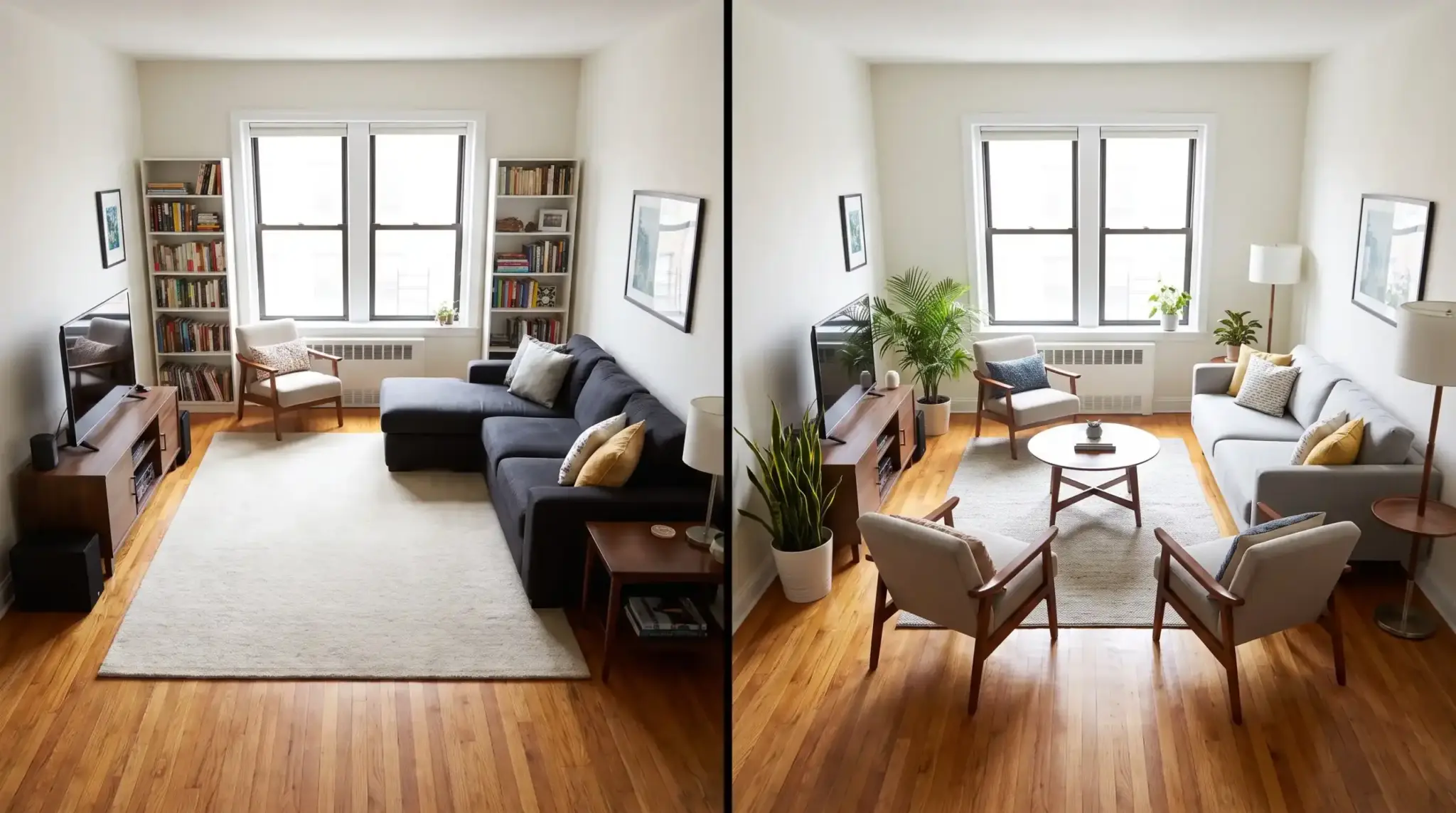
Layout is the foundation. If your furniture is fighting the architecture, no wall color will save it.
A well-planned furniture layoutfor your living room creates better flow, improves circulation, and makes even compact spaces feel more open.
I learned this the hard way after repainting my living room twice before realizing the sofa was just in the wrong spot entirely.
The most common layout mistake is pushing all the furniture right up against the walls. It seems like it would open up the space in the middle, but it usually does the opposite.
Instead of feeling airy, the room ends up with a large empty center and narrow walkways along the edges. It actually makes the space feel more stretched out and boxy, not larger.
Pull key pieces 2 to 4 inches off the wall. Let the sofa float slightly. It creates visual breathing room that reads as spacious rather than cramped.
Keep walkways clear at 30-36 inches minimum, enough that two people can pass comfortably. When movement feels easy, the room feels larger.
2. Use Light, Cohesive Colors
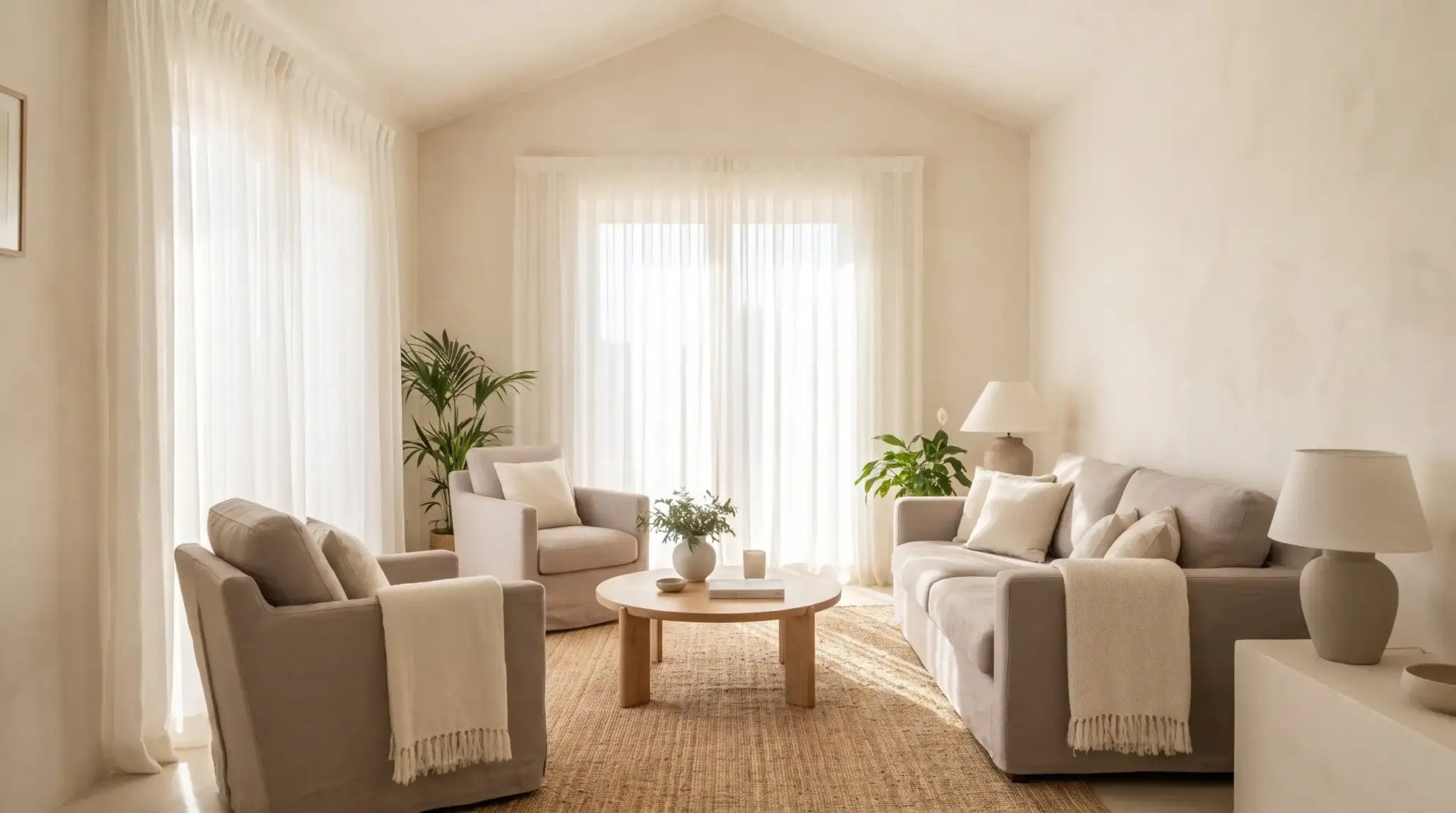
All-white is not always the answer. In a room with great natural light, it reads as airy and open.
But in a low-light room with angular corners, white can feel flat and clinical, sometimes even smaller than a warmer color would.
Color perception research from the University of Queensland found that warmer, lighter hues increase perceived room volume more consistently than stark cool whites, particularly under warm artificial light.
Soft warm neutrals like creamy off-whites, warm greiges, and pale taupes reflect light without going cold.
Two useful moves: paint the ceiling the same shade as your walls to remove the visual lid, and match your largest furniture pieces close to your wall tone.
When a sofa blends into a wall rather than contrasting against it, the eye reads the whole room as one continuous space.
3. Hang Curtains High and Wide
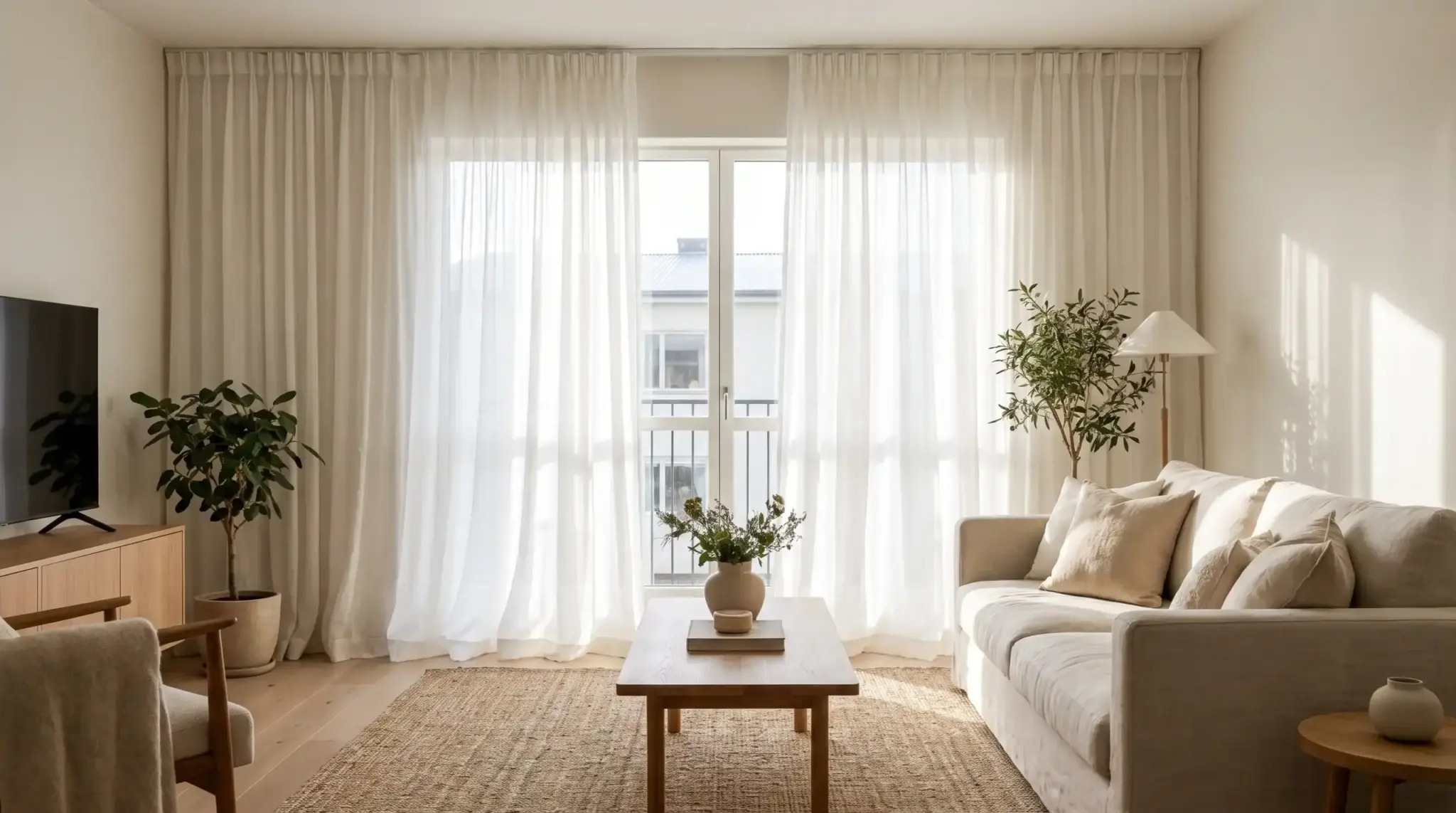
This is one of the fastest changes you can make to a small living room. And almost everyone does it wrong.
Mount the curtain rod 4 to 6 inches below the ceiling, not just above the window trim. Extend the rod 6 to 12 inches on each side of the window frame.
Let the panels float about half an inch above the floor.
The window looks taller. The wall looks taller. The whole room reads as having more vertical space than it actually does.
Use lightweight, sheer fabric where privacy allows. If you rent and cannot drill, Kwik-Hang brackets fit into the window trim without drilling.
4. Place Mirrors Strategically, Not Randomly
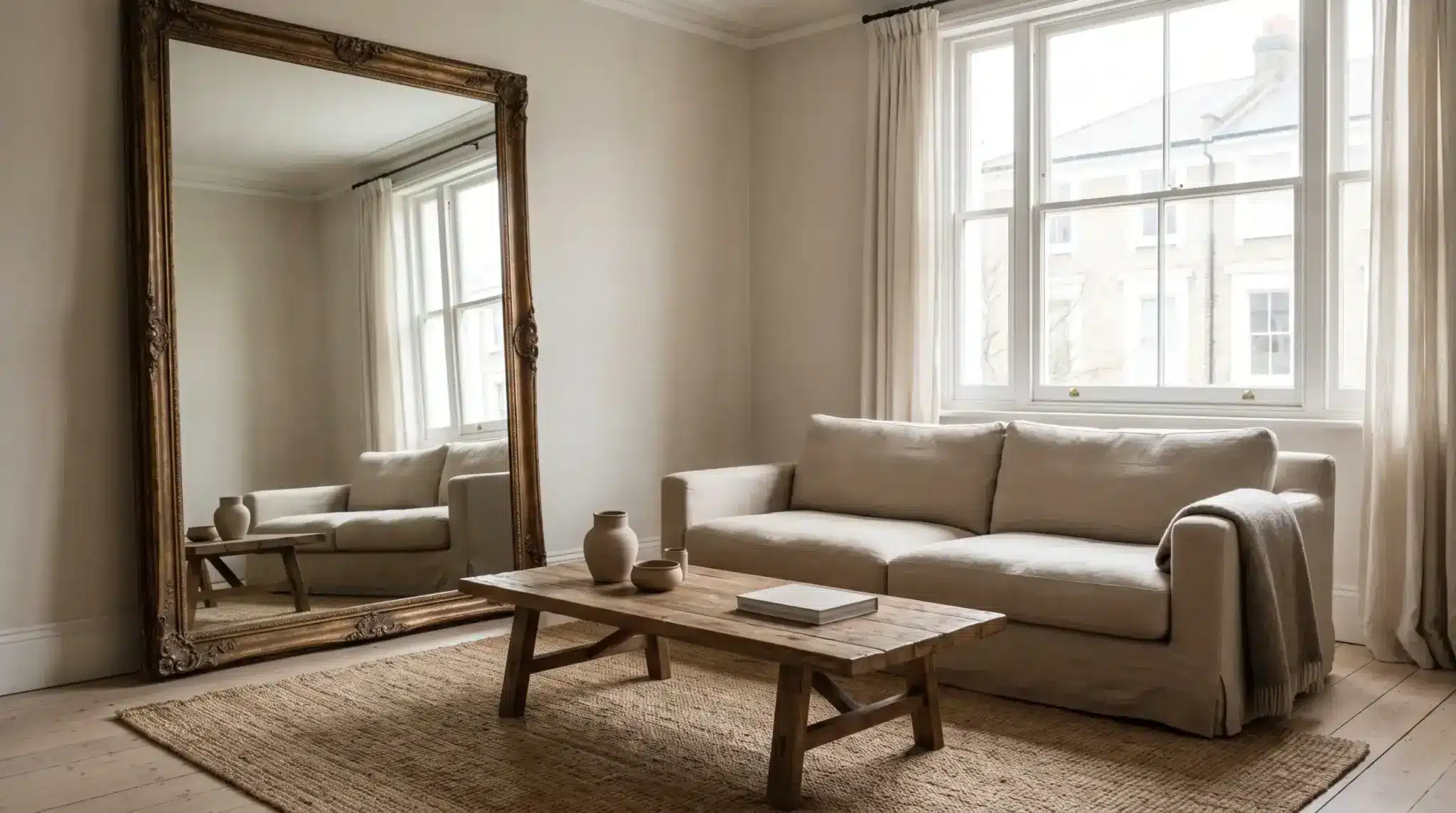
Put a mirror opposite a window. It reflects natural light back across the room, creating the illusion that the wall opens up.
Avoid placing a mirror opposite something cluttered or dark. You would just double the visual mess.
One large mirror reads as architectural, almost like another window. A gallery of small mirrors reads as decoration. In a small room, go large and deliberate.
IKEA’s NISSEDAL at 25 x 63 inches is a solid, affordable option. Thrift stores routinely have large vintage mirrors under $40.
5. Use a Rug That’s Big Enough
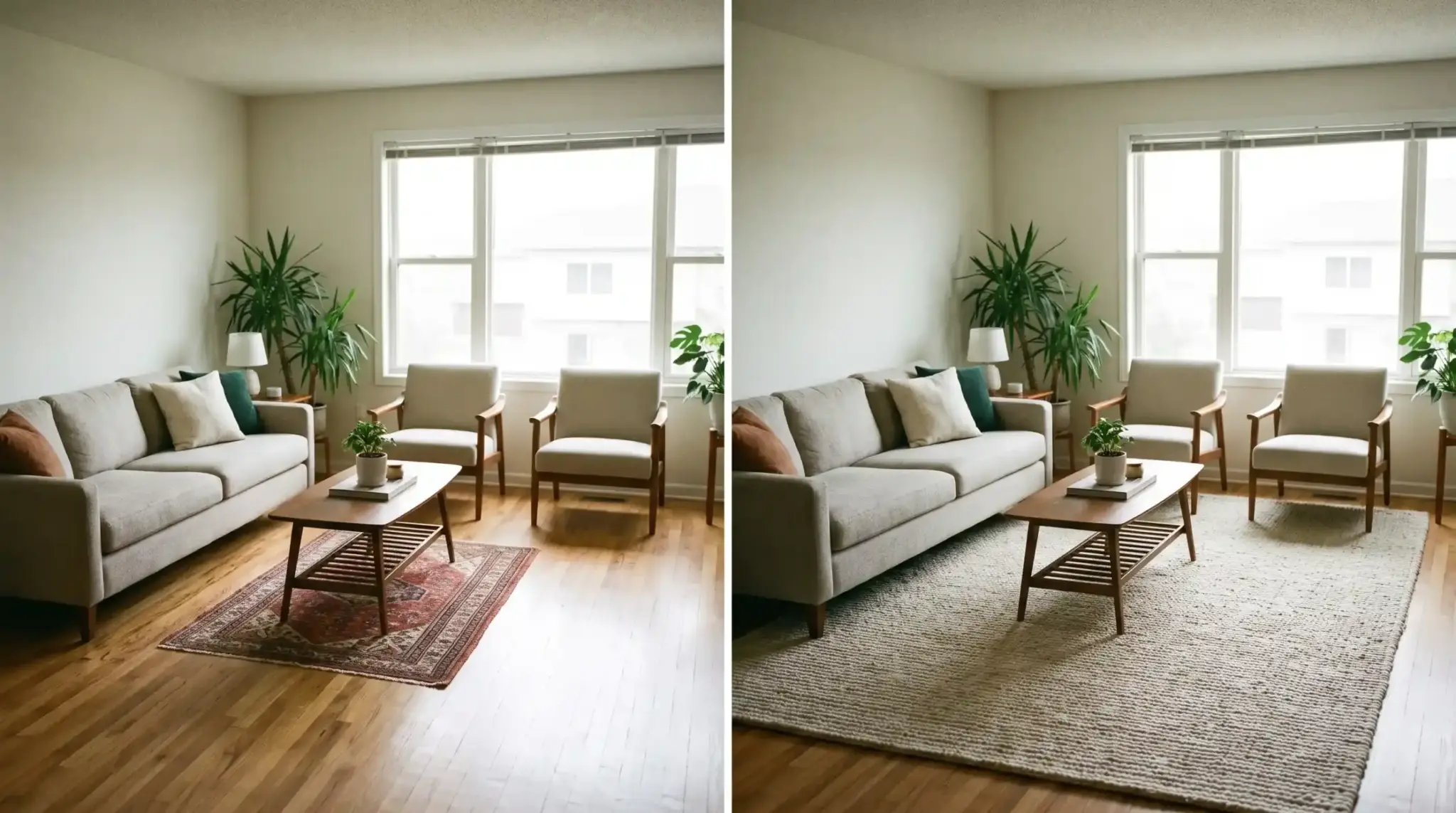
A small rug in the center of a small living room fragments the floor and makes the seating zone feel cramped.
The front legs of every seating piece should sit on the rug. Not all four legs, just the front two. This ties the arrangement together and makes everything feel intentional.
Choosing the right living room rug size is just as important as the placement, since both affect how connected and spacious the seating area feels.
For a standard US apartment living room, an 8 x 10-foot rug is the minimum.
A 9 x 12 is better. Keep the pattern low-contrast or solid. A loud, busy pattern adds visual noise that reads as clutter.
6. Layer Your Lighting
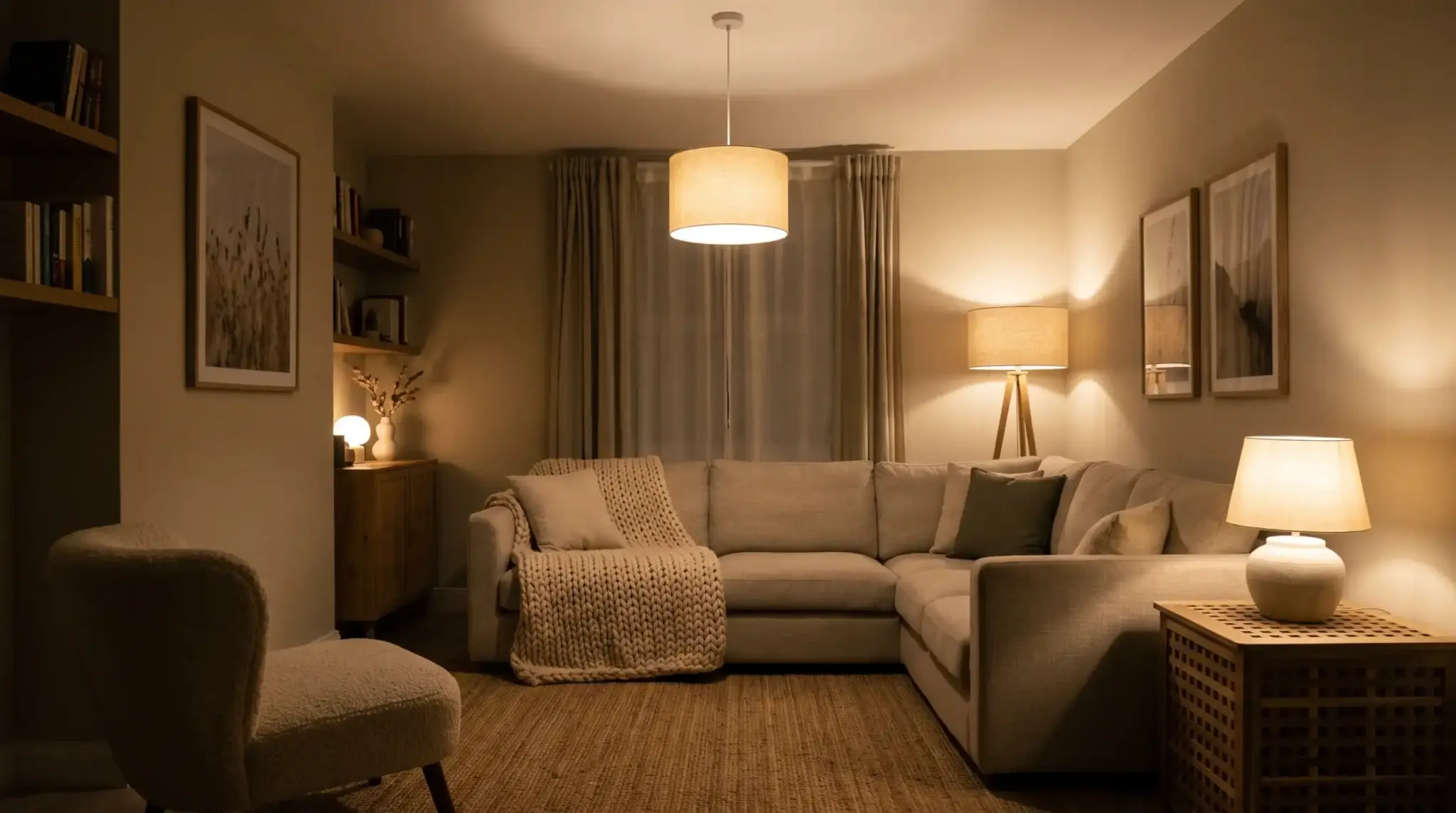
Poor lighting makes small rooms feel tight and dingy. The formula: one overhead source, one floor lamp, one table lamp at different heights across the room.
Dark corners are the enemy. A floor lamp in a dim corner does more for perceived room size than most decorative choices.
Stick to warm white bulbs at 2700K-3000K. Cool, bright light above 4000K can make a small room feel institutional.
You want a space that feels good to sit in, not one that just looks large on a floor plan.
7. Use Vertical Space to Pull the Eye Up
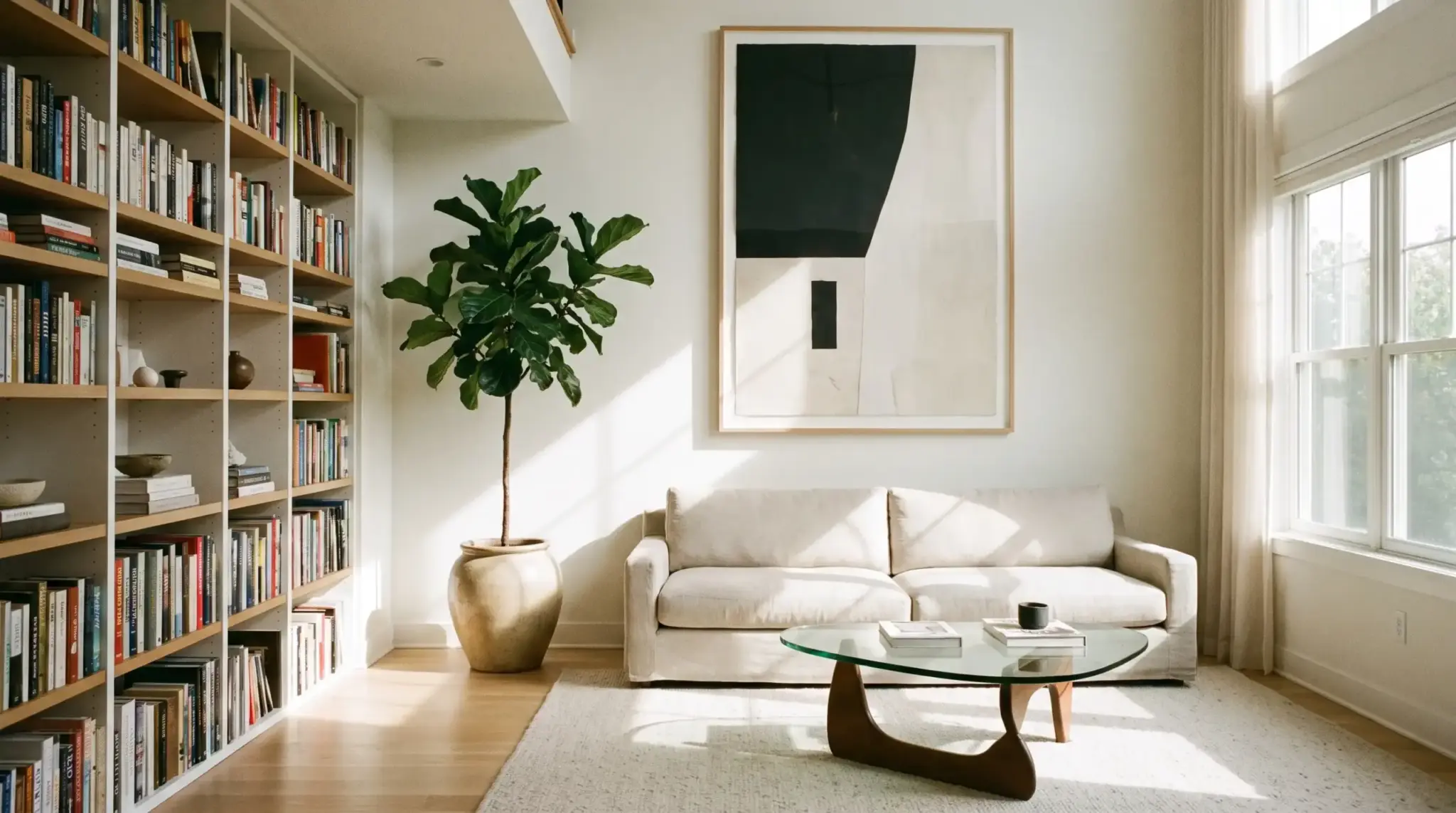
Small rooms flatten visually when everything sits at the same height. Floor-to-ceiling bookshelves are one of the best fixes.
A tall plant anchors a corner and adds height without taking up floor space. For art, hang it in the upper half of the wall rather than at eye level.
Art hung high signals the ceiling height to the brain. Wide, horizontal art hung low cuts the wall and makes the room feel squatter.
8. Choose Furniture With Visible Legs
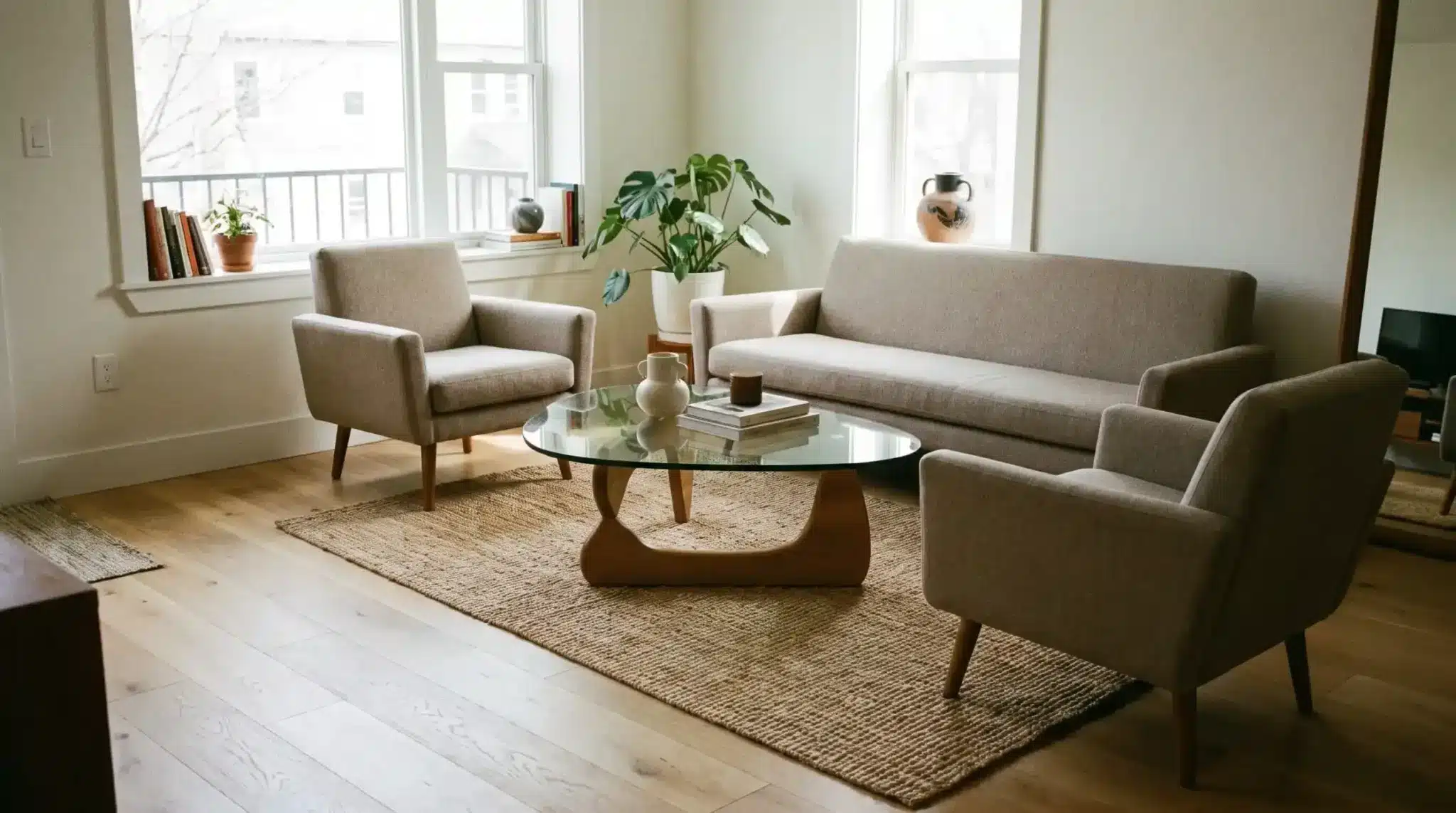
Floor-touching sofas close off the visual floor. Furniture with legs, even just 4 to 6 inches off the ground, lets the eye travel beneath pieces and makes the room read as more open.
This is part of why mid-century modern furniture works so well in small apartments. Glass and acrylic coffee tables take up physical space but almost no visual space.
9. Create One Clear Focal Point
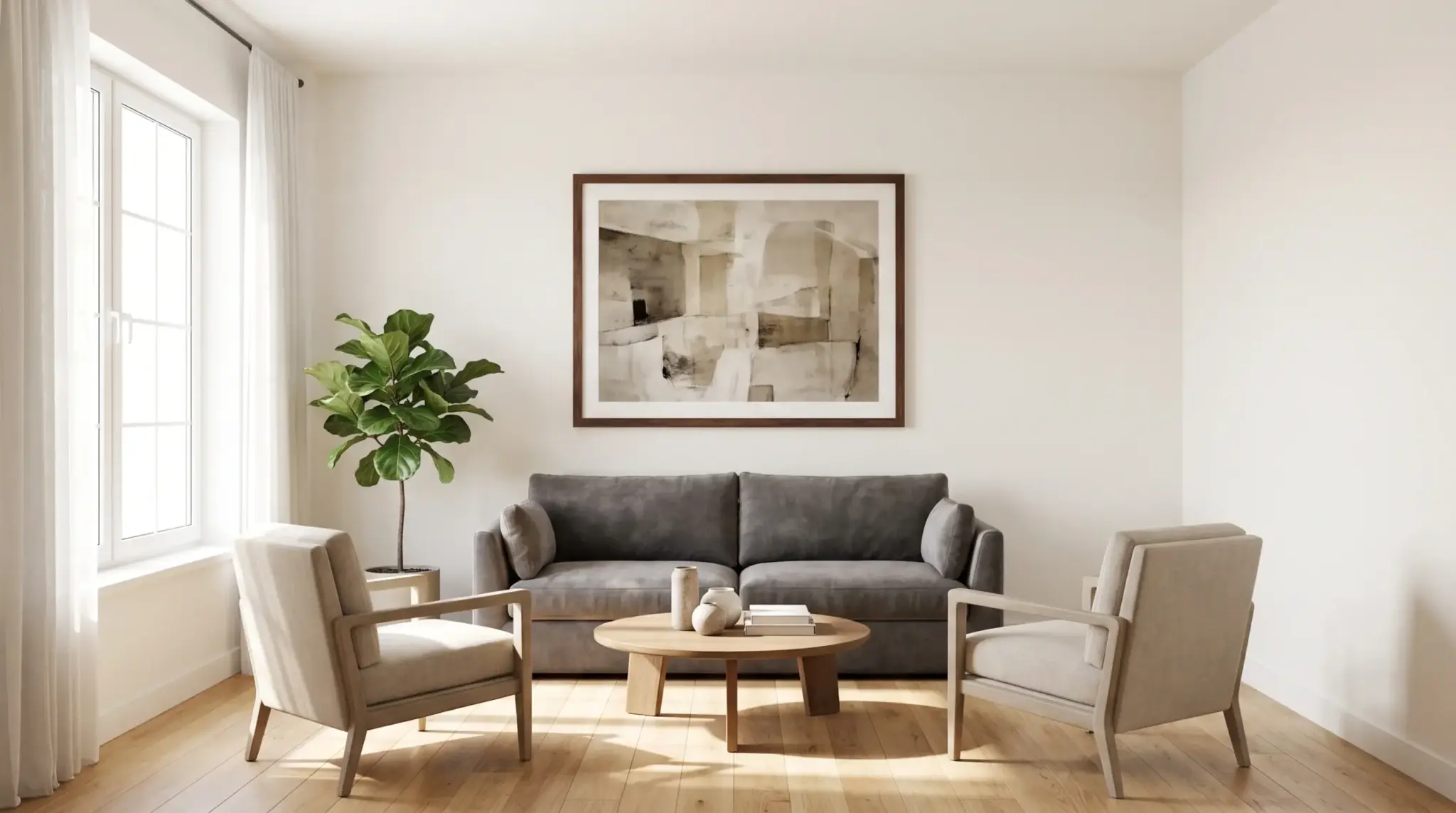
A small room with too many competing focal points feels chaotic.
Pick one: a fireplace, a TV wall, a large piece of artwork, or a statement sofa. Then arrange everything else to support it.
The most common mistake I see is a TV wall on one side and a gallery wall directly opposite.
Both compete for attention at the same time. One needs to stand down. A cleaner wall almost always wins in a small living room.
10. Edit Ruthlessly
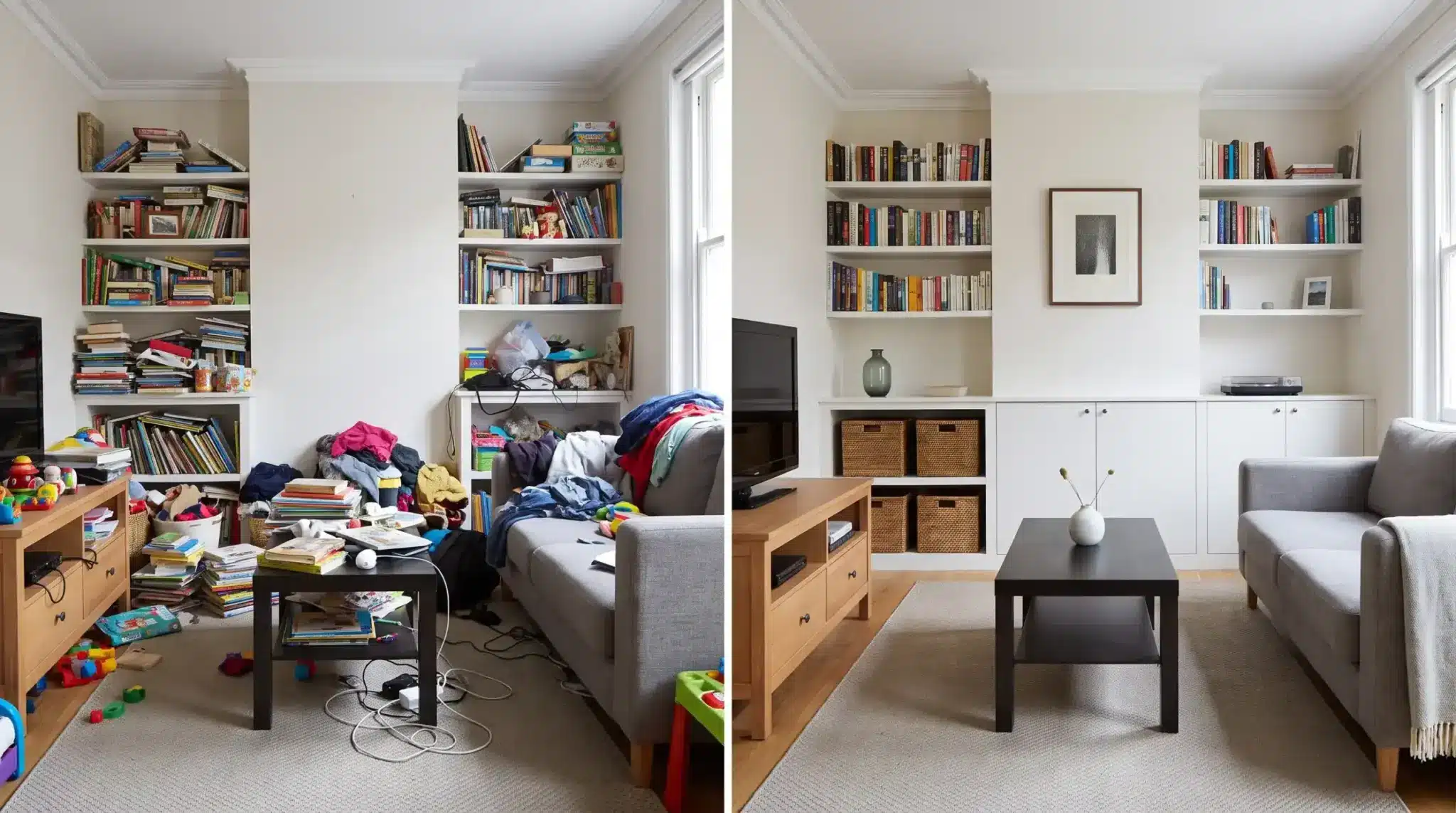
A small room with less in it almost always feels bigger than one working overtime to hold everything you own.
Pull one piece out at a time and live with the room for a few days before deciding. Half the time, you will not miss it.
The goal is not a bare room. It is a room where every item has a reason to be there.
Baskets, storage ottomans, and wall shelves hold the practical stuff while keeping surfaces clear. Clear surfaces add more perceived space than almost anything else on this list.
Conclusion
The room you have is probably fine as it is. Better decisions about the space you already have matter more than adding square footage.
Start with the layout. Pull the furniture off the walls and see how the room breathes before you buy or change anything. Then deal with light.
Then mirrors and curtains. Decorative choices come last.
I’ve made every mistake on this list in my own living room, some of them more than once. The rearrangements weren’t wasted. They taught me that a room doesn’t need to be bigger to feel right.
Have you tried any of these in your own space? Drop a comment below. I want to know which one surprised you most.
Frequently Asked Questions
Should I use a small rug in a small living room?
No. A rug that’s too small fragments the floor. Aim for at least 8 x 10 feet so the front legs of every seating piece rest on it.
Does furniture with visible legs make a room look bigger?
Yes. Legs let the eye travel under furniture, showing more floor and making the room read as more open than floor-touching pieces.
How high should curtains be hung in a small living room?
Mount the rod 4 to 6 inches below the ceiling and extend it 6 to 12 inches past the window frame on each side.