To keep wasps away, remove what draws them and add scents they hate. Clear food, sweet drinks, and open trash, then seal the cracks where they nest. Hang clove or peppermint oil near your seating and plant mint or marigold close by. Skip the myths, stay consistent, and call a pro for a large nest.
I get a text almost every summer: someone wants to know how to keep wasps away before their cookout gets crashed again.
Wasps show up for patios, pools, and cookouts every summer, and a sting from one actually hurts. Getting them off your turf does not mean soaking your yard in poison.
I keep bees in my backyard, so I care about methods that knock out wasps without hurting the bees working the same flowers. Some of this is what I use myself. The rest comes from a 2013 bait-trial study on which scents actually make wasps back off.
This post covers the smells wasps hate, which plants help, cleanup habits that matter most, and a few popular hacks not worth your time.
Why Wasps Keep Crashing Your Yard
Before you fight back, know what pulls them in. Wasps want three things from your space.
1. Food: They love sugar and protein. Fallen fruit, spilled soda, meat on the grill, and pet food all ring the dinner bell. A single sticky can draw them from feet away.
2. Water: Wasps drink and build with water. Birdbaths, pool edges, dripping taps, and plant saucers all serve as watering holes.
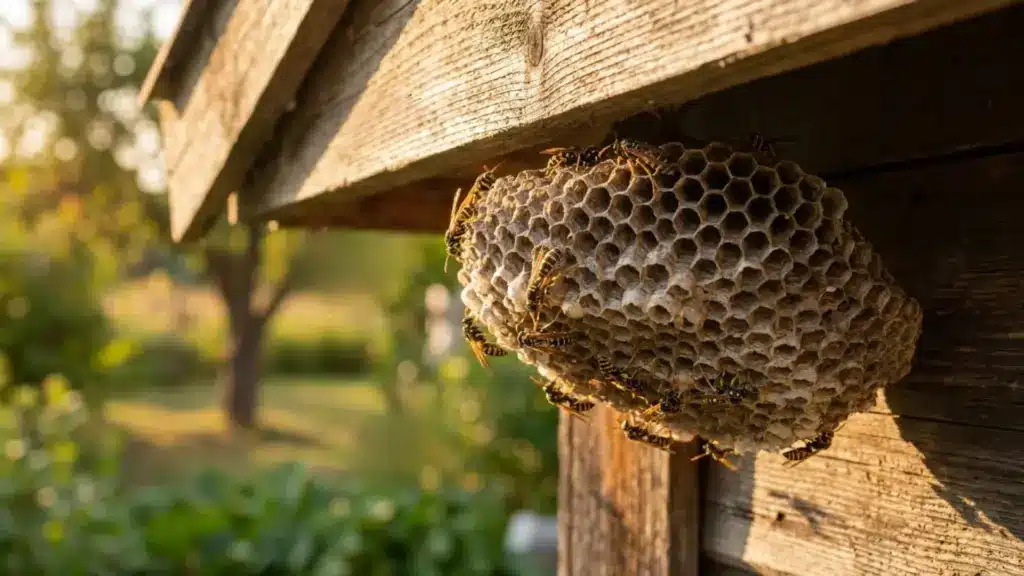
3. Shelter: Once fed, a queen hunts for a spot to nest. Eaves, wall gaps, sheds, and deck corners make snug homes.
Take away these draws, and you make your yard a bad address. That is the base of every method here.
Smells Wasps Cannot Stand
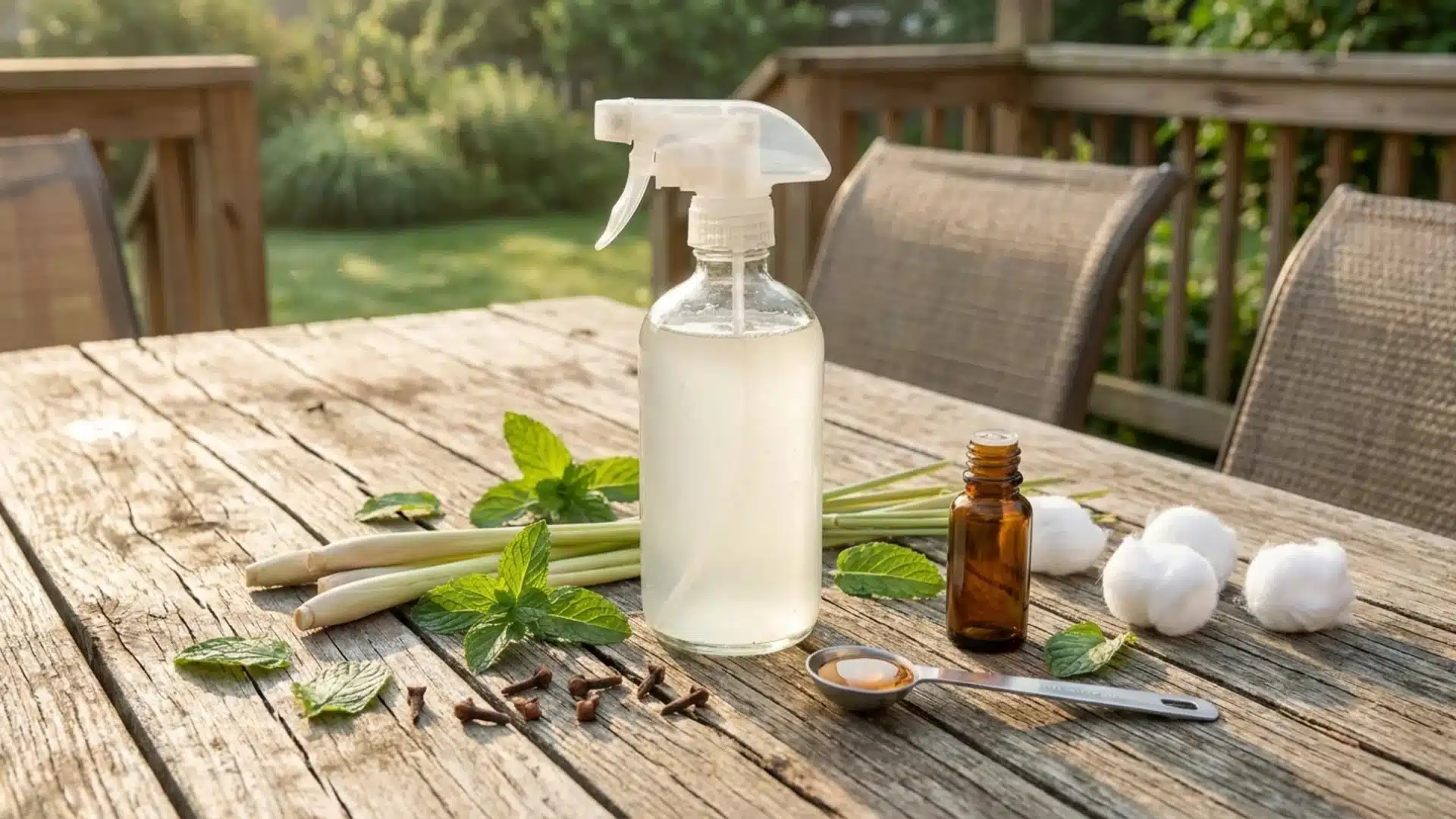
Wasps read the world through scent, so strong smells throw them off. This is one of the friendliest ways to keep wasps away without harming them.
Peppermint, clove, and lemongrass top the list. A 2013 study found that a mixture of clove, geranium, and lemongrass oils almost completely prevented wasps from landing on bait. Clove, on its own, cut wasp visits by around 95 percent in the same research.
Here is a simple spray you can make at home:
- Add 10-15 drops of clove, peppermint, or lemongrass oil to a spray bottle.
- Fill with water and a small squirt of dish soap.
- Shake well and spray around eaves, railings, and table legs.
Soak a few cotton balls in the same mix and tuck them near your chairs. I keep a bottle of this mixed and ready on my own porch all summer.
One catch: the scent fades. Reapply every few days, or after rain.
Tested vs. Skip: Popular Wasp Hacks
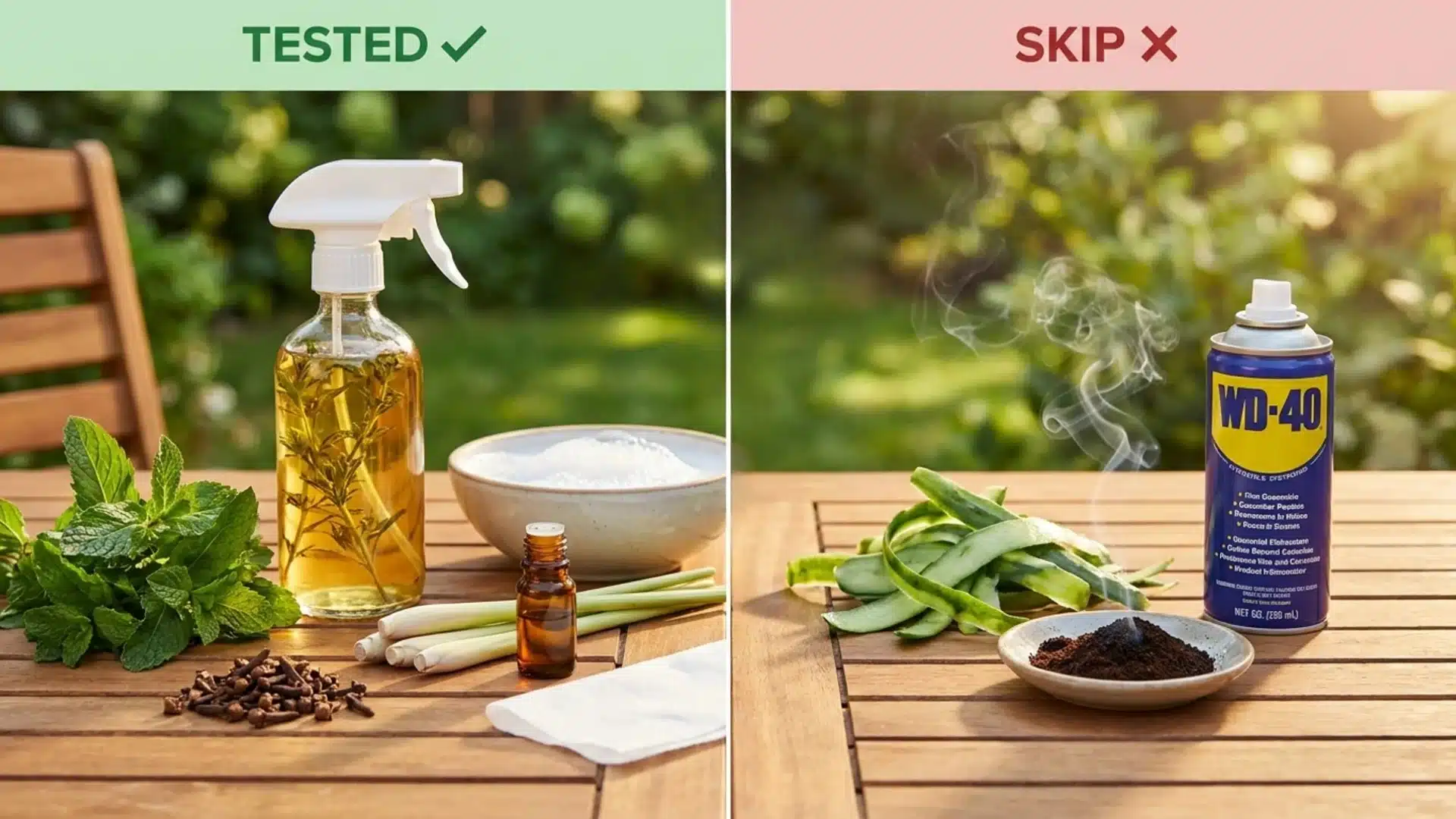
Here is a straight take on which ones pull their weight and which ones just sound good.
Worth trying:
- Scented oil sprays
- Dish soap and water on a lone wasp
- Dryer sheets
Mostly folklore:
- Cucumber peels
- Coffee grounds burned in a dish
- WD-40 on eaves
If a hack has no science behind it, treat it as a bonus, not your main plan.
The Fake Nest Trick for Wasps
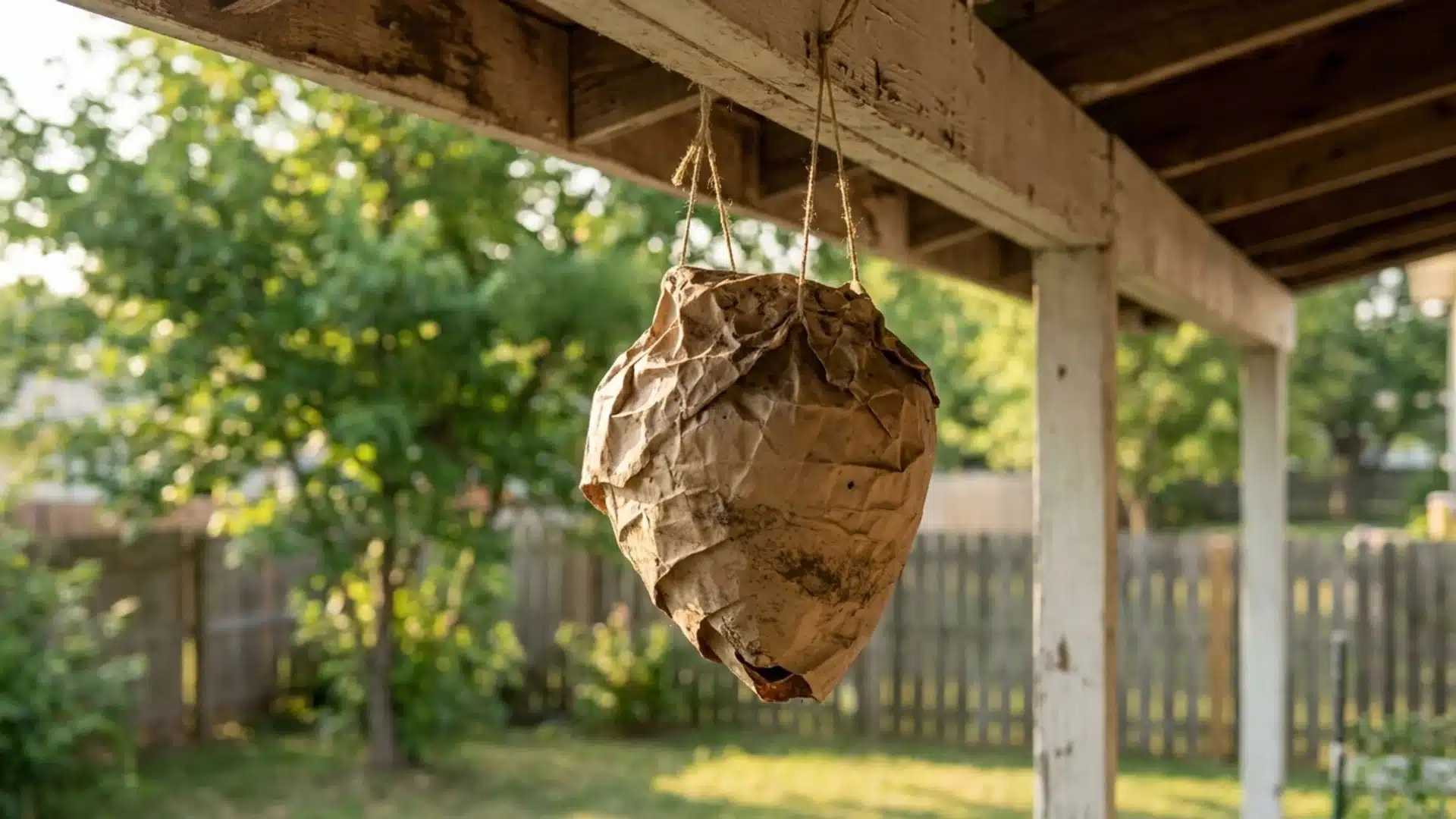
Hang a crumpled brown paper bag, so wasps think a rival nest lives there and move on. Does it work? The answer is messy.
Some wasps, like paper wasps, avoid building near other nests, so the idea has a real basis. But USA Today fact-checked it and rated it false as a reliable fix. Entomologists are split on it, and I stay doubtful too.
Two problems stand out. First, a bag carries no wasp scent, so up close it fools no one. Second, wasps chew paper to build nests, so a paper bag may hand them free supplies. Some pest pros suggest a plastic decoy instead.
If you still want to test it, timing beats everything. Hang it in early spring before queens settle. Place it in a sheltered, visible spot. Treat it as one small tool, not a shield.
Keep Wasps Away Before They Settle In
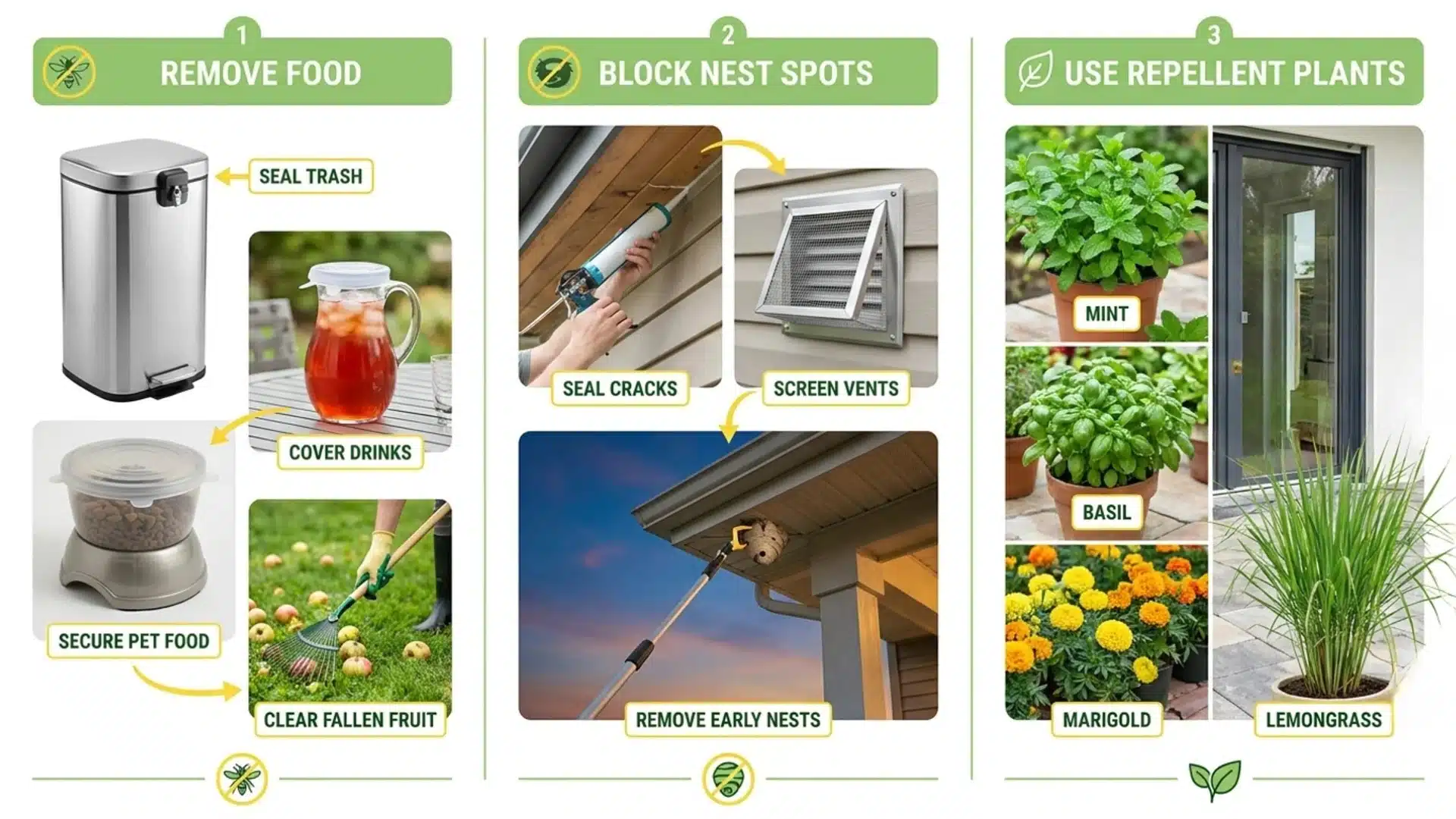
Prevention beats reaction, so remove the food, shelter, and comfort wasps seek.
Start with food, since it matters most. Bin leftovers right after eating, use trash cans with tight lids, rake up fallen fruit, bring pet bowls indoors, and cover sweet drinks at cookouts. The same mess that pulls in wasps is exactly what draws ants into your kitchen, so cleaning it up solves two problems at once.
Next, close their nesting spots. In spring, fill cracks in eaves, siding, and door trim with caulk, and screen off vents and chimneys. If you spot a new nest the size of a golf ball, knock it down in the evening when wasps rest.
Finally, let plants do some work. Mint, basil, marigold, and lemongrass all give off scents wasps dislike, and marigold’s pest-deterring reputation carries over from the vegetable garden. Grow them in pots near patios and doors, and move them to cover new trouble spots.
When to Call a Pro: Some jobs need a specialist. Call one if the nest is large, tucked in a wall or roof, or beside a door you use daily.
Common Mistakes That Keep Wasps Coming Back
Even good habits fall flat when you slip up in small ways.
- Waiting until wasps swarm before you act: By late summer, a colony is large and stubborn. The fixes here work best in early spring, before a queen ever picks your eaves.
- Spraying once and quitting: Scented oils fade fast, so one round buys you at most a day. Set a reminder to recoat every few days and after every rain.
- Wearing bright colors or sweet perfume: Yellows, florals, and fruity body sprays all read as flowers to a wasp. Go for plain, light clothing when you sit outside.
- Going after a nest at midday: Wasps are awake, hot, and quick to sting in full sun. Handle any nest at dusk or dawn, when they slow down and stay home.
- Trusting myths as your whole defense: Cucumber peels and burnt coffee grounds may help a little, but they fold under a real colony. Keep them as extras, not your plan.
- Placing traps next to your seating: A trap draws wasps in, so parking one by your chairs pulls them right at you. Set traps at the far edge of your yard instead.
Keep Your Patio Wasp-Free All Summer
Keeping wasps off your patio comes down to a few steady habits: cut their food and water, close their nesting gaps, and lean on the smells they can’t stand.
Test the hacks that actually hold up, like scented sprays, and skip the ones built on folklore. Save the fake nest trick for early spring, if you try it at all, and call a pro the moment a nest gets bigger than a golf ball or sits near a door you use daily.
Once your patio’s sorted, the next pest worth tackling is whatever’s chewing on your houseplants.
Which trick will you try first? Tell me in the comments.
Frequently Asked Questions
How Do I Keep Wasps Off My Porch?
Remove their food sources first. Seal trash cans, clean up spills fast, and take pet food inside once your pet is done eating.
Do Dryer Sheets Repel Wasps?
Many people, including mail carriers, say the strong synthetic scent in dryer sheets can deter wasps from nesting in mailboxes, though no lab study confirms it.
Do Coffee Grounds Repel Wasps?
Not reliably. Burning coffee grounds may create smoke that irritates wasps briefly, but no research backs it as a dependable repellent.