I bought my first pothos on a whim at a grocery store checkout line seven years ago. It sat on a shelf next to the flowers, three dollars, no fuss.
That one plant is the reason I now have more than 70 plants crammed into my Portland apartment.
The pothos plant benefits people talk about are real: cleaner air, lower stress, more humidity in dry rooms, and near-zero effort.
It multiplies for free once you get comfortable with basic plant propagation, and it fits into almost any corner of a home.
It works in low-light corners where other plants give up. It costs very little, lasts for years, and asks for almost nothing in return.
This post covers what pothos does for a home, the most popular types to grow, and the care habits that keep mine thriving year-round.
What Is the Pothos Plant?
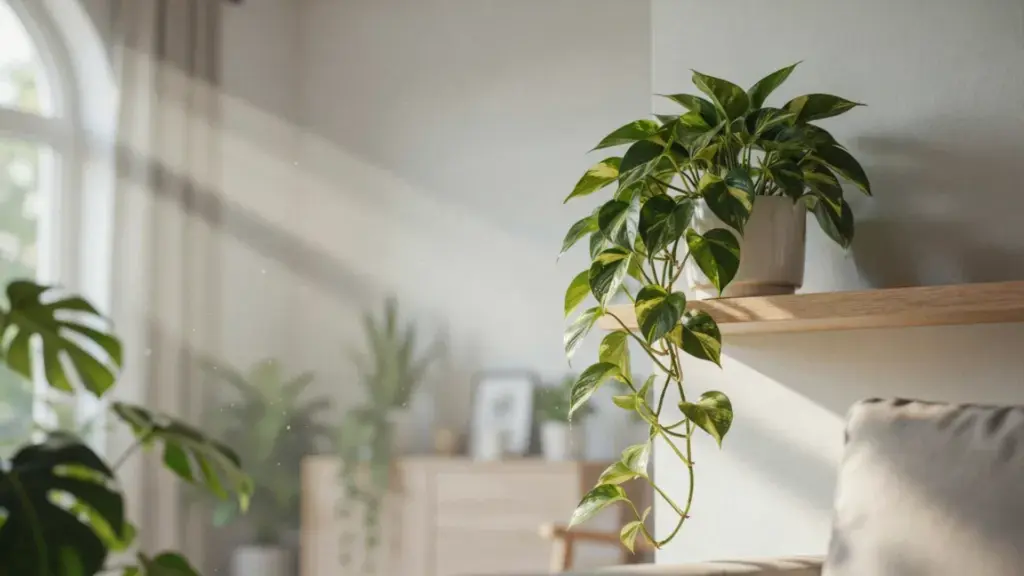
Pothos is a tropical vine native to the Solomon Islands. You have probably seen it trailing from shelves or hanging in office lobbies. It goes by several names: Devil’s Ivy, Money Plant, and Golden Pothos are the most common.
It earned the nickname Devil’s Ivy for one reason. It refuses to die even in low-light, low-water conditions.
The heart-shaped leaves come in green, gold, white, and silver depending on the variety. In the wild, it climbs trees and can reach up to 20 feet.
Indoors, it stays manageable. Outdoors, it thrives in USDA hardiness zones 10 to 12.
12 Pothos Plant Benefits You Will Actually Notice
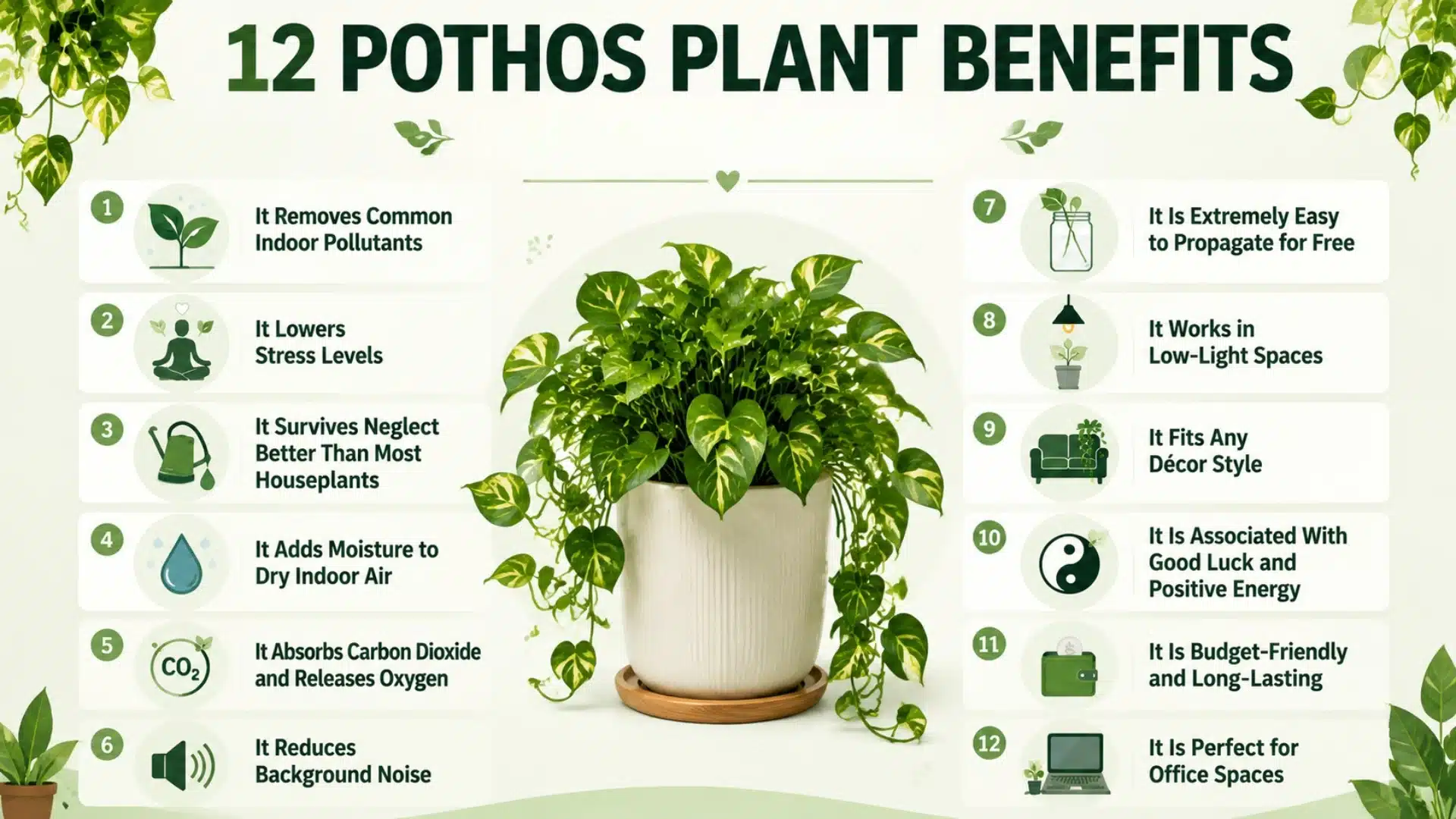
Most houseplants do one thing well. Mine do several, and I notice the difference without doing much at all.
1. It Removes Common Indoor Pollutants
This is the most researched benefit of the pothos plant. NASA’s Clean Air Study rated pothos in the top three houseplants for removing volatile organic compounds from indoor air.
It targets benzene, formaldehyde, carbon monoxide, and xylene, pollutants that build up from furniture, paint, cleaning products, and car exhaust.
A peer-reviewed study found that golden pothos breaks down formaldehyde 1.5 times faster than peace lily.
One honest note: you would need far more plants than most homes can hold to match the results NASA saw under sealed lab conditions. Still, even a few well-placed pothos in a small room make a real difference.
2. It Lowers Stress Levels
One controlled trial recorded a 42% average drop in salivary cortisol, the stress hormone your body produces, after just 15 minutes with a pothos plant nearby.
A UK study testing eight houseplant species found that golden pothos ranked among the top three for boosting overall well-being.
Participants reported that lush, leafy plants with dense canopies, exactly what pothos looks like, gave the biggest mental lift.
Caring for a plant also builds a calm daily routine. That small act of watering and checking on your plant gives your brain a genuine break.
3. It Survives Neglect Better Than Most Houseplants
Pothos handles missed waterings, dim corners, dry indoor air, and inconsistent care without complaint. I’ve gone three weeks without watering mine during a busy stretch and it barely noticed.
That kind of tolerance is what makes pothos care so forgiving for beginners and busy people alike.
Neglect does have a limit, though. Yellowing leaves or sudden leaf drop are early signals that your plant needs attention.
Overwatering, low light, and root-bound roots are the most common reasons why pothos leaves turn yellow, and fixing the cause early usually takes just a few minutes.
The good news is that these signs show up before any real damage is done. A little water and a move to better light usually solve it.
4. It Adds Moisture to Dry Indoor Air
Pothos releases water into the air through a process called transpiration. A large plant can release 13 to 17 fluid ounces of water a day into your space.
In winter, when indoor humidity often drops below 20%, this is genuinely useful. Dry air causes scratchy throats, dry skin, and sinus issues. A few pothos plants in a room can take the edge off without running a humidifier.
5. It Absorbs Carbon Dioxide and Releases Oxygen
Pothos has one of the higher CO₂ conversion rates among common houseplants. One controlled experiment showed a 6.5% reduction in CO₂ in a closed room. The CO₂ content dropped from 454 ppm to 425 ppm, resulting in higher oxygen levels.
Pothos roots also absorb CO₂ from water, which is why many people place cuttings in fish tanks. The roots oxygenate the water, which helps fish.
6. It Reduces Background Noise
This one surprises most people. The stems and broad leaves of pothos absorb sound waves, which softens echo and ambient noise in a room. Open-plan spaces, home offices with hard floors, and rooms with high ceilings benefit most from this.
It is a real and practical reason to place pothos in a busy room.
7. It Is Extremely Easy to Propagate for Free
Pothos is one of the easiest plants to multiply at home. You do not need rooting powder, special soil, or any equipment.
Cut a vine just below a node, drop the cutting into a jar of clean water, and change the water every few days.
Roots show up in two to three weeks. I’ve built entire shelves out of cuttings this way, and propagating pothos in water is close to foolproof once you have done it once.
This means you can fill a home with more plants at no extra cost and still have enough left over to share with friends.
8. It Works in Low-Light Spaces
Most houseplants need bright, indirect light to do well. Pothos tolerates genuinely dim conditions: dark corners, windowless bathrooms, office desks far from any window.
That flexibility is a big part of why it shows up on every list of easy houseplants for beginners.
Light levels do affect the leaves. Less light means slower growth and less variegation, but the plant stays green and alive even in a rough spot.
9. It Fits Any Decor Style
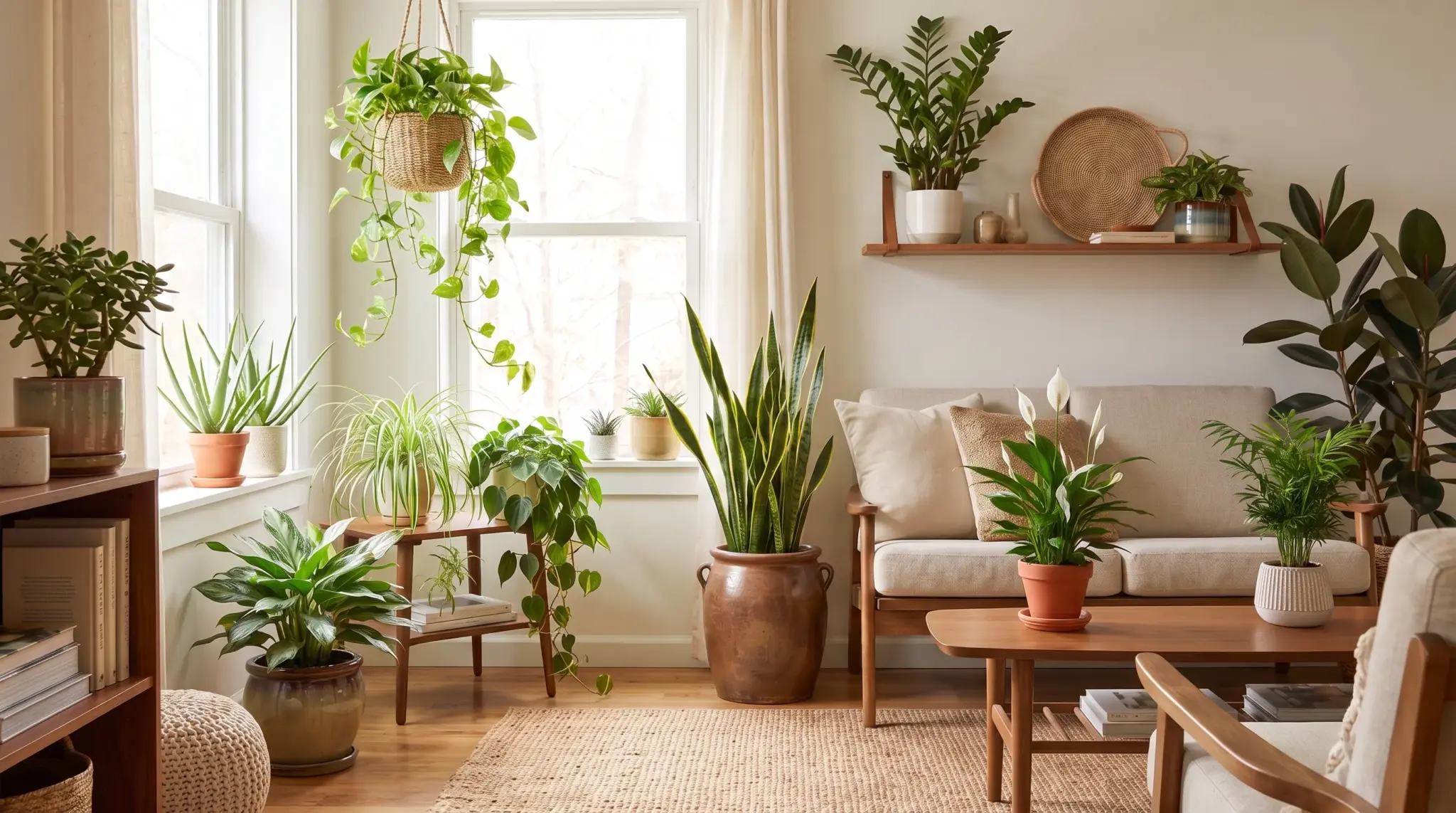
Pothos works in hanging baskets, on bookshelves with trailing vines, climbing a moss pole, or sitting in a simple pot on a desk. The variety of leaf patterns, green and gold, white and green, solid dark green, and bright lime, means there is a type to match almost any interior.
10. It Is Associated With Good Luck and Positive Energy
In Feng Shui, pothos is placed in the southeast or east corner of a room to attract wealth energy and push out negativity. The heart-shaped leaves of golden pothos represent growth, abundance, and renewal.
In many Asian cultures, the pothos is also called the Money Plant and is believed to bring prosperity to the home.
11. It Is Budget-Friendly and Long-Lasting
Pothos is one of the most affordable houseplants you can buy. It propagates freely, lives for years with basic care, and only needs repotting every 1 to 2 years.
There are very few plants that offer this much value for such little cost.
12. It Is Perfect for Office Spaces
A Wageningen University study found that employees in workplaces with indoor plants reported higher job satisfaction and better focus.
Pothos specifically tolerates office lighting, fluorescent or LED, with limited natural light, better than most plants. It fits on a desk, a filing cabinet, or a windowsill with ease.
Popular Types of Pothos
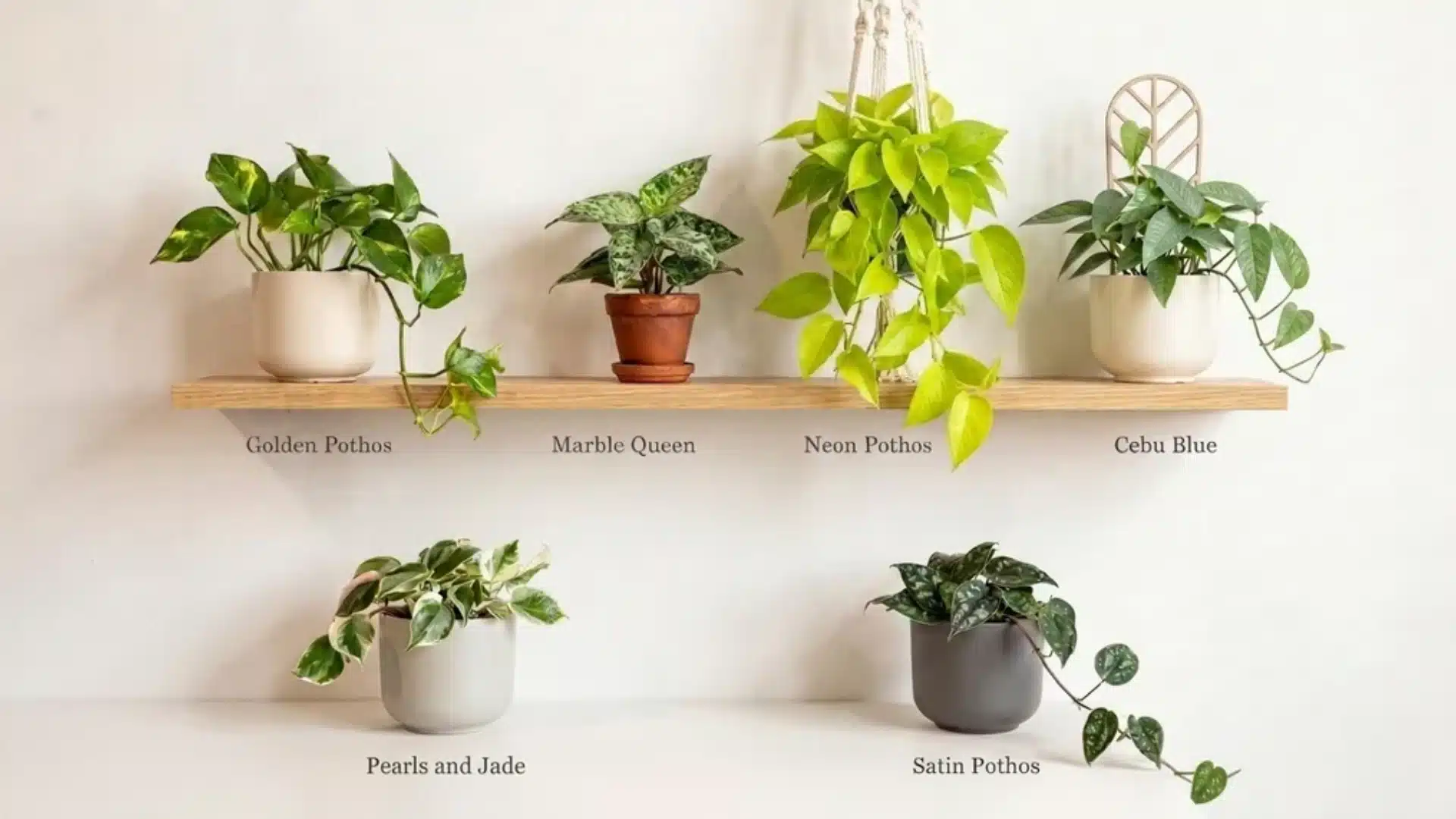
All pothos varieties share the same easy-care traits. The main difference is appearance.
- Golden Pothos: Green leaves with golden-yellow variegation. The most common and beginner-friendly type.
- Marble Queen: White and green marbled leaves. Prefers bright indirect light to hold its variegation.
- Neon Pothos: Bright lime-green leaves. Bold color choice for any room.
- Jade Pothos: Solid dark green. Ideal for minimalist spaces and offices.
- Pearls and Jade: Green, white, and grey variegation. Good for lower-light spots.
- Cebu Blue: Bluish-green with a shimmer. Works well in tropical-style spaces.
- Satin Pothos: Dark green with silver spots. Strong visual contrast on any shelf.
Basic Pothos Care Tips
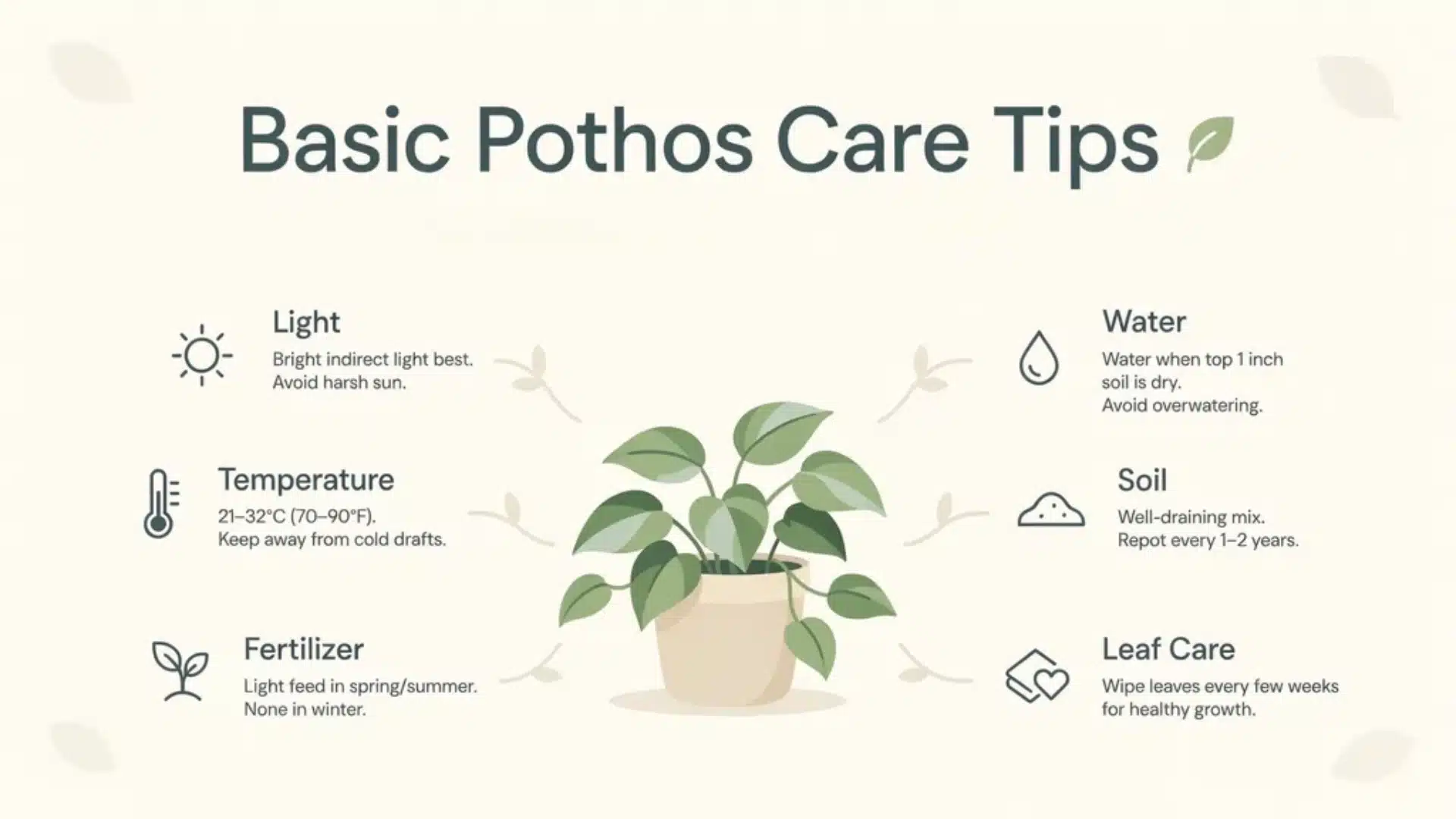
Pothos is forgiving, but these six habits are what keep every pothos on my shelves looking good year-round.
1. Light: Bright, indirect light is best. Low light is tolerated. Direct sun scorches the leaves.
2. Water: Let the top inch of soil dry out before watering. Overwatering causes root rot and yellow leaves, the most common care mistake.
3. Temperature: 70 to 90°F (21 to 32°C). Keep away from cold drafts.
4. Soil: Use well-draining potting mix. Repot every one to two years.
5. Fertilizer: Light feeding during spring and summer. Nothing needed in winter.
6. Leaf care: Wipe leaves with a damp cloth every few weeks. Dust blocks light and slows growth.
One Important Warning: Pothos Is Toxic to Pets and Children
Pothos contains insoluble calcium oxalate crystals in its leaves and stems.
If a cat, dog, or young child chews on the plant, these crystals cause immediate oral irritation, drooling, vomiting, and difficulty swallowing. In rare cases, liver or kidney damage can occur in pets.
If your pet ingests pothos, call your vet or ASPCA Poison Control at (888) 426-4435.
To keep pothos safely in a home with pets or children:
- Place it on high shelves or in hanging baskets out of reach
- Use hooks or clips to train vines upward and away from the floor
- Keep the plant in a room pets cannot enter
Why I Keep Adding More Pothos to My Shelves
Pothos earns its spot for reasons that go past looks. It works in the dim corner nobody else wants, multiplies without effort, and quietly does a handful of useful things while it climbs.
Mine started as one three-dollar grocery store plant. Seven years later, it’s one of the easiest reasons my apartment stays green through a gray Portland winter.
If yours ever starts dropping leaves or turning yellow, the fix is almost always small. Which type of pothos are you starting with? Drop it in the comments.
Frequently Asked Questions
Is It Safe to Touch a Pothos Plant?
Yes, touching an intact pothos is safe for most people. The risk comes from chewing the leaves, not brushing against them. Wash your hands after pruning, just to be safe.
What Do Coffee Grounds Do for Pothos?
Coffee grounds add a small boost of nitrogen and can help pothos grow lush and green, but too much turns the soil acidic. Use sparingly.
What Is the Lifespan of a Pothos Plant?
Pothos plants live an average of 5 to 10 years. With consistent, minimal care, mine have lasted well past that.
Where Should I Put a Pothos Plant in My House?
Anywhere with bright, indirect light works best, though pothos also tolerates low-light spots like bathrooms, hallways, and office desks away from windows.
Is a Pothos Plant Considered Lucky?
In Feng Shui, pothos is linked to wealth and growth because of its heart-shaped leaves. Many households keep one near an entryway for that reason.