Quick answer
Why is my pothos turning yellow?
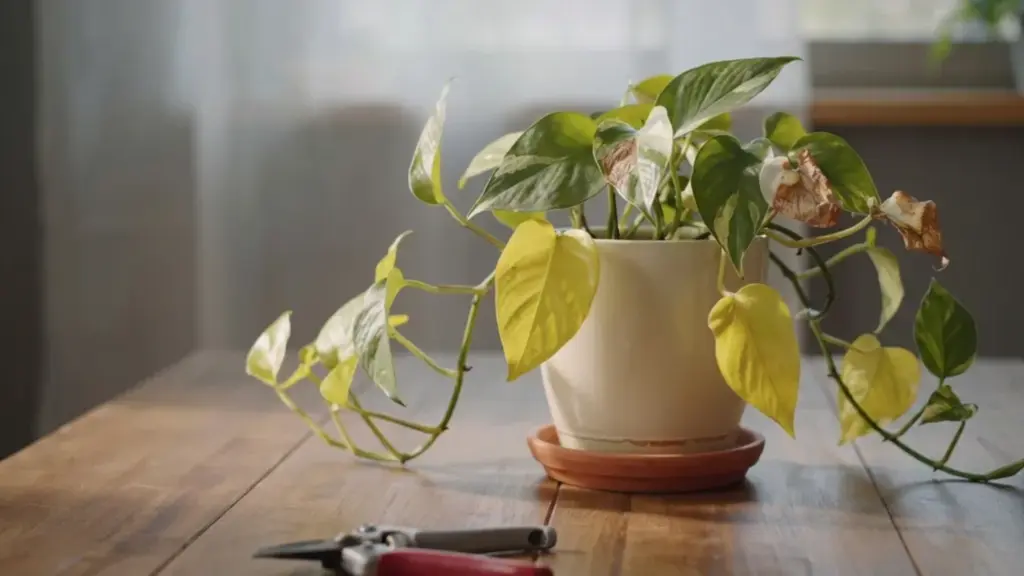
Overwatering is the most common cause of yellow pothos leaves: soggy soil deprives roots of oxygen and can cause rot. Check the soil an inch down first. If it is not too wet, consider underwatering, unsuitable light, low nutrients, mineral buildup, cold drafts, pests, or roots crowded in the pot.
Why is my pothos turning yellow? Most often the soil is staying too wet. Other causes are underwatering, wrong light, low nutrients, mineral buildup from tap water, cold drafts, pests, and a crowded pot. Check the soil an inch down first. A yellow leaf won't turn green again, so trim it.
The grocery store pothos that started my whole collection dropped three yellow leaves in one week. I did what every new plant parent does and watered it more.
The leaves kept yellowing. When I finally pulled it out of the pot, the roots were mushy and smelled sour.
So, why is my pothos turning yellow? A yellow leaf points at one unmet need, and we can find it by checking eight causes in order.
1. Overwatering Is the Most Common Cause
Overwatering is the first thing I check, and Clemson Extension lists it among the usual causes of yellow pothos leaves. Soggy soil starves the roots of oxygen, so they rot and can't feed the leaves. The leaves go yellow, soft, and droopy.
I push a finger an inch into the soil and lift the pot to feel if it's still heavy days later. A sour smell from the drainage holes means rot has started. I water by feel, the same way I handle watering my houseplants in general.
If the roots are soft and black, I do this:
Slide the plant out of its pot.
Cut away mushy roots with clean scissors.
Repot in fresh, well-draining mix.
Water only when the top inch is dry.
I only use pots with drainage holes (plant #1 learned that the hard way).
2. Too Little Water Does It Too
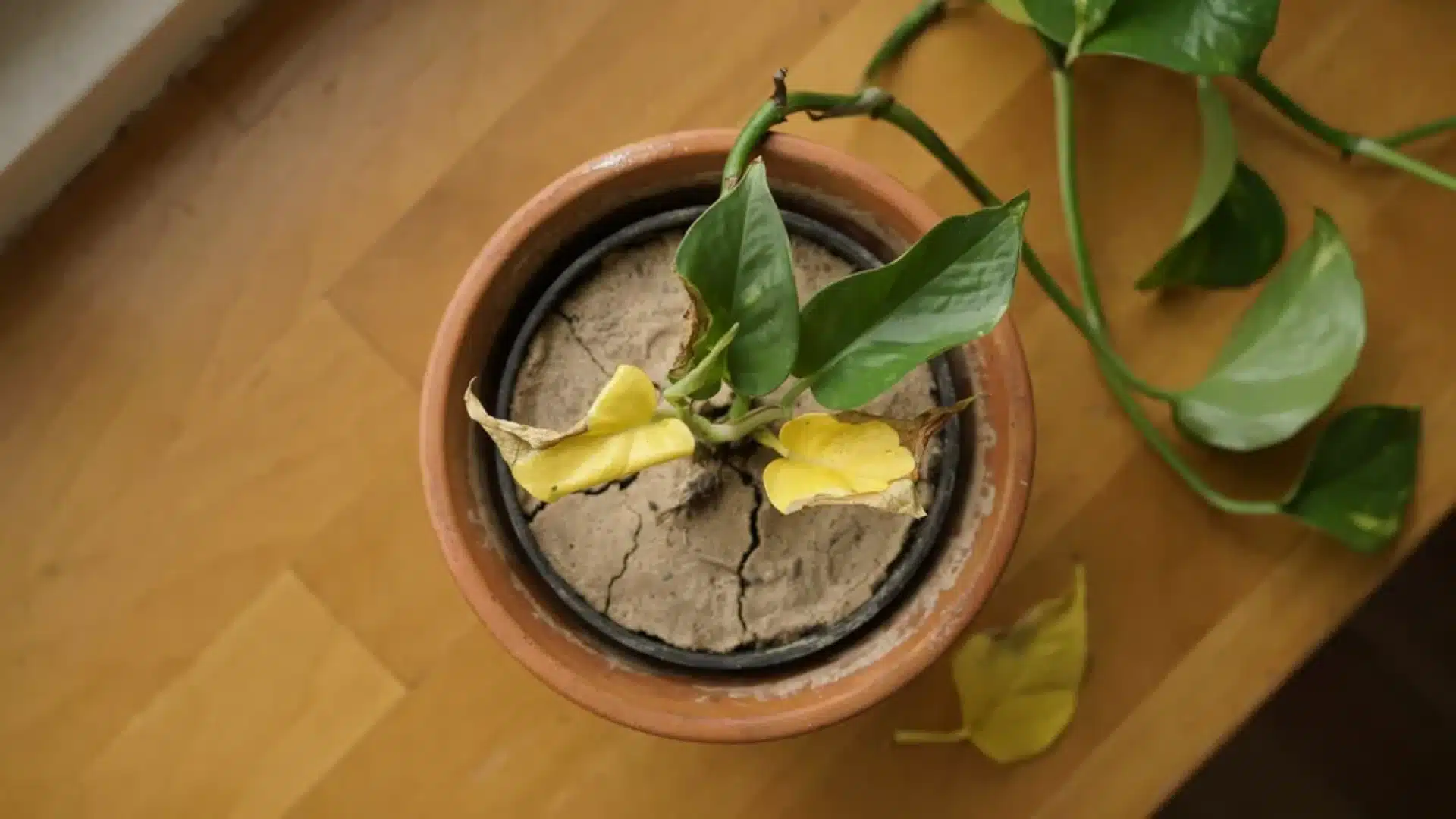
Soil that stays bone dry for too long makes the plant pull water out of its older leaves to protect new growth. Those leaves yellow from the tips and edges and feel crispy instead of soft.
I water until it runs out of the drainage holes, then check the soil once a week.
3. Light That Is Too Strong or Too Weak
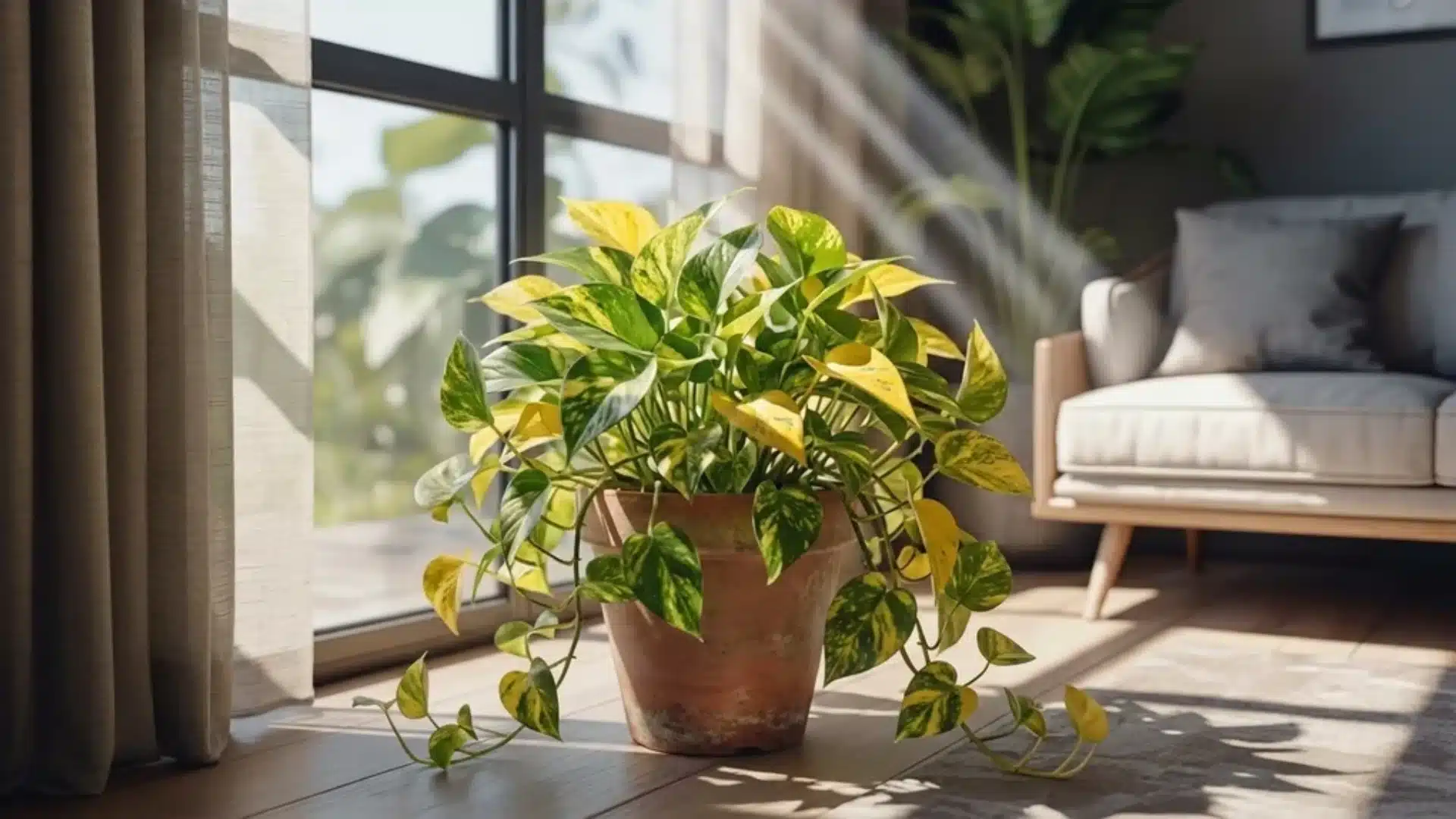
Direct sun through a south-facing window scorches leaves into yellow or white patches. I hang a sheer curtain in summer.
Too little light is just as hard. In my Portland apartment, January gray makes a vine in a dim corner drop its oldest leaves, since it can't feed them all. A sudden move from a bright spot to a dim room does the same thing faster.
A bright indirect spot near an east or north window suits most pothos.
4. Low Nutrients Pale the Whole Plant
Low fertility is the other usual cause Clemson Extension points to, and it shows as pale yellow across the whole plant, not just the bottom leaves (these are the usual signs of nutrient deficiency).
I feed with a balanced houseplant fertilizer every other month in spring and summer, per Clemson, and skip winter. Too much burns roots and yellows leaf edges, so if I overdo it I flush the pot with plain water.
5. Tap Water Can Build Up in the Soil
Tap water carries chlorine, fluoride, and minerals that build up in the soil over time. The result is pale yellow patches or browning edges with no watering mistake to explain them.
Filtered water or rainwater fixes this. Letting a can of tap water sit overnight lets chlorine escape, but not fluoride or chloramine.
6. Cold Drafts and Dry Heat
Pothos like steady warmth, roughly 65°F to 85°F. Cold air from a vent or drafty window can turn leaf edges yellow or black, and a radiator dries them to crispy brown tips.
7. Pests Drain the Leaves
Spider mites, mealybugs, and scale feed on leaf sap, so leaves go speckled and pale before turning yellow. I check undersides in bright light for webbing, sticky residue, or tiny moving specks.
I treat these like any of the bugs on indoor plants: isolate the plant, wipe every leaf with insecticidal soap or neem oil, and repeat every 5 to 7 days for 2 to 3 weeks.
8. A Crowded Pot Starves the Roots
When roots fill the pot, they compete for water and nutrients. Roots poking out of the drainage holes, soil that dries very fast, and a mat of circling roots all point here.
I move up to a pot 1 to 2 inches wider, since a much bigger one stays wet too long.
If the vines are healthy, I root a few cuttings by propagating pothos in water while the main plant recovers.
Will Yellow Pothos Leaves Turn Green Again?
No. A yellow leaf has already lost its chlorophyll. The one exception is a mild nutrient shortage caught early, which can sometimes stop a leaf that has only just started to change.
I trim yellow leaves with clean scissors so the plant puts its energy into new growth.
Pothos Forgive a Lot
Pothos bounce back faster than almost any plant I own, which is why I hand one to friends who swear they kill everything. A few yellow leaves are a small price, and the benefits of growing pothos make it worth the effort.
If one of these fixes worked for your plant, tell me in the comments.
Frequently Asked Questions
Why is my pothos turning yellow when the soil is dry?
Dry soil with yellow leaves usually means underwatering or a crowded pot. Water until it drains, then check the roots for crowding.
Should I remove yellow leaves from my pothos?
Yes. Trim fully yellow leaves with clean scissors so the plant sends its energy to new growth instead.
Can I propagate a pothos that has yellow leaves?
Yes, as long as the stem and nodes are healthy. Cut a green stem just below a node and root it in water.