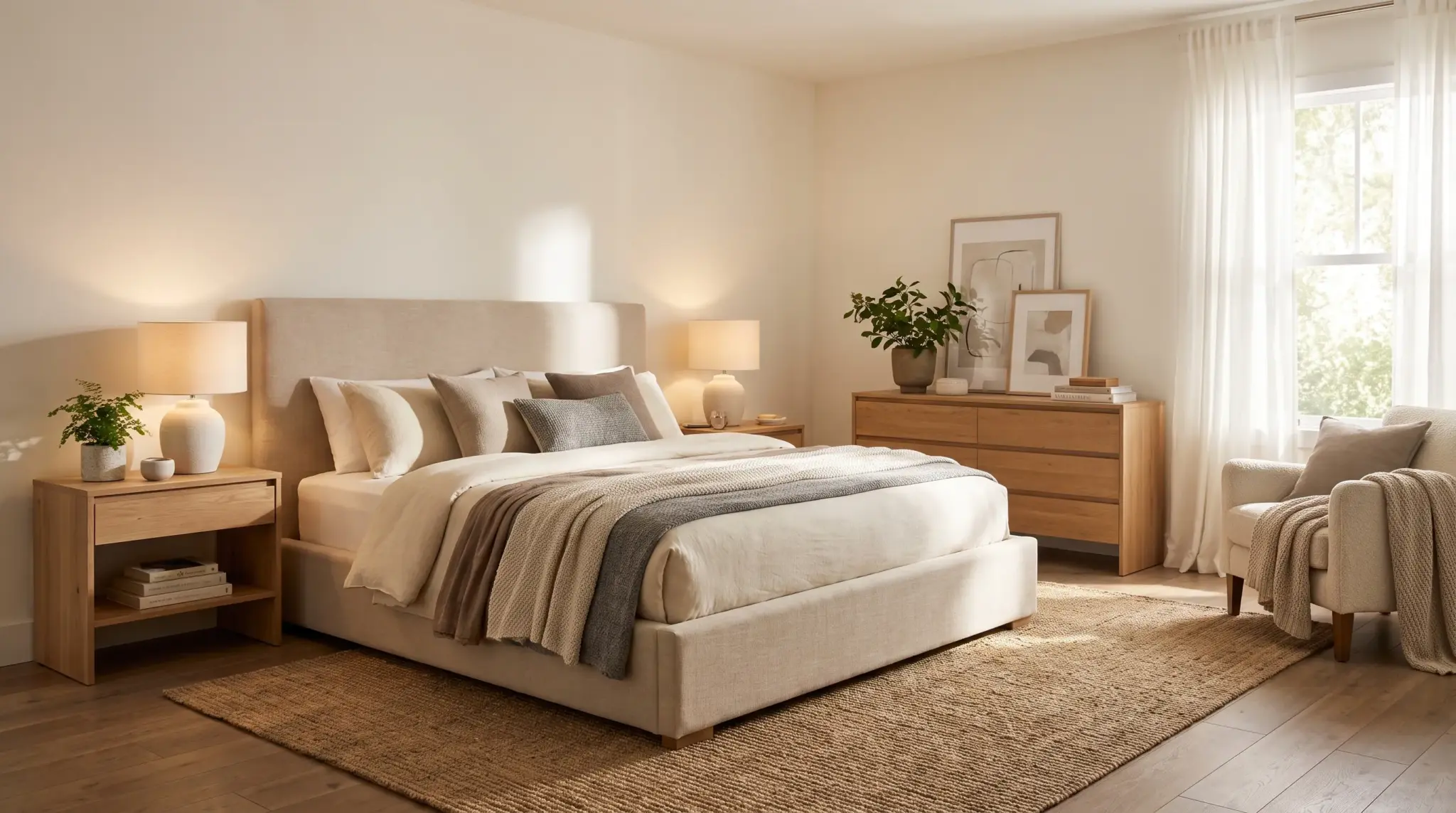
Most bedrooms fail in the same three ways. The bed sits too close to a wall, there is exactly one light source in the ceiling, and every surface is holding something that does not belong there.
Fixing those three things costs almost nothing. Everything after that is preference.
What follows is a working list of master bedroom interior design ideas, arranged from the decisions that are hardest to reverse (colour, layout) down to the ones you can change on a Saturday afternoon.
Master Bedroom Design Ideas Based on Colour and Style
Colour and style set the mood before a single piece of furniture goes in. Get the palette wrong and no amount of good bedding rescues it.
1. Choose a Calming Bedroom Colour Palette
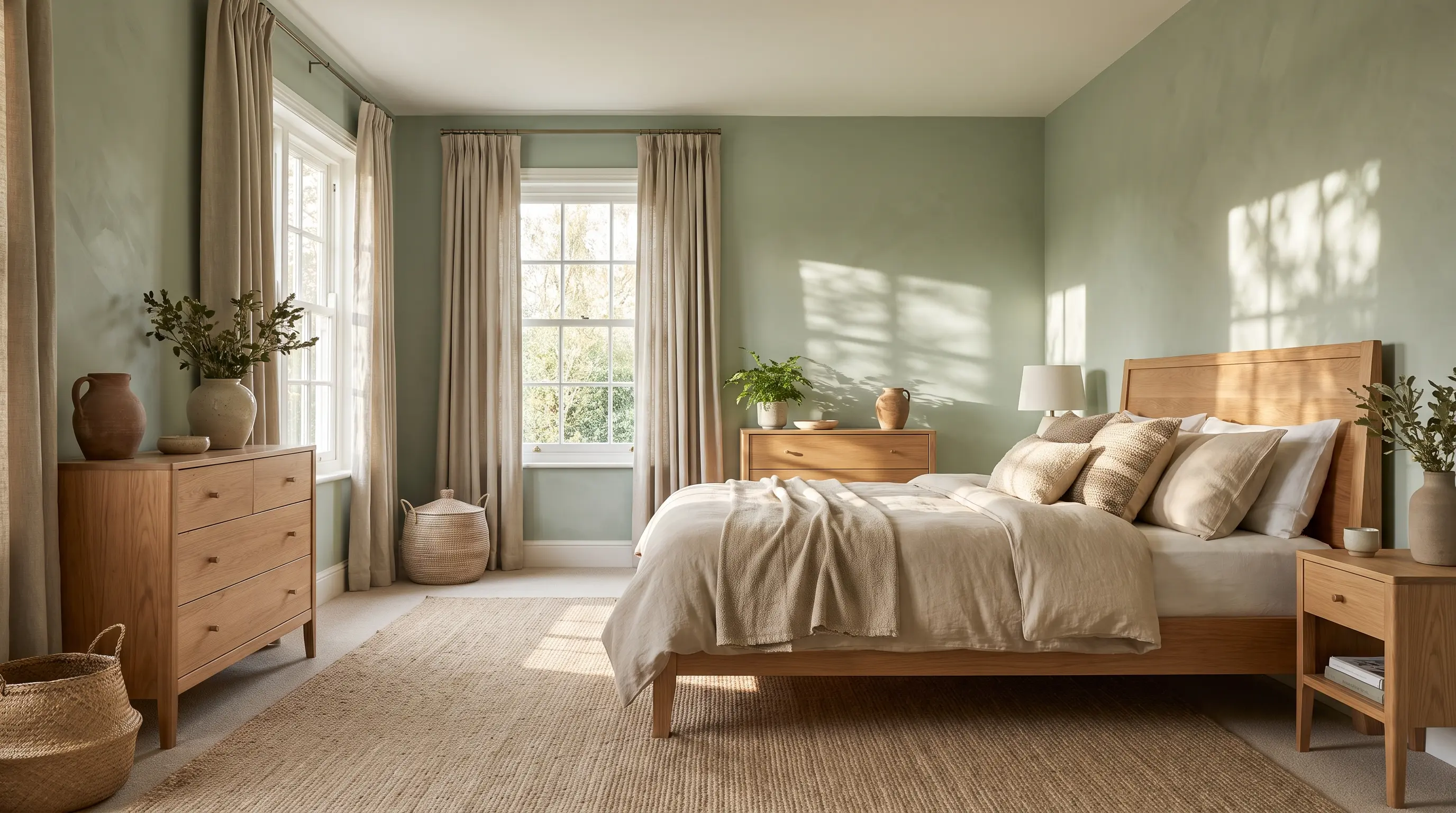
Start with which way your windows face, not with a paint chip.
North-facing rooms get cool, blue-cast light for most of the day. A grey that looked sophisticated in the shop will read cold and slightly dirty on a north wall. Push warm instead. Clay, mushroom, warm sage, anything with a yellow or red base underneath.
South-facing rooms get the opposite problem, which is that warm light makes warm paint look orange by four in the afternoon. Cooler greens and muted blues hold their colour there.
The 60-30-10 split is the easiest way to keep it from going wrong. Sixty per cent goes to your dominant colour, usually walls and large soft furnishings. Thirty per cent is your secondary, which tends to be bedding and curtains. The last ten per cent is your accent, and that is where the risk lives. A cushion in a colour you are not sure about costs twenty pounds to be wrong. A wall costs a weekend.
Buy sample pots. Paint an A4 patch on two different walls and look at it at 8am, 2pm and 9pm under lamplight before committing.
2. Add Natural Materials for Warmth
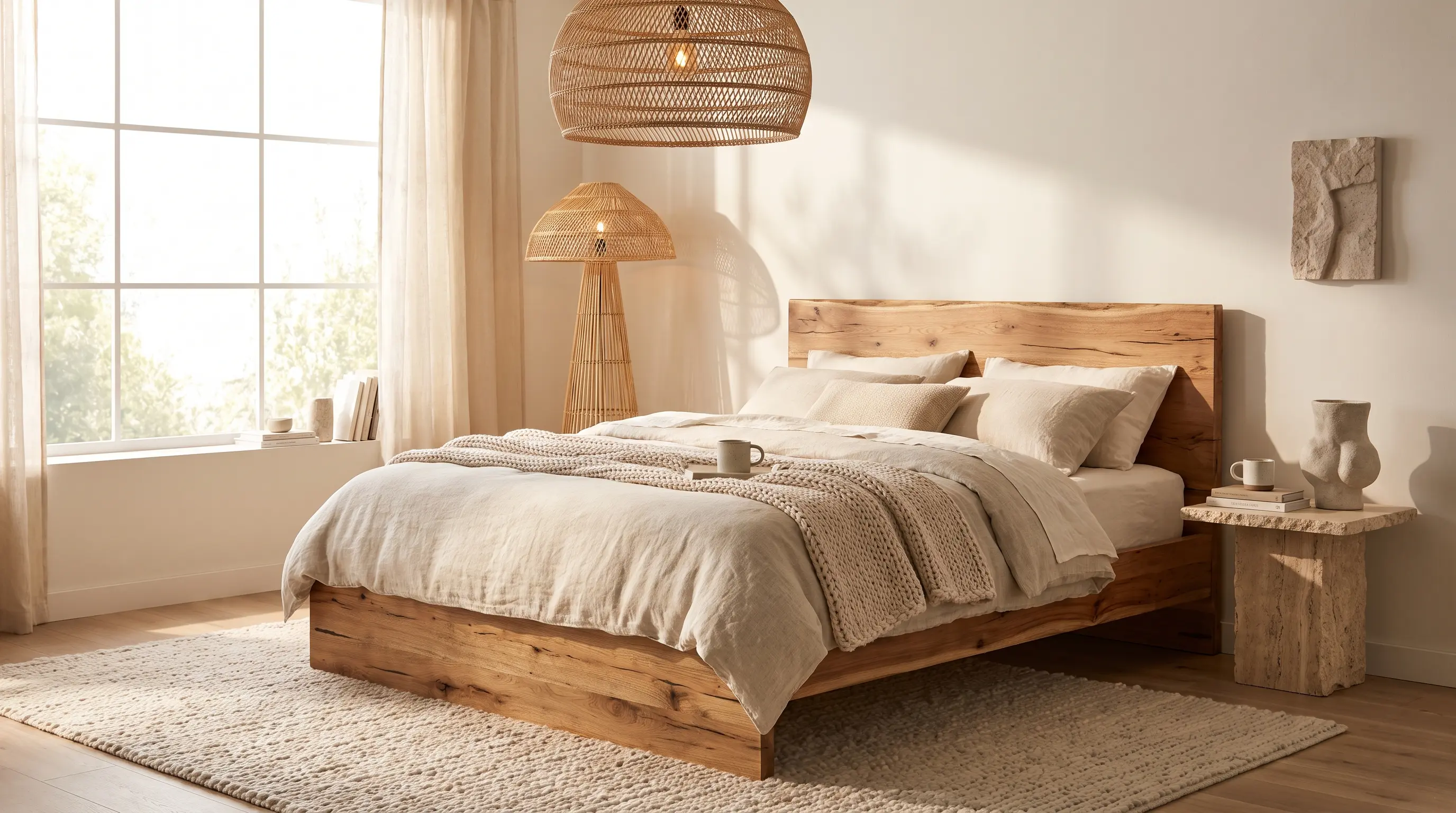
Paint gives you colour. It cannot give you texture, and texture is most of what makes a room feel warm rather than merely decorated. This is the whole logic behind rustic interior design, which leans on wood, stone and undyed fabric to do the work.
A solid oak or walnut bed frame anchors the room and outlives four sets of bedding. Linen sheets get softer with every wash, which is the reverse of how cotton percale behaves. Rattan works best in one piece rather than three, so pick either the pendant shade or the chair, not both.
On rugs, size matters more than material. A rug should extend 24 to 30 inches past the sides and foot of the bed so your feet land on wool, not floorboards. For a queen that means 8×10. For a king, 9×12. The 5×7 rug tucked half under the bed is the single most common mistake in bedroom styling.
3. Create a Minimalist Master Bedroom Design
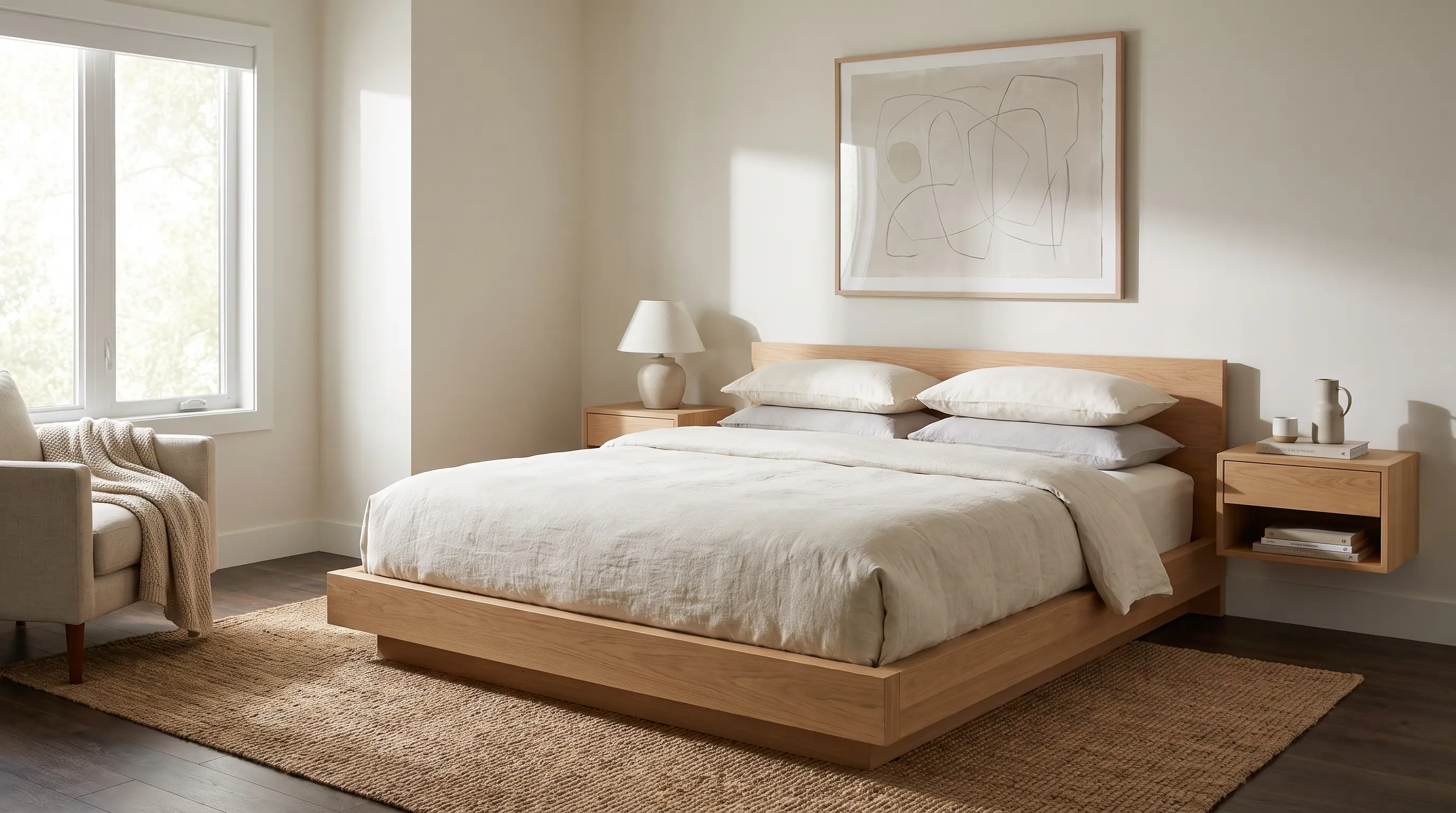
Minimalism in a bedroom is less about owning less and more about giving everything a home that is not a surface.
The test is the nightstand. If it holds a lamp, one book and a glass of water, the room reads calm. If it holds a lamp, three books, two chargers, a hand cream, a pair of earrings and a receipt, no amount of expensive furniture will save it. Add a single drawer and the problem disappears.
Fewer, better pieces also buy you floor space, and empty floor is what actually reads as luxury.
4. Mix Modern and Vintage Elements
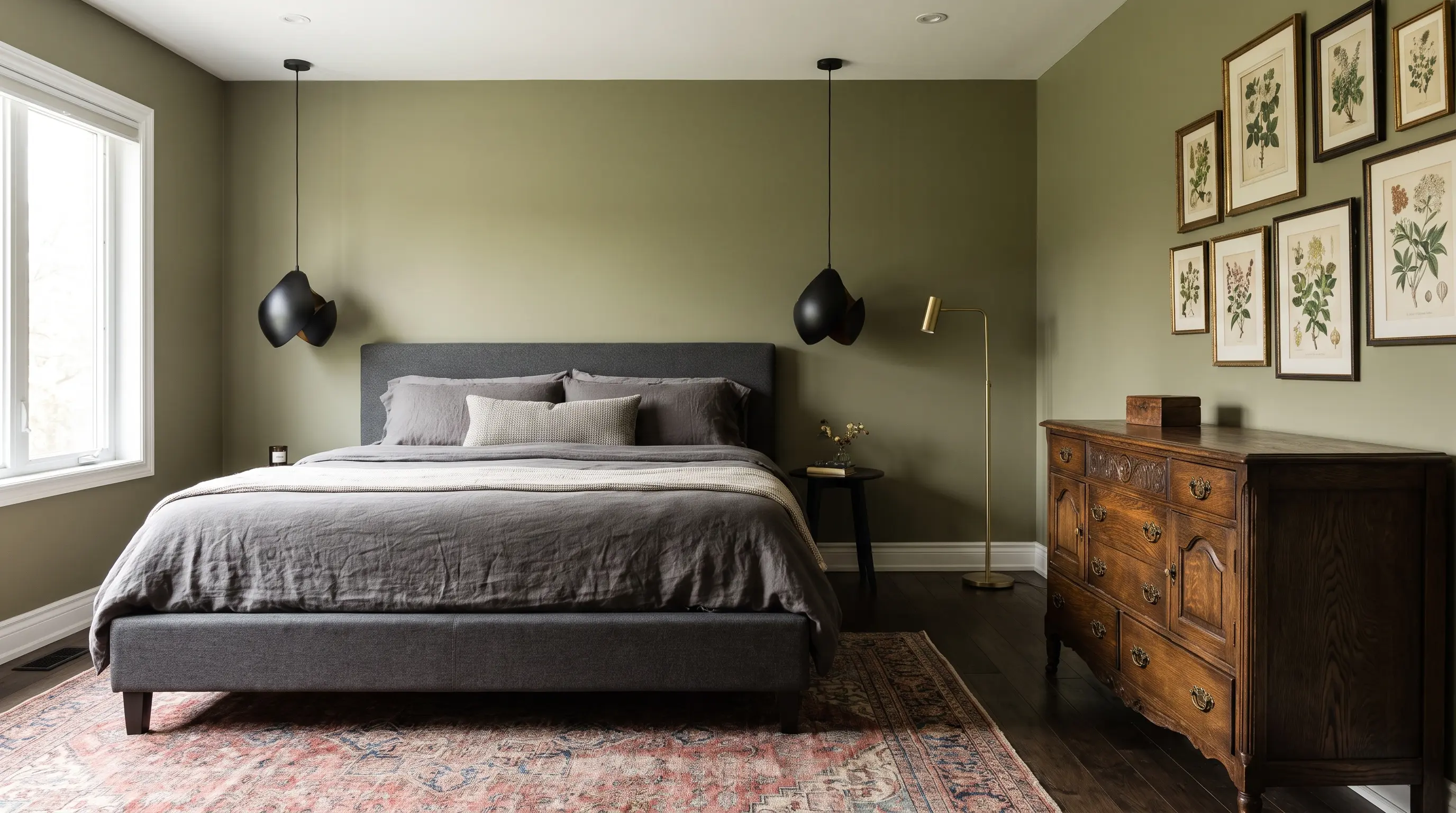
A matching five-piece bedroom set is the fastest way to make a room look like a showroom floor. It costs less to buy and looks it.
One old thing fixes this. A 1960s teak chest of drawers next to a clean contemporary bed frame gives the room a history it did not earn. Two old things is usually still fine. Four and you have crossed from mixed into themed.
The rule that keeps it coherent is metal. Pick one finish, brass or black or brushed nickel, and carry it across drawer pulls, lamp bases, curtain rods and light fittings. Mixed woods look intentional. Mixed metals look accidental.
5. Borrow from Hotel Rooms Without the Hotel Budget
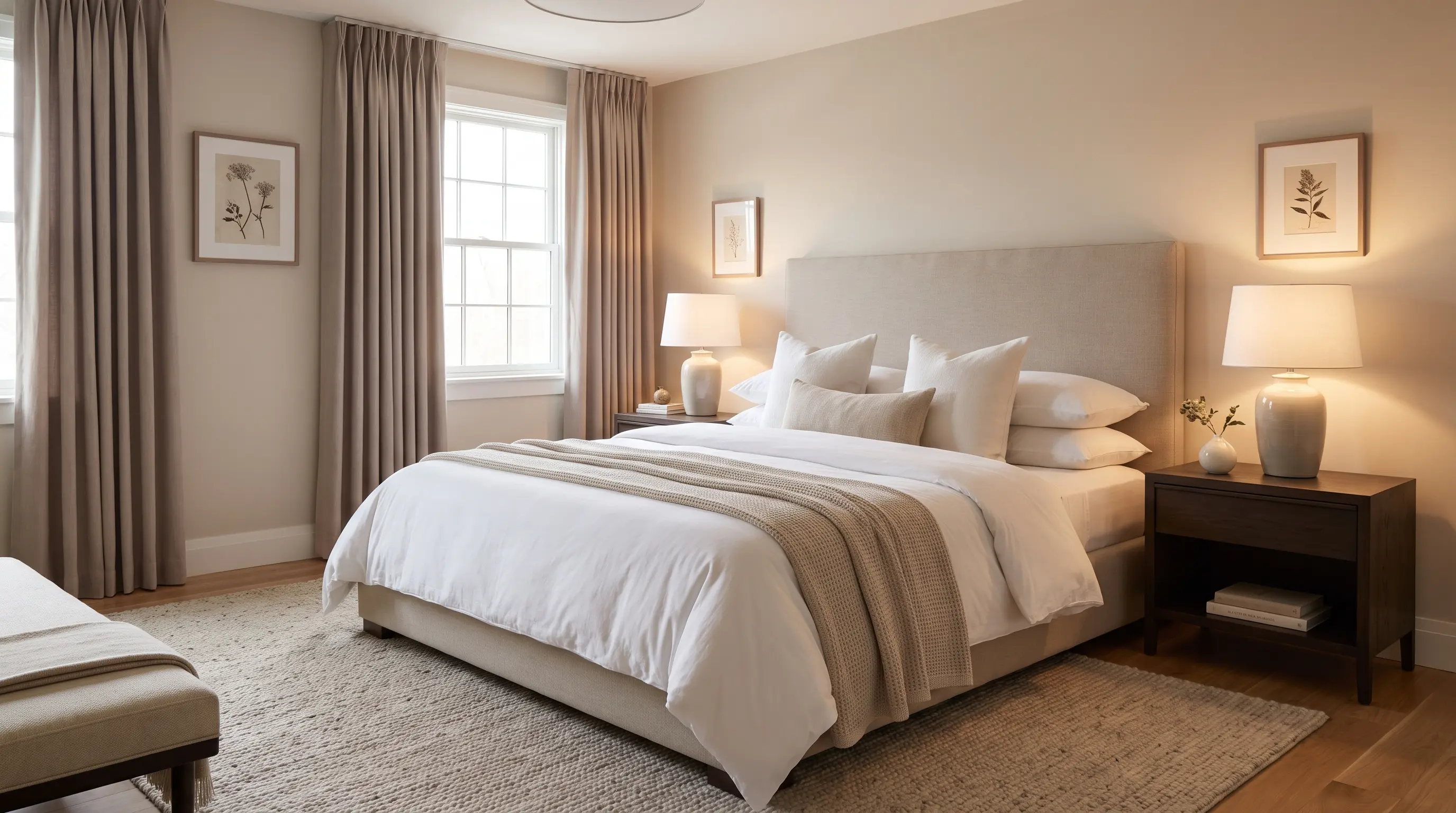
Hotels are not spending more than you. They are spending it in a different order.
What actually creates the effect is symmetry and layers. Two identical nightstands, two identical lamps, and a bed made in stages rather than thrown together. A fitted sheet, a flat sheet, a duvet, a folded quilt across the bottom third, then two euro shams behind two standard pillows with a lumbar cushion in front.
Where the money should go is the mattress and the sheets, because those are the two things you are in contact with for eight hours. A 400 to 600 thread count cotton percale or a washed linen will do more for how the room feels than any amount of decorative objects.
Master Bedroom Decorating Ideas That Change the Look
With the palette settled, the walls and textiles do the rest of the visual work.
6. Build a Feature Wall Behind the Bed
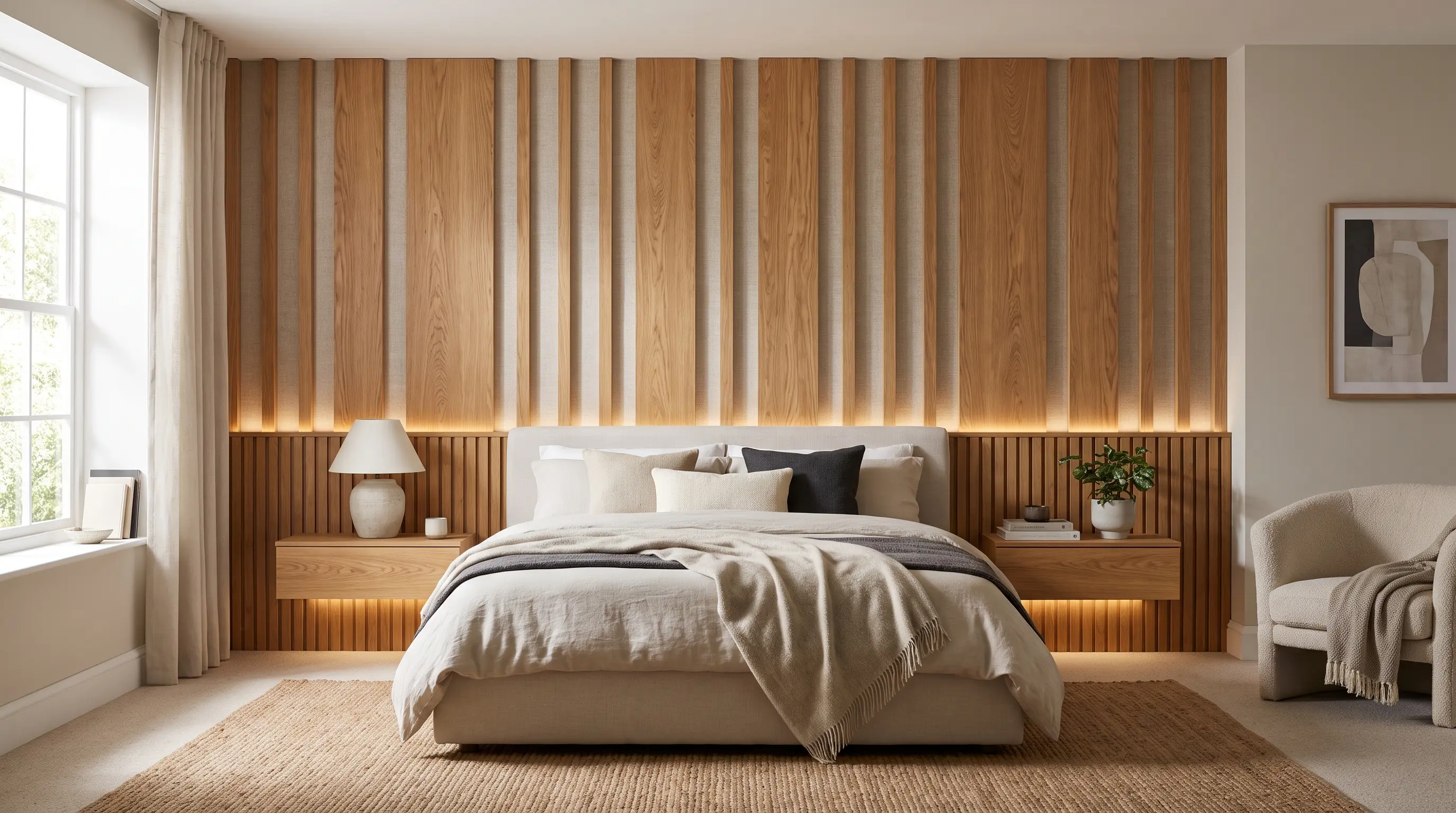
The wall behind the bed is the only one you never look at while you are in the room, and the first one anyone else sees. That makes it the cheapest place to put your effort.
Four options, in rough order of cost and commitment. Paint is the fastest and the easiest to undo. Limewash costs a little more and gives a soft mottled depth that flat emulsion cannot. Wallpaper behind the bed only, rather than the whole room, is far more forgiving of pattern. Vertical wood slat panelling is the most work and the biggest payoff, and it also absorbs a surprising amount of sound.
An upholstered headboard achieves something similar with no decorating at all, and it is the better call in a rented flat.
If you hang art above the bed, leave 6 to 8 inches between the top of the headboard and the bottom of the frame, and keep the arrangement no wider than the bed itself.
7. Add Plants to the Master Bedroom
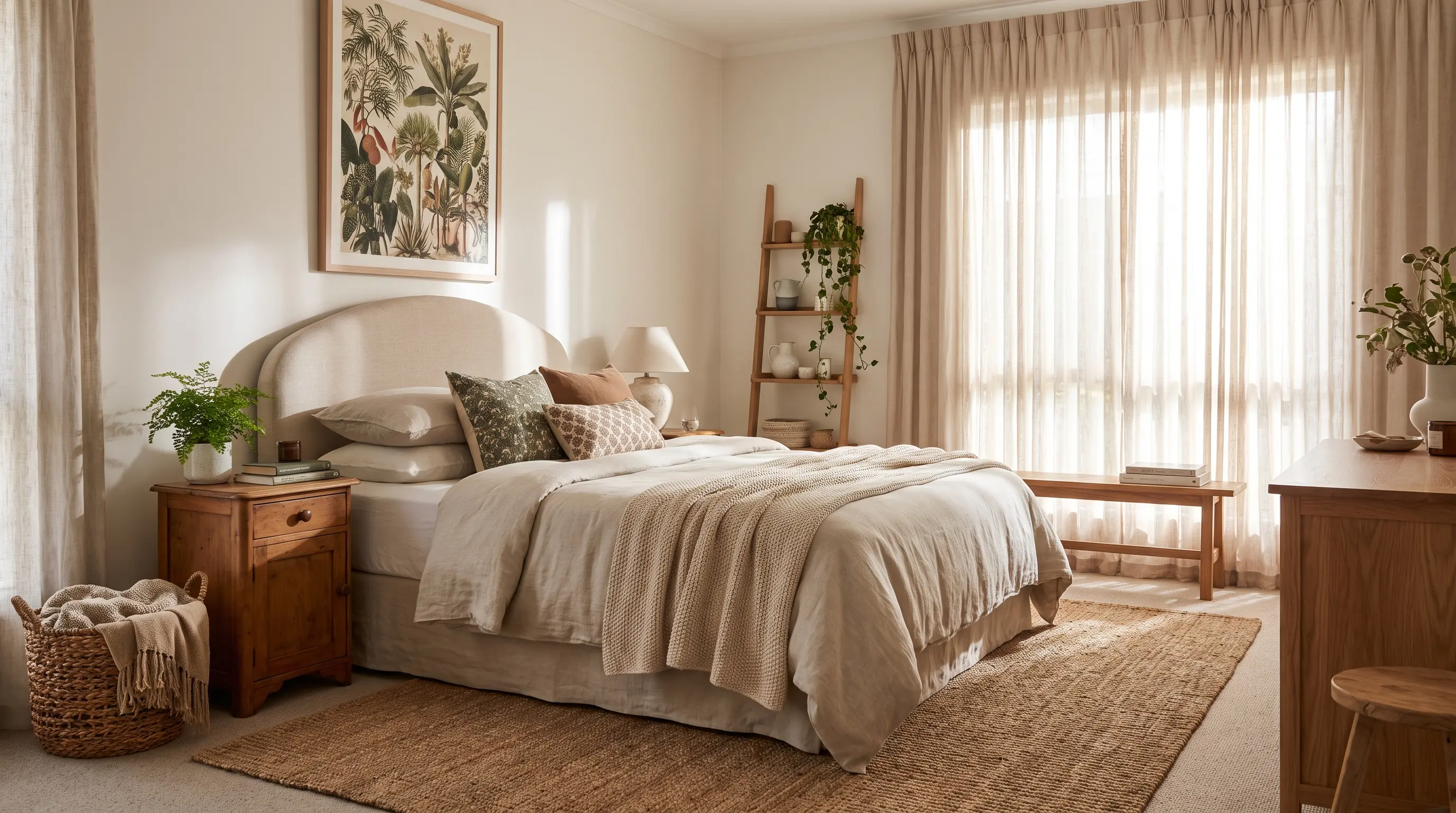
Bedrooms are usually the darkest room in a house, which rules out most of what looks good in photographs.
What survives low light and irregular watering: snake plant, ZZ plant, pothos, heartleaf philodendron. What will die in your bedroom within a season regardless of intention: fiddle leaf fig, most calatheas, anything sold as a “statement” plant.
Three plants at three different heights beats seven at the same level. Something trailing from a shelf, something mid-height on a nightstand, something floor-standing in a corner. For more options, this guide to indoor hanging plants covers the trailing varieties in more detail.
Match the pot to the room, not to the plant. A terracotta pot in a room full of black metal will always look like it wandered in from somewhere else.
8. Use Layered Bedding for a Designer Look
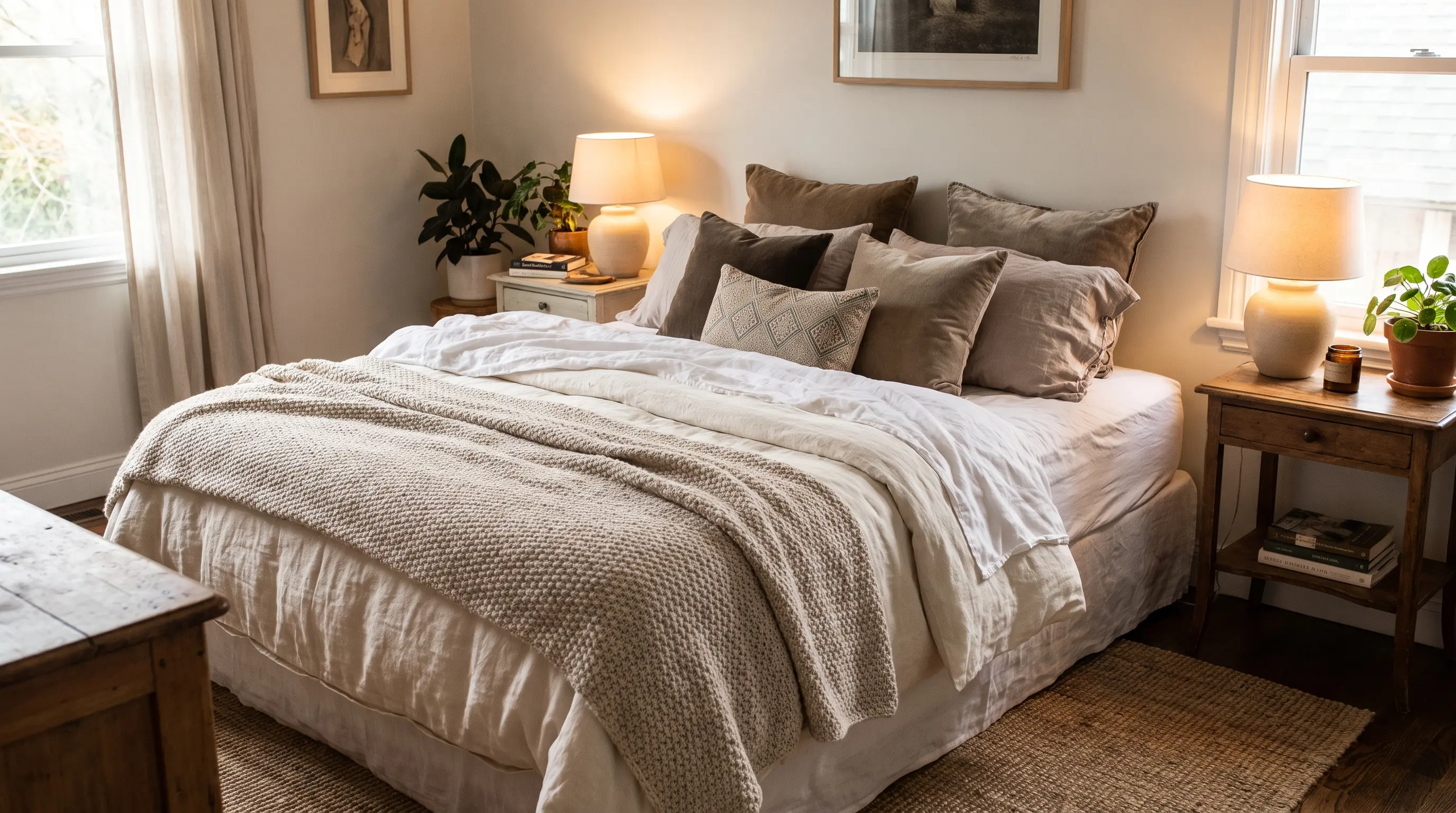
Layering is what separates a made bed from a styled one, and it takes about ninety extra seconds a morning.
Mix weights rather than colours. Crisp cotton against a chunky knit throw against a velvet cushion gives you contrast even when everything is the same shade of oatmeal. That is why all-white bedding works in magazines and often falls flat at home. The magazines have three textures. The flat version has one.
Swapping the throw and cushion covers twice a year, lighter cotton in summer and wool in winter, resets the room for the price of a takeaway.
9. Use Mirrors to Make the Room Feel Larger
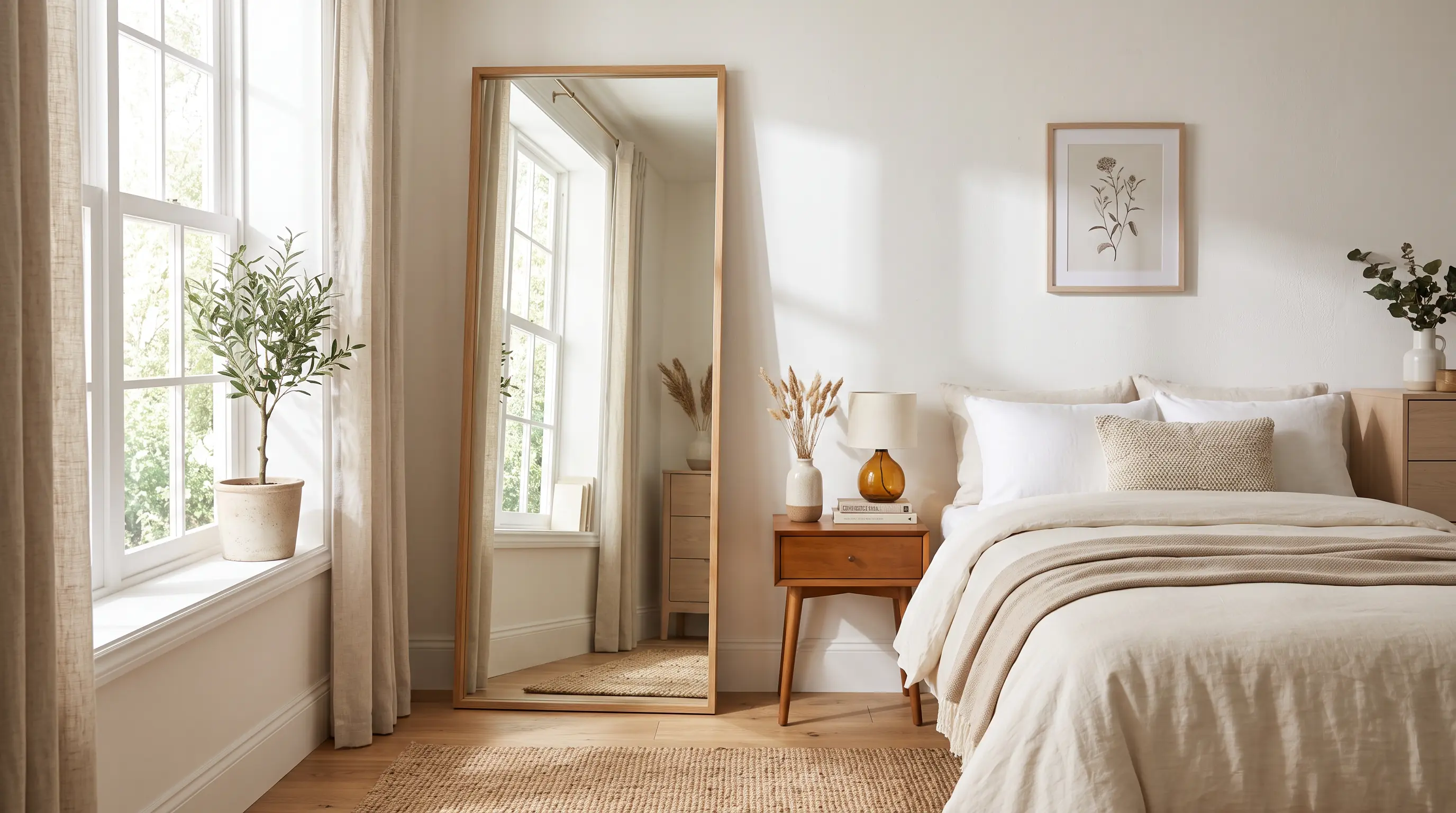
Position does all the work here.
A mirror on the wall opposite a window doubles the daylight in the room. A mirror on the wall beside a window does close to nothing. Get that one placement right and you rarely need a second mirror.
A full-length leaning mirror, roughly 60 to 70 inches tall, earns its space twice over because you also need somewhere to check what you are wearing. Avoid hanging one directly facing the bed unless catching your own reflection at 3am does not bother you. A reasonable number of people find it deeply unsettling.
10. Hang Curtains Properly
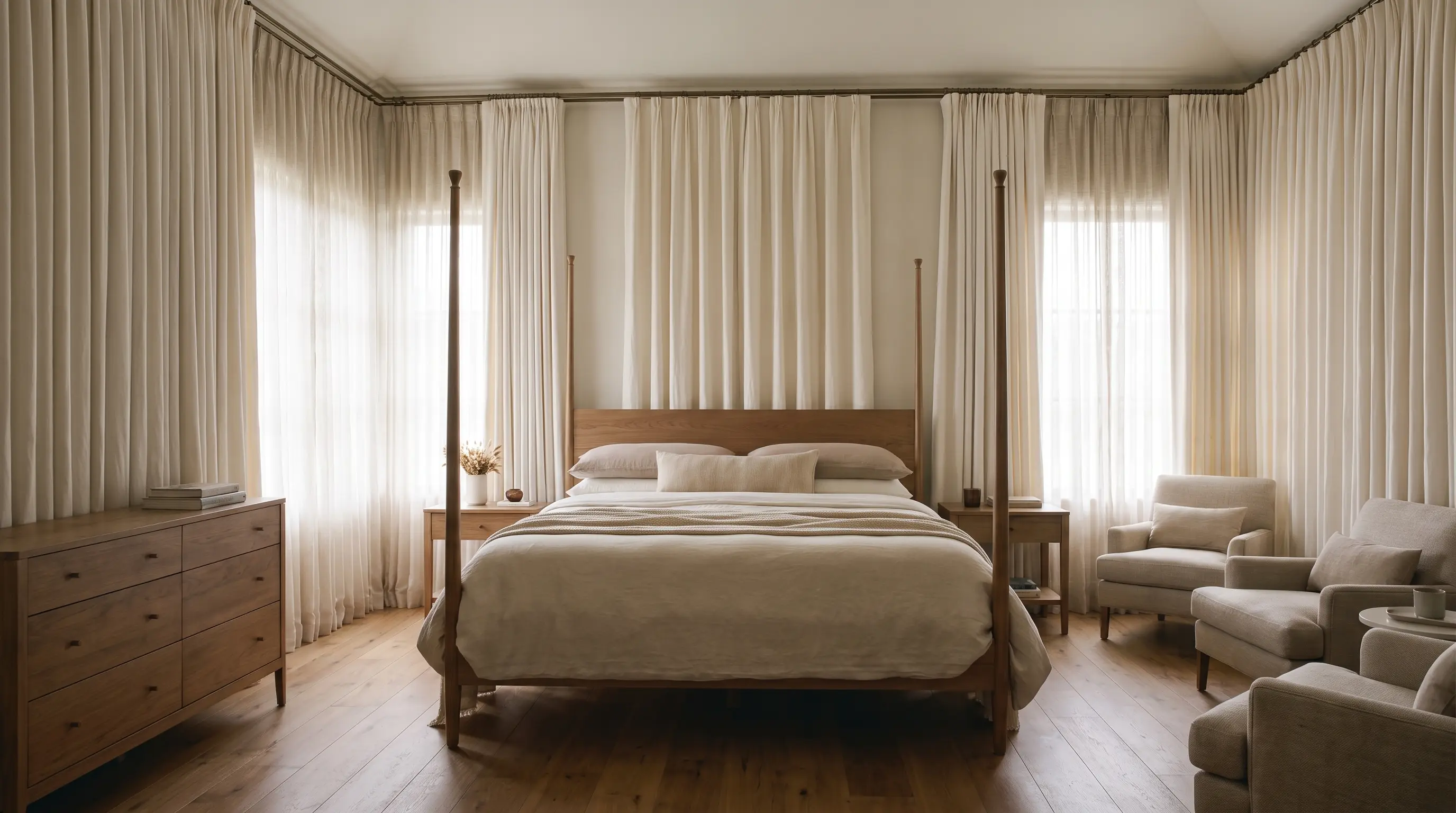
Nearly everyone hangs curtains too low and too narrow.
The rod should sit 4 to 6 inches above the window frame, or higher still if you can take it close to the ceiling, and it should extend 8 to 12 inches past the frame on each side. That lets the fabric stack off the glass when open, so you get the full window and the illusion of a taller wall.
Length should reach the floor or break against it by about half an inch. Curtains that stop at the sill make a room look unfinished no matter what they cost.
Double up on the track if you can. Sheers for daytime privacy, blackout behind them for sleep. In a bedroom the blackout layer is not decorative, it is the difference between waking at 5am in June and not.
Functional Master Bedroom Design Ideas for Comfort
Layout, light and storage are the parts that decide whether the room works on a Tuesday morning, not just in a photograph.
11. Design Around the Bed Placement
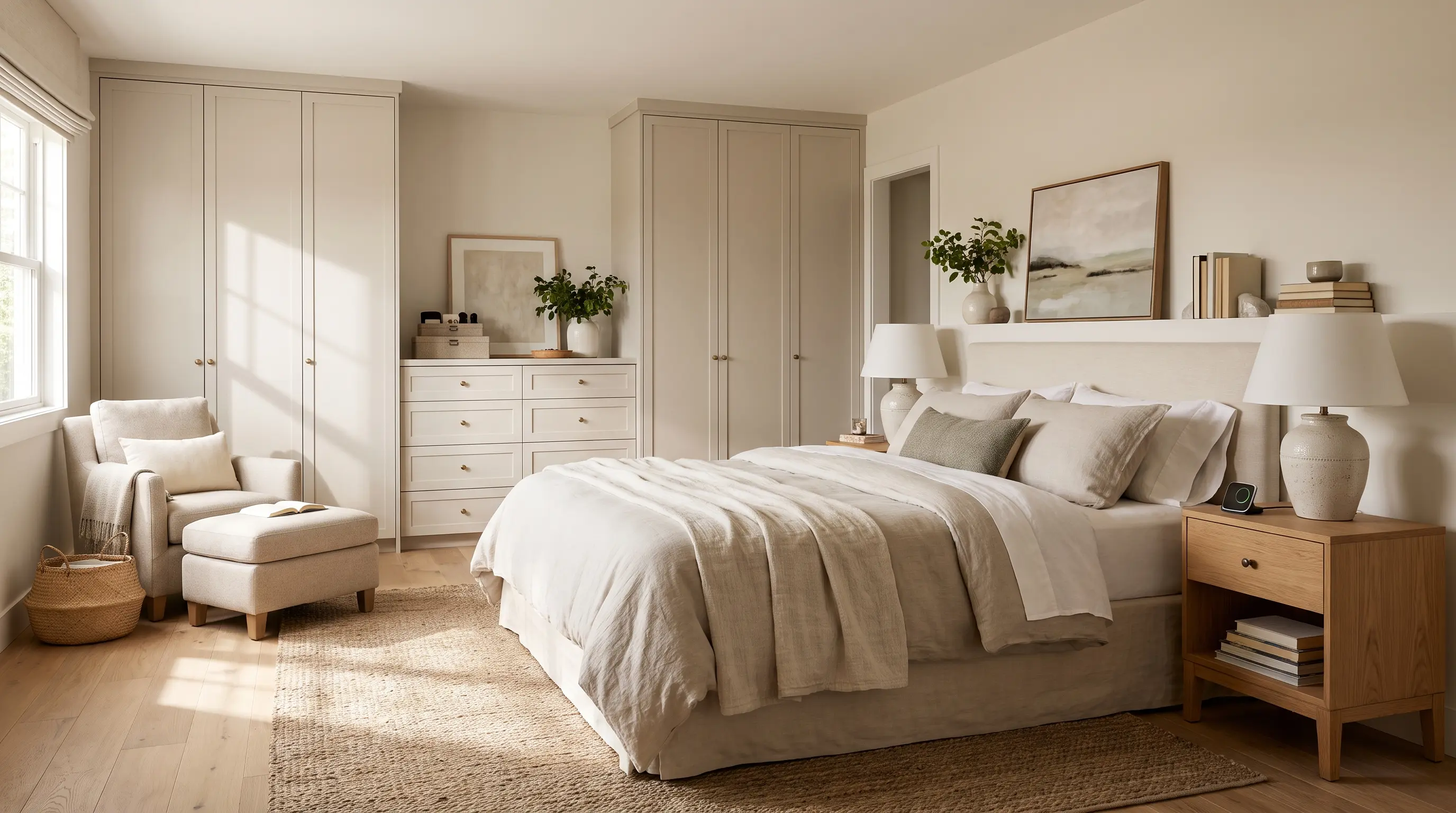
Measure before you move anything.
You want a minimum of 24 inches of clear floor on both sides of the bed, and 30 inches is more comfortable. At the foot, leave 36 inches if there is a walkway. Below 24 inches on one side, whoever sleeps there will be climbing over their partner for the next decade.
A queen is 60 by 80 inches. A king is 76 by 80. Add the clearances and a king genuinely needs about 12 feet of wall-to-wall width to sit properly, which is why kings often make a room feel worse rather than more luxurious.
The headboard belongs against a solid wall, ideally the one facing the door but not directly in line with it. Do not push a bed under a window if you can help it. It kills the light, the draught is real in winter, and there is nowhere for the headboard to go.
12. Layer Different Lighting Sources
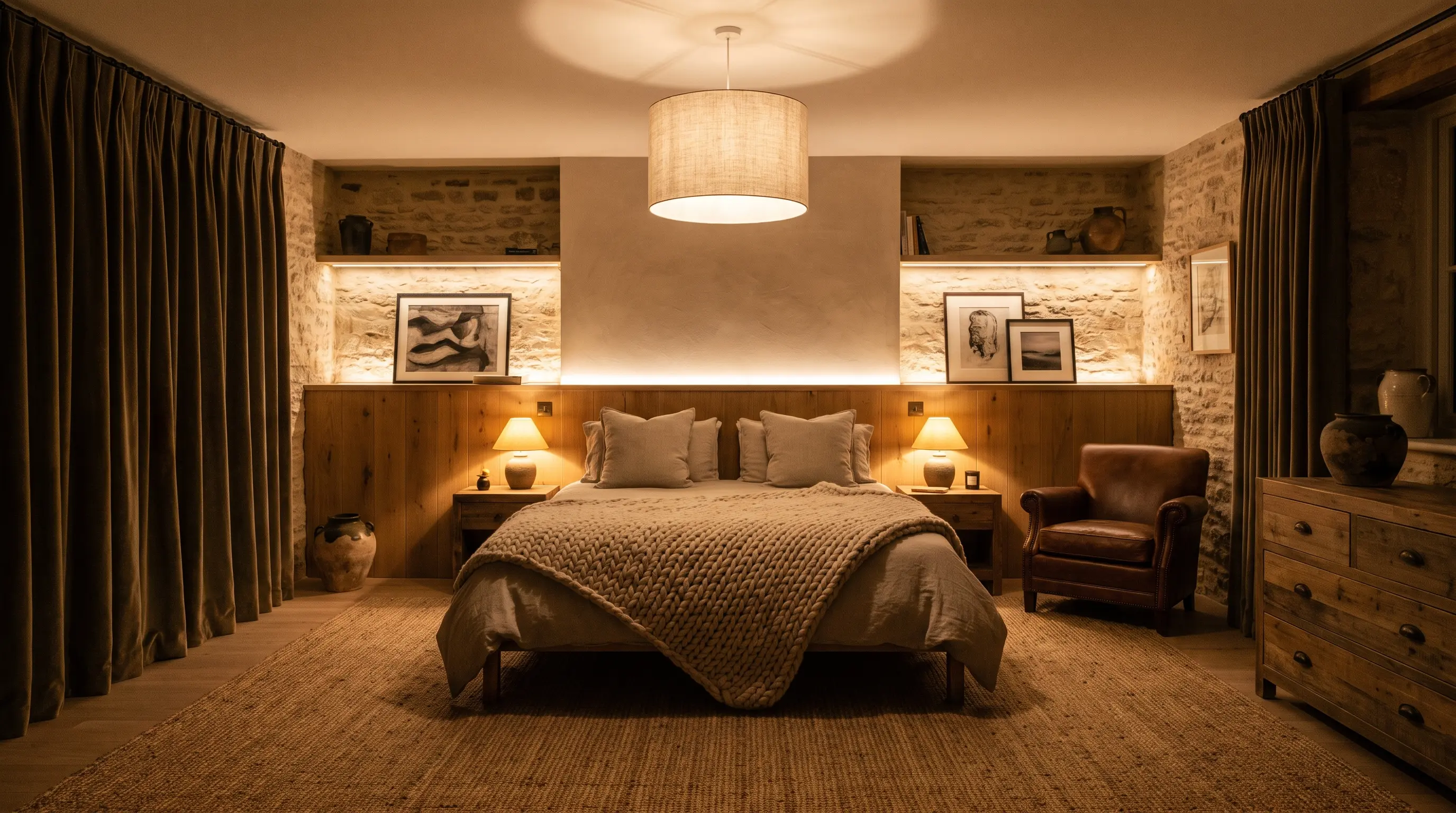
A single ceiling light is the reason your bedroom feels like a waiting room after dark.
You need three types. Ambient for general light, which is the ceiling fitting. Task for reading, which means a lamp or wall light with the bulb roughly at shoulder height when you are sitting up. Accent for atmosphere, which is anything low and warm, a picture light or a strip behind the headboard.
Colour temperature matters more than brightness. Stay at 2700K or below in a bedroom. Anything at 4000K and up is daylight-toned and actively suppresses melatonin, which is fine in a kitchen and wrong here.
Put the main light on a dimmer. It is a thirty-minute job and it changes the room more than most furniture.
13. Create Smart Storage Solutions
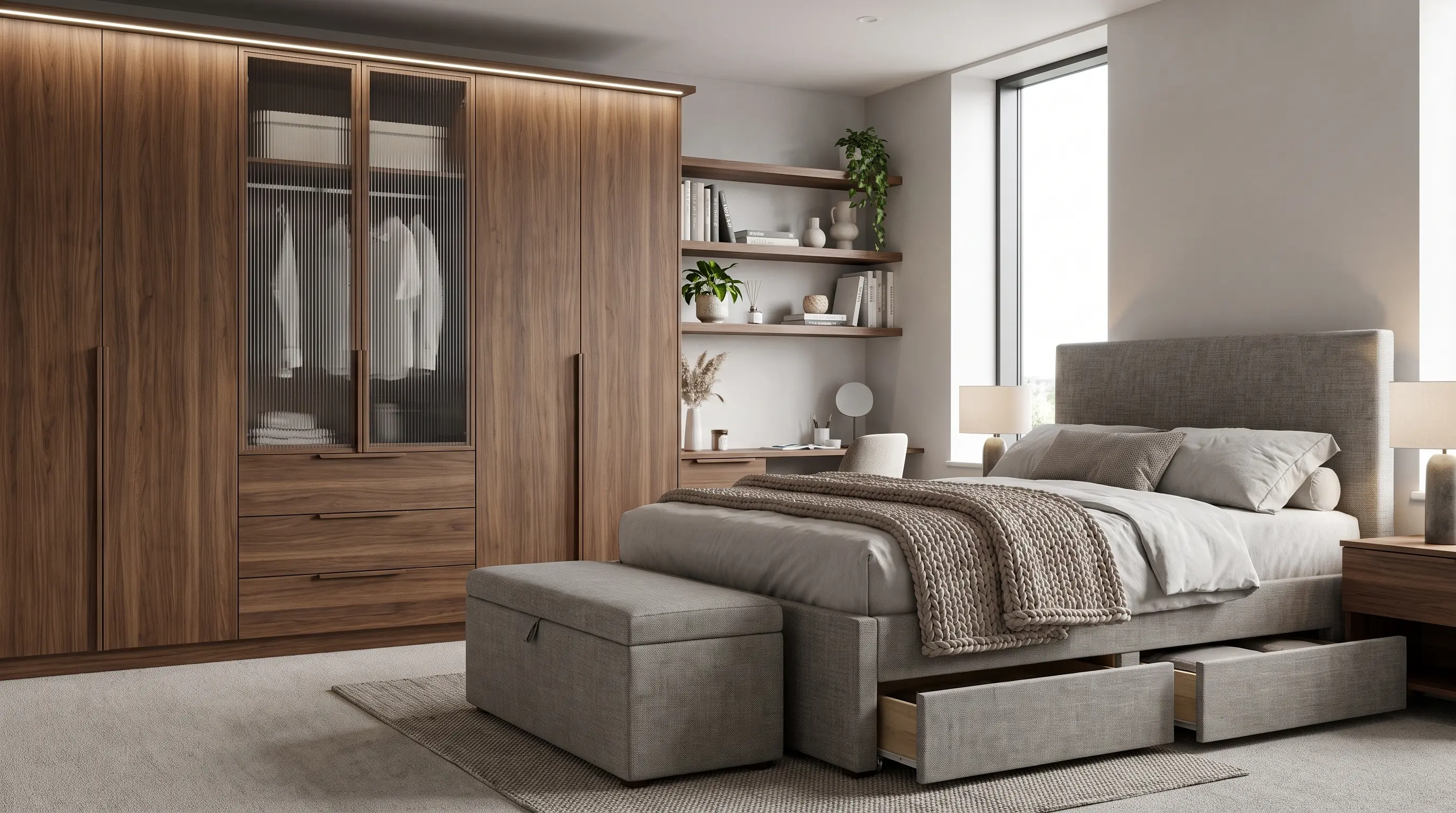
There are roughly 25 cubic feet of dead space under a standard double bed. An ottoman or drawer base bed reclaims it, and that is usually enough for all your out-of-season clothing and spare bedding.
Built-in wardrobes taken to the ceiling gain you a whole extra shelf compared with a freestanding unit, and they remove the dust-collecting gap on top. Floating shelves work where a nightstand will not fit, particularly in a narrow room.
A blanket box at the foot of the bed does two jobs at once, storage plus somewhere to sit and put your shoes on.
14. Design a Small Master Bedroom Carefully
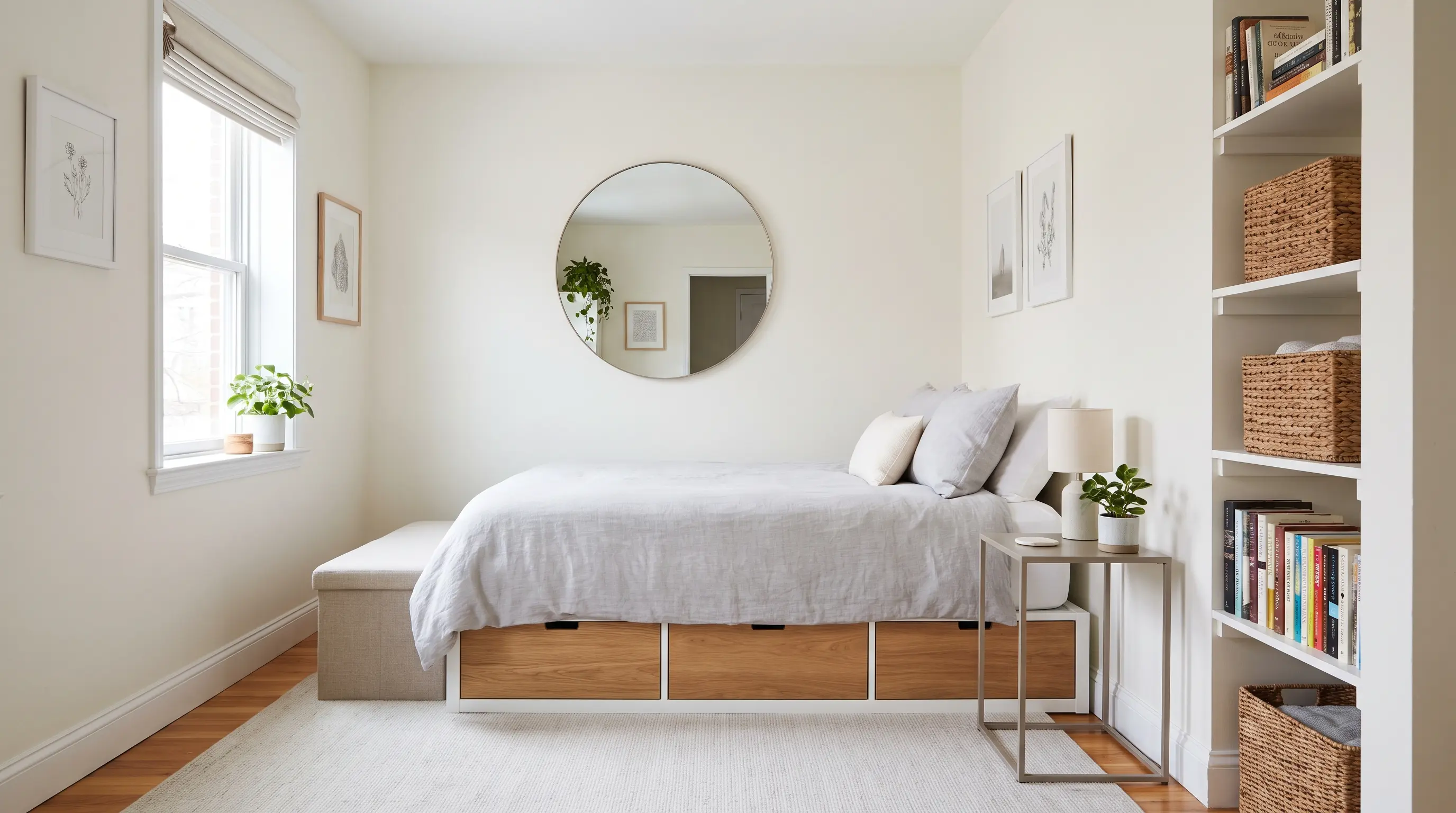
In a room under about 120 square feet, the wins are all vertical or wall-mounted.
Wall-mounted reading lights instead of table lamps free up the entire nightstand surface. Floating nightstands do the same for the floor, and visible floor is what makes a small room read bigger. Take wardrobes to the ceiling. A slim console rather than a chest of drawers.
Counterintuitively, one large piece of furniture beats several small ones. Four small things create four visual interruptions. One tall wardrobe creates one.
15. Decorate the Bedroom Without Overspending
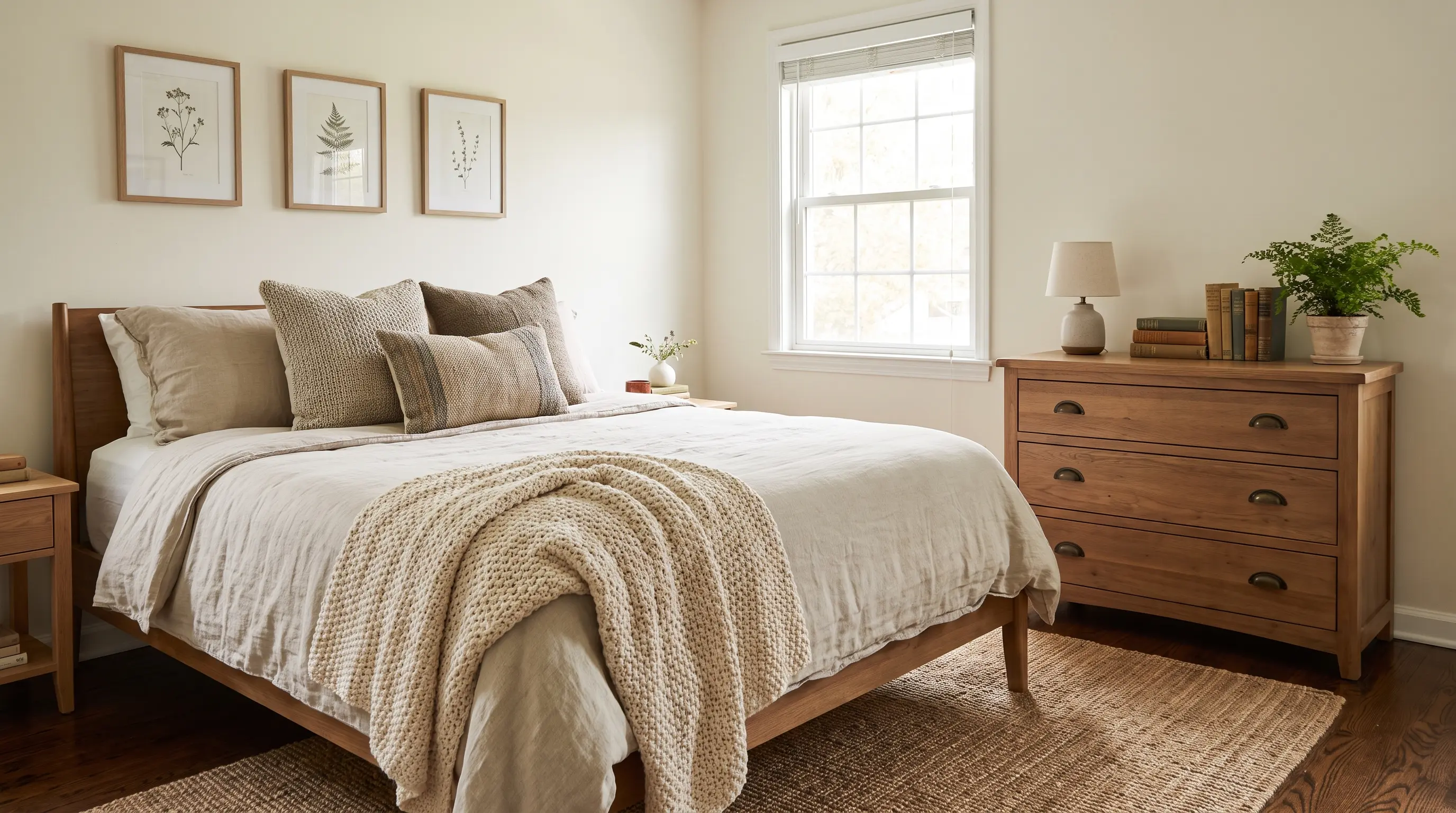
Free, and worth doing first: move the bed, rehang the curtains higher and wider, clear both nightstands, swap the ceiling bulb for a 2700K one.
Under fifty: new cushion covers, a throw, a dimmer switch, replacement drawer pulls. Changing the handles on a plain chest of drawers is the highest return-per-pound change available in a bedroom, and it takes a screwdriver and twenty minutes.
Under two hundred: a properly sized rug, or curtains long enough to reach the floor. Both of these fix problems that no amount of accessorising covers up.
16. Add a Reading Corner

A chair in a bedroom becomes a laundry pile unless three things are true. It has to be genuinely comfortable to sit in for half an hour, it needs its own light, and it needs a surface within arm’s reach for a cup.
Get all three right and you use it. Get any one wrong and you have bought an expensive clothes rail.
The corner beside a window is the obvious spot. About 30 square inches of floor takes a small armchair, a narrow side table and a floor lamp. If the room genuinely will not take a chair, a bench at the foot of the bed does the same job in a fraction of the footprint.
How to Personalise Your Master Bedroom Interior Design

Everything above is generic. This part is not, and it is the reason two bedrooms with identical furniture can feel completely different.
Personal objects work when they have a reason to be in the room and fail when they are filling a gap. A framed photograph from a trip you actually took. A ceramic bowl someone made. A stack of books you have genuinely read, rather than the coffee-table hardbacks bought by colour.
Keep it to a handful and give them room. Three objects on a chest of drawers with space between them read as chosen. Nine read as storage.
The one constraint is palette. A meaningful object in a colour that fights the room will always look like it landed there by accident, so either work it into your ten per cent accent or find it a home elsewhere in the house.
Final Thoughts
If you only do three things, do these. Move the bed so there are at least 24 inches on both sides. Add a second and third light source and get everything down to 2700K. Rehang the curtains higher, wider and long enough to touch the floor.
None of those cost much. All three change the room more than a new set of furniture would.
The rest is preference, and preference is what makes it yours.
Frequently Asked Questions
What is the 3 5 7 rule in interior design?
Group decor in odd numbers of three, five or seven. Odd groupings read as natural rather than staged, because the eye cannot split them into matching pairs.
What are the master bedroom trends in 2026?
Warm earth tones over grey, limewash and plaster wall finishes, wood slat panelling, wall-mounted reading lights, and beds with integrated storage.
What is the 60 30 10 rule for bedrooms?
Sixty per cent dominant colour on walls and large furnishings, thirty per cent secondary on bedding and curtains, ten per cent accent in cushions and small decor.
How much space should be left around a bed?
At least 24 inches on both sides and 36 inches at the foot if there is a walkway. Thirty inches at the sides is more comfortable.
What colour temperature is best for a bedroom?
2700K or lower. Anything above 3000K is daylight-toned and interferes with melatonin production in the evening.
What size rug goes under a queen bed?
An 8×10 rug, positioned so it extends 24 to 30 inches past the sides and foot of the bed. A king needs 9×12.
Where should a mirror go in a bedroom?
On the wall directly opposite a window, which roughly doubles the daylight. Avoid placing one facing the bed.