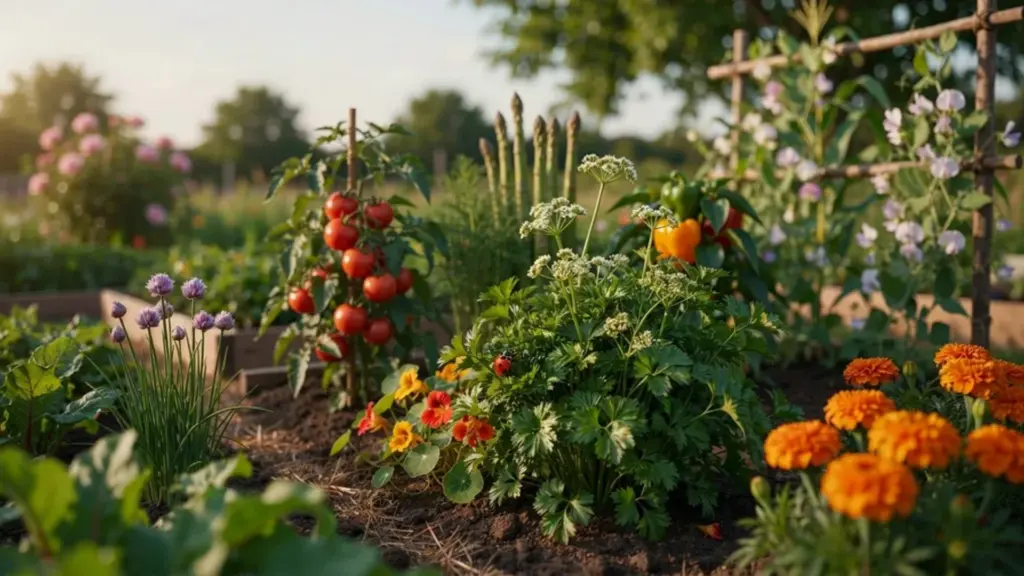
Marigolds saved my tomatoes by accident one summer, and that’s how I started paying attention to what grows well next to what.
Parsley turned out to be one of the most useful plants on my North Carolina herb farm, not because of what it does for itself, but because of what it does for its neighbors.
The right parsley companion plants reduce pest damage and pull in insects that do pest control for you. The wrong ones concentrate pests instead of spreading them out.
This post covers the best pairings, the plants to avoid with parsley, and how to lay them out in both raised beds and containers.
Why Does Companion Planting Matter for Parsley?
Companion planting means growing different plants close together so they support each other. Some plants repel pests. Others attract insects that feed on those pests. Some pairs simply share space well without competing for light, water, or nutrients.
Parsley benefits from this more than most herbs.
Here’s why:
Parsley is a biennial plant. In Year 1, it focuses on producing leaves.
In Year 2, it flowers and sets seed. Those flowers are where parsley really earns its place as a companion plant.
They attract braconid wasps and tachinid flies, two insects that prey on caterpillars, armyworms, cutworms, and cabbage loopers. No spray needed.
This means your companion choices should shift between Year 1 and Year 2. In Year 1, focus on plants that benefit from parsley’s scent and leaf growth.
In Year 2, place parsley near crops most vulnerable to the pests that wasps and flies control.
Best Companion Plants for Parsley
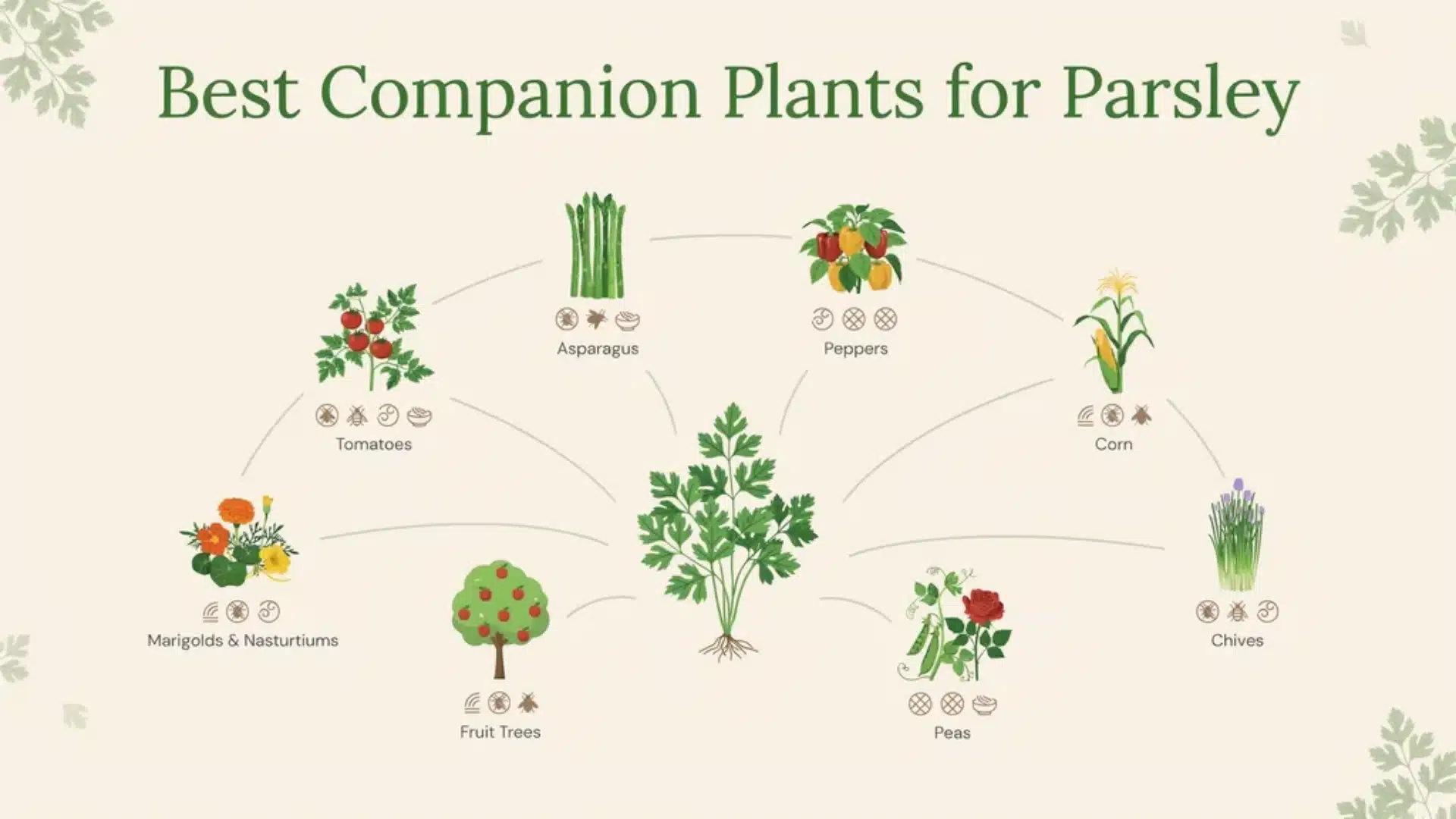
Parsley gets along with more plants than gardeners expect. Here are the ones that actually make a difference.
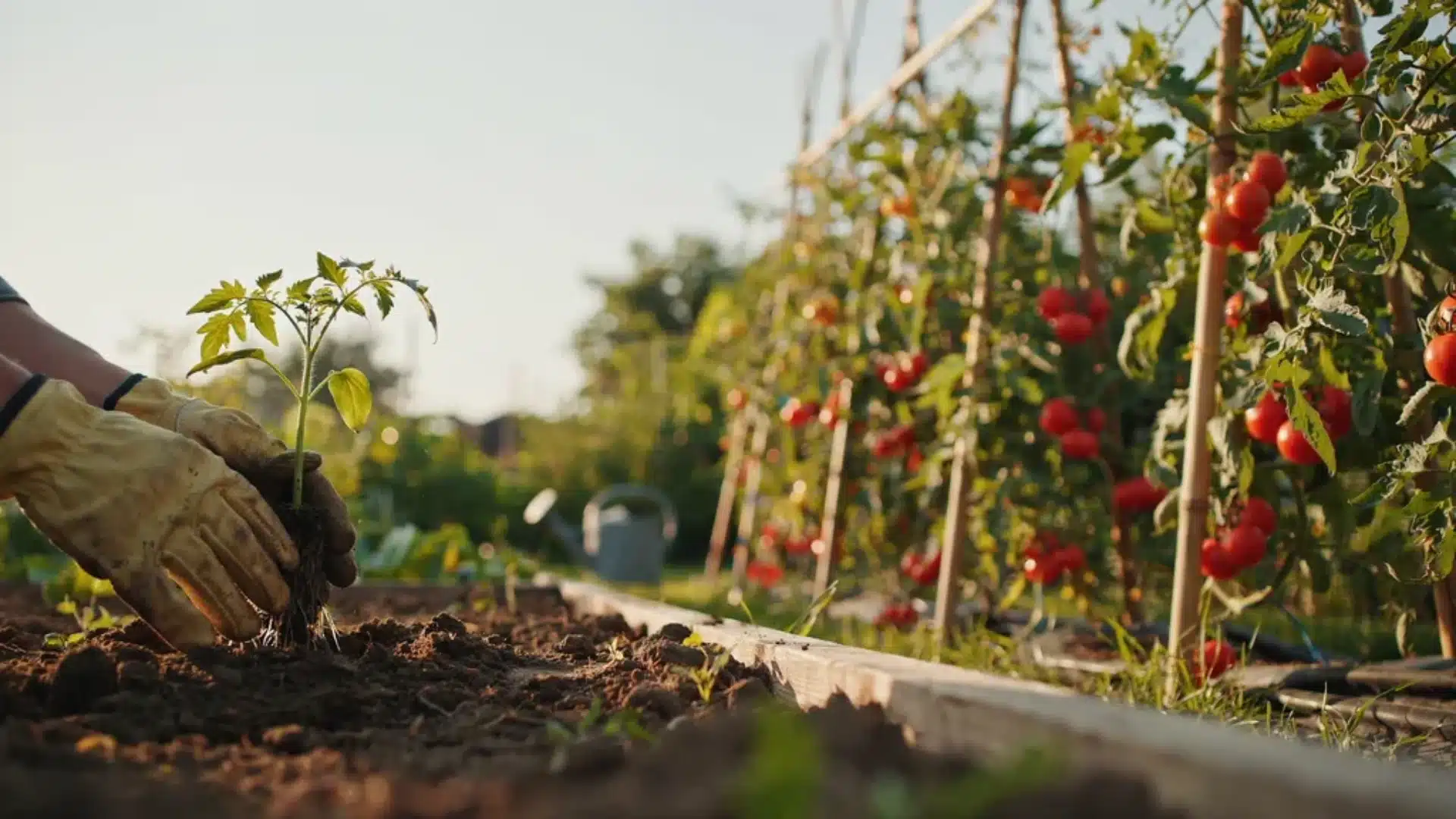
1. Tomatoes
Parsley and tomatoes are one of the most reliable pairings in the vegetable garden.
Parsley attracts hoverflies, which prey on aphids that attack tomato plants. It can also be a trap crop, drawing aphids away from tomatoes toward itself.
Tomatoes, in return, provide filtered shade for parsley during hot summer months. Parsley prefers some protection from intense sun, and a mature tomato plant delivers exactly that.
Pro Tip: This pairing works best in sunny spots with well-drained soil. In humid climates, tomato blight can spread to nearby parsley. If your summers are wet and warm, keep a bit more distance between the two.
2. Asparagus
Parsley repels asparagus beetles, a common pest that damages asparagus crowns and stems. Asparagus, in turn, does not compete heavily with parsley for soil nutrients.
The two crops also use garden space efficiently, since asparagus produces mostly underground and parsley grows above ground.
Asparagus is a perennial, and parsley is biennial, so their different life cycles complement each other well. Plant parsley at the base of asparagus rows to fill that space productively.
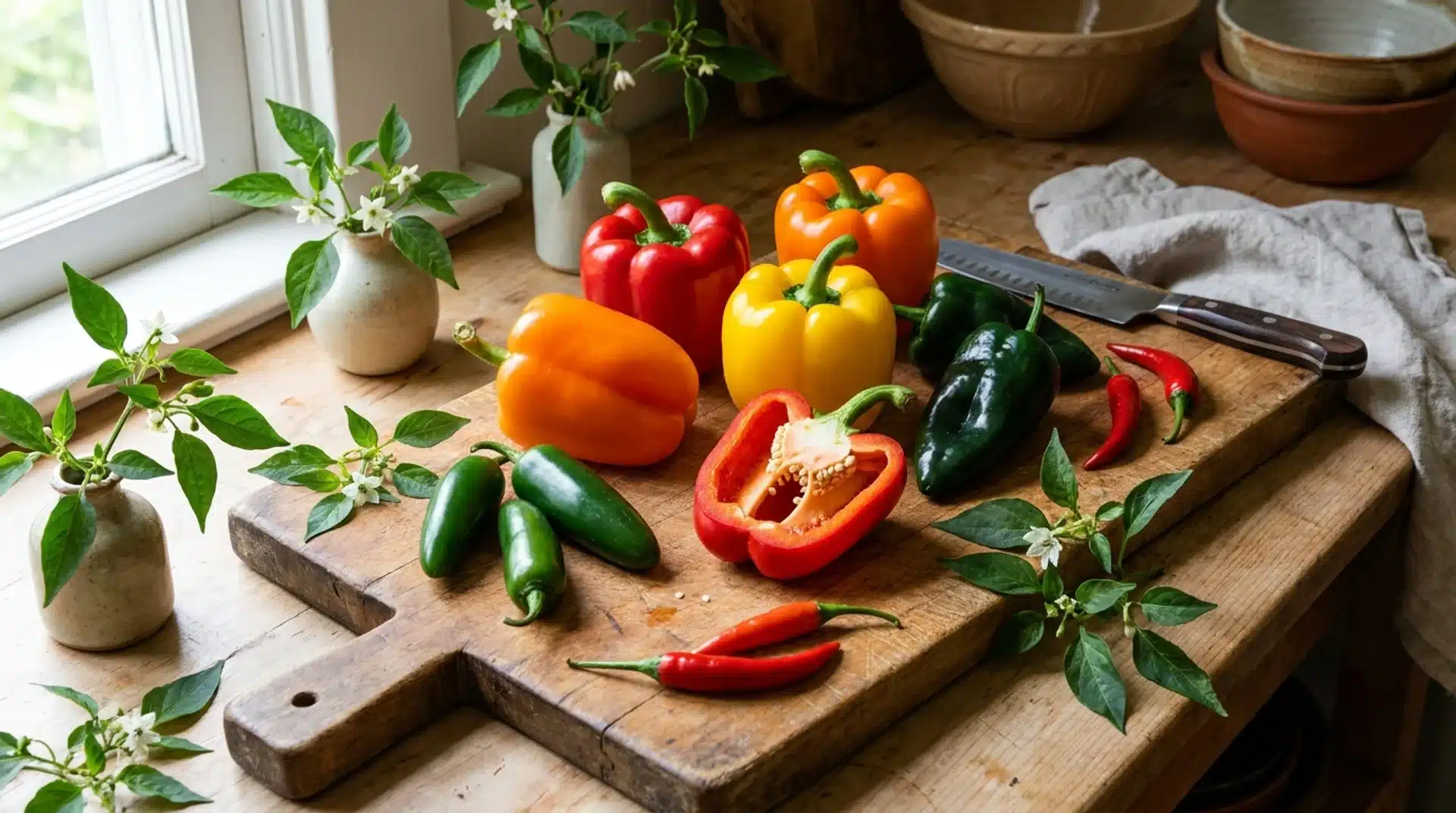
3. Peppers
Parsley attracts tachinid flies and parasitic wasps that keep pepper pests in check. Aphids and beetles are the two main threats to pepper plants, and parsley helps reduce both.
This is a practical pairing for smaller beds. Both plants have moderate water needs and prefer well-drained soil, making them easy to manage side by side.
4. Corn
Corn is vulnerable to earworms, cutworms, and armyworms. Flowering parsley brings parasitic wasps and tachinid flies into the garden that hunt these exact pests.
The tall corn stalks also provide partial shade that parsley can use during warm months.
This pairing is best suited to larger garden beds. In small raised beds or containers, corn takes up too much space to make it worth the trade-off.
5. Chives
Chives and parsley work well together, especially in containers and raised beds. Chives mask parsley’s scent, which helps confuse onion flies and reduces their ability to locate parsley.
For a 4×8 raised bed, a practical layout is to plant parsley along one long edge with chives placed every two to three parsley plants. This spacing gives both herbs room to grow without competing for nutrients.
One thing to check before planting: chives struggle in alkaline soil, and planting them in such conditions can stunt them. Test your soil pH first and aim for a range of 5.5 to 6.7.
6. Roses
Parsley near roses deters rose beetles and attracts hoverflies that feed on destructive aphids.
This pairing works well if you already grow both in the same part of the garden.
7. Peas
Parsley and peas are both frost-tolerant, which makes them a strong early-season pairing. Give peas a trellis to climb and plant parsley at their base.
Peas grow vertically, and parsley spreads horizontally, so they use space without crowding each other. As the weather warms, pea vines provide light shade that parsley benefits from.
8. Fruit Trees
Parsley planted around the base of apple and pear trees attracts braconid wasps.
These wasps prey on gypsy moths, which cause serious infestations on both fruit trees. It is a low-effort way to add pest protection to your orchard without any chemical inputs.
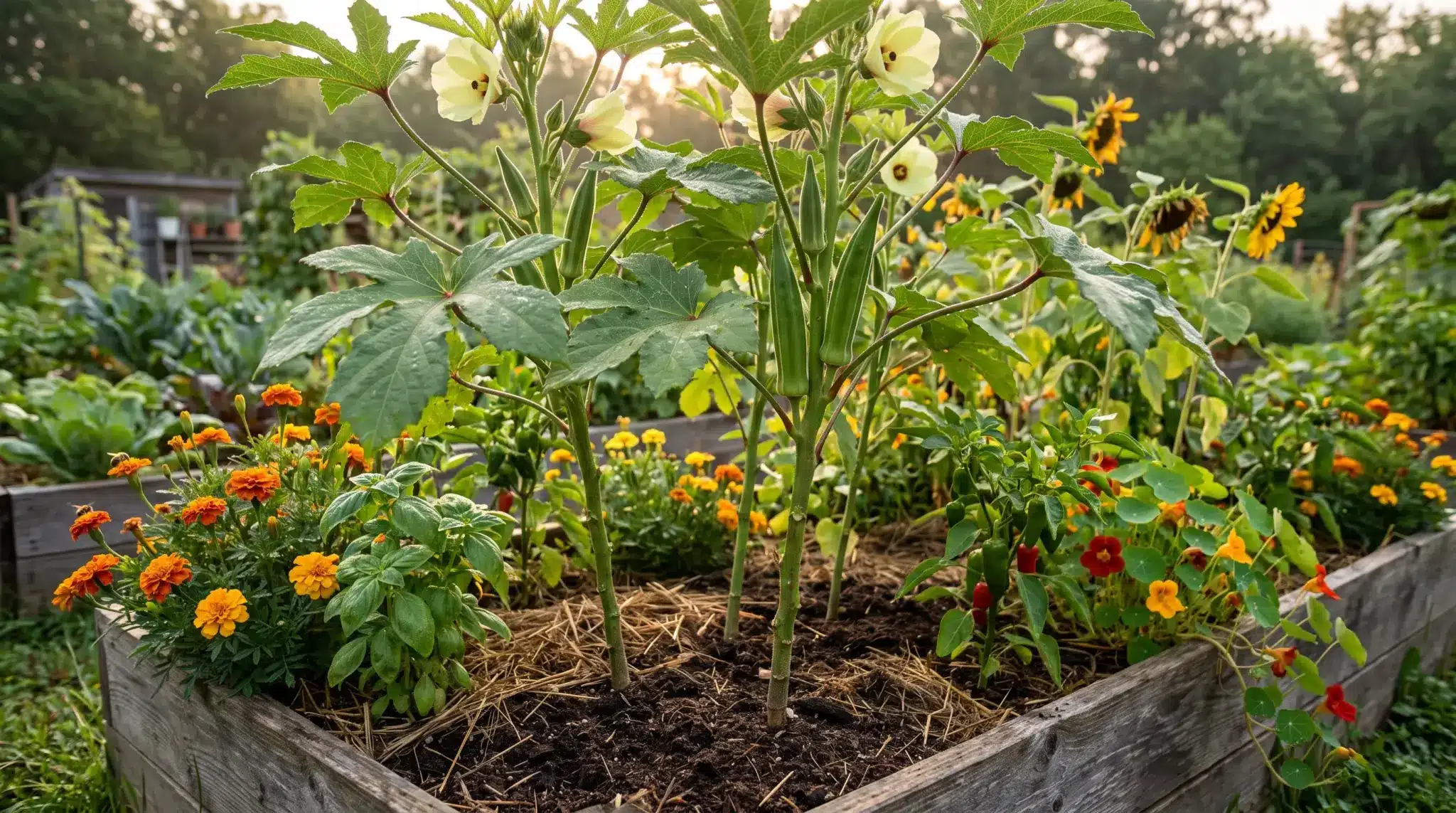
9. Flowers: Marigolds and Nasturtiums
Marigolds planted near parsley repel harmful nematodes in the soil, protecting parsley’s roots from damage. Nasturtiums are a trap crop too. They draw aphids and whiteflies away from parsley and other nearby plants.
Both flowers attract pollinators, benefiting the broader garden.
Plants to Avoid Near Parsley
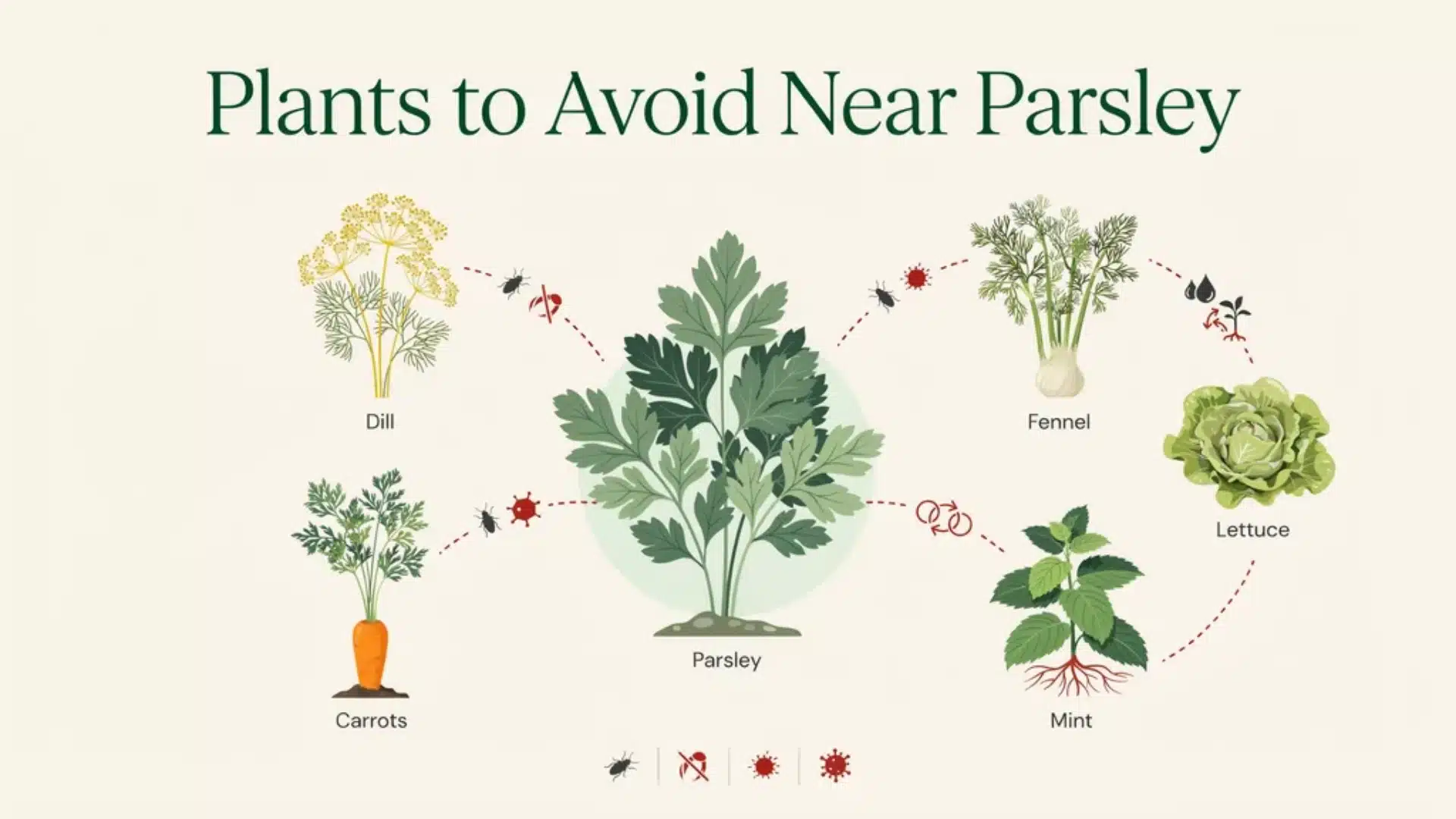
Knowing which plants to avoid is just as important as knowing which ones help.
1. Dill
Dill is in the same plant family as parsley (Apiaceae) and attracts the same pests. Planting them close together concentrates pest pressure rather than reducing it.
There is also a risk of cross-pollination if both plants flower at the same time. Seeds saved from parsley that cross-pollinated with dill can produce off-flavored plants the following season.
2. Fennel
Fennel is another Apiaceae family member. Grouping two plants from this family creates a richer habitat for the willow-carrot aphid (Cavariella aegopodii), which spreads serious diseases to both plants.
Keep fennel in a separate area of the garden, ideally in its own container or bed.
3. Carrots
Carrots share a bed with parsley in a lot of gardens, but the two plants share the same primary pest: the willow-carrot aphid.
This aphid vector carries carrot motley dwarf disease, a condition caused by a viral complex that leads to yellow or red leaf discoloration and stunted growth. There is no cure once it is established.
Planting parsley and carrots in the same bed concentrates both host plants in one location, increasing the risk of disease spreading between them.
Keep them in separate beds and let parsley’s beneficial insects work independently for each crop.
4. Mint
Mint spreads through underground rhizomes at a rate of 12 to 18 inches per growing season. Those roots will reach parsley’s root zone within one season if both plants share a bed.
Mint also produces volatile compounds in high concentrations that can suppress the growth of nearby herbs.
If you want both in your garden, grow mint in a container with the rim sitting one to two inches above soil level to catch surface runners. Under those conditions, the two plants can exist nearby without issue.
5. Lettuce
Lettuce and parsley compete for the same resources: cool weather, moisture, and soil nutrients. Lettuce can bolt early when parsley grows too close.
If you’re growing lettuce in containers, give it a separate pot from parsley. If you grow both in a bed, keep at least 6 to 8 feet between them.
Parsley Companion Planting for Raised Beds and Containers
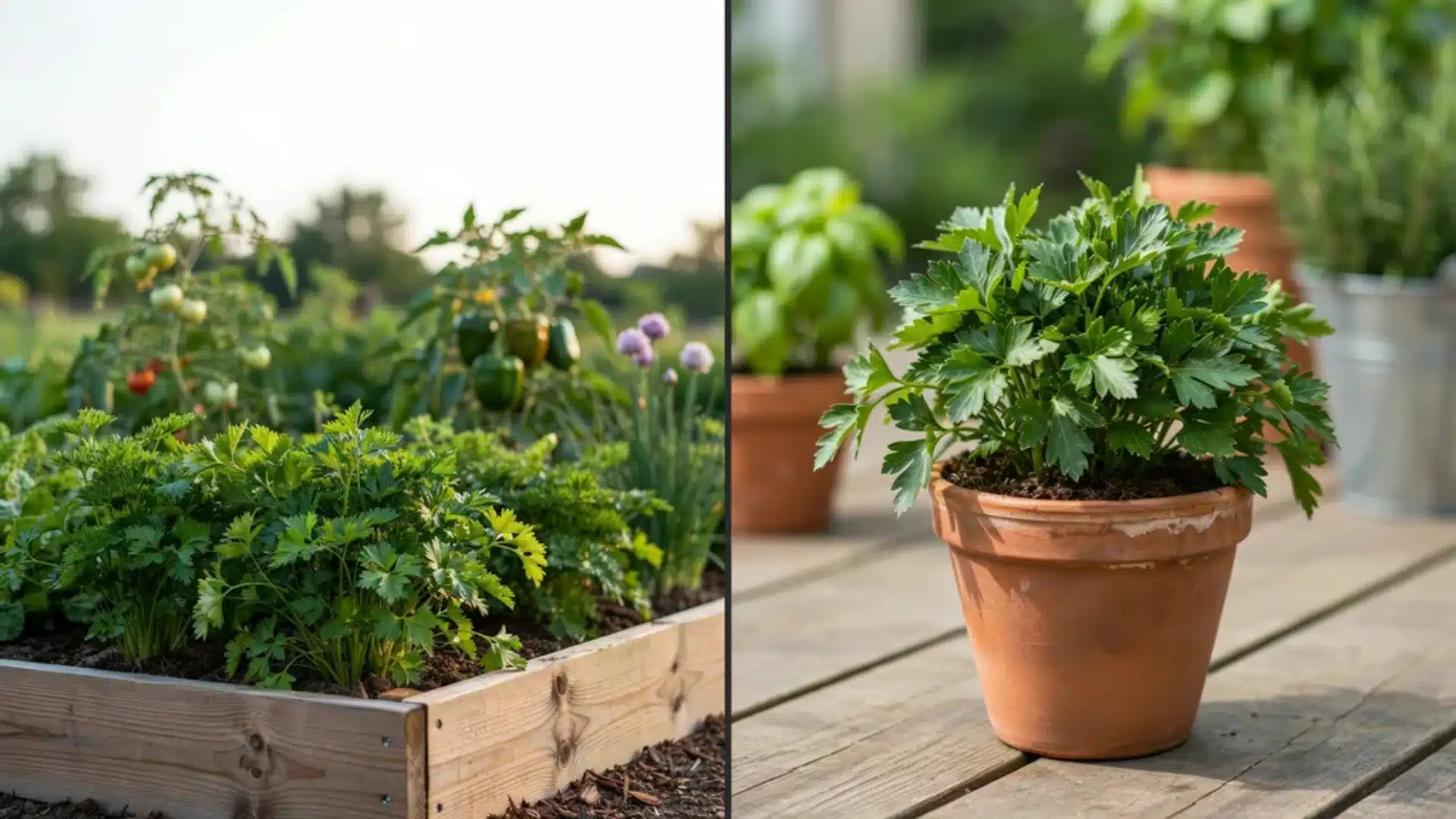
Getting the placement right is as important as choosing the right partners.
1. Spacing in open ground: Plant parsley 8 to 10 inches apart with 12 to 24 inches between rows.
2. Spacing in raised beds: 6 to 8 inches apart works well. Plant parsley along one edge so it doesn’t shade shorter neighbors.
3. Containers: If your pot is under 12 inches wide, grow parsley in its own pot. If you’re also growing tomatoes in containers, give each plant its own pot rather than sharing root space. Cramped roots cause more problems than any companion benefit can fix.
4. Soil: Parsley needs well-drained, nutrient-rich soil with a pH of 5.5 to 6.7. Amend with compost before planting.
5. Mulch: Apply mulch around parsley plants to retain soil moisture and help stabilize soil temperature. Parsley roots dry out faster than many gardeners expect.
6. Year 2 strategy: Let a few parsley plants bolt near your most pest-prone crops. The flowers are where parsley does its best companion work.
Summing it up
Choosing the right parsley companion plants is one of the simplest ways to grow a healthier garden. Tomatoes, asparagus, chives, and peas all bring real benefits.
Marigolds and nasturtiums protect the soil and lure pests away, while dill, fennel, carrots, and mint quietly cause problems that are easy to prevent.
Good companion planting comes down to keeping pest magnets away from their shared hosts and letting a few plants pull double duty as pest control.
Which parsley companion plants are you trying this season? Leave a comment below and let us know how it goes.
Frequently Asked Questions
Can You Plant Multiple Parsley Plants Together?
Yes. Give each parsley plant its own 12-inch-wide pot, or space them 8 to 10 inches apart in a garden bed or border.
Does Parsley Like Sun or Shade?
Parsley grows well in partial shade or full sun. Aim for 5 to 6 hours of direct sunlight a day for the fullest growth.
What Should You Never Plant Near Parsley?
Plant it near dill or fennel and you concentrate shared pests instead of deterring them. Keep those three in separate beds.