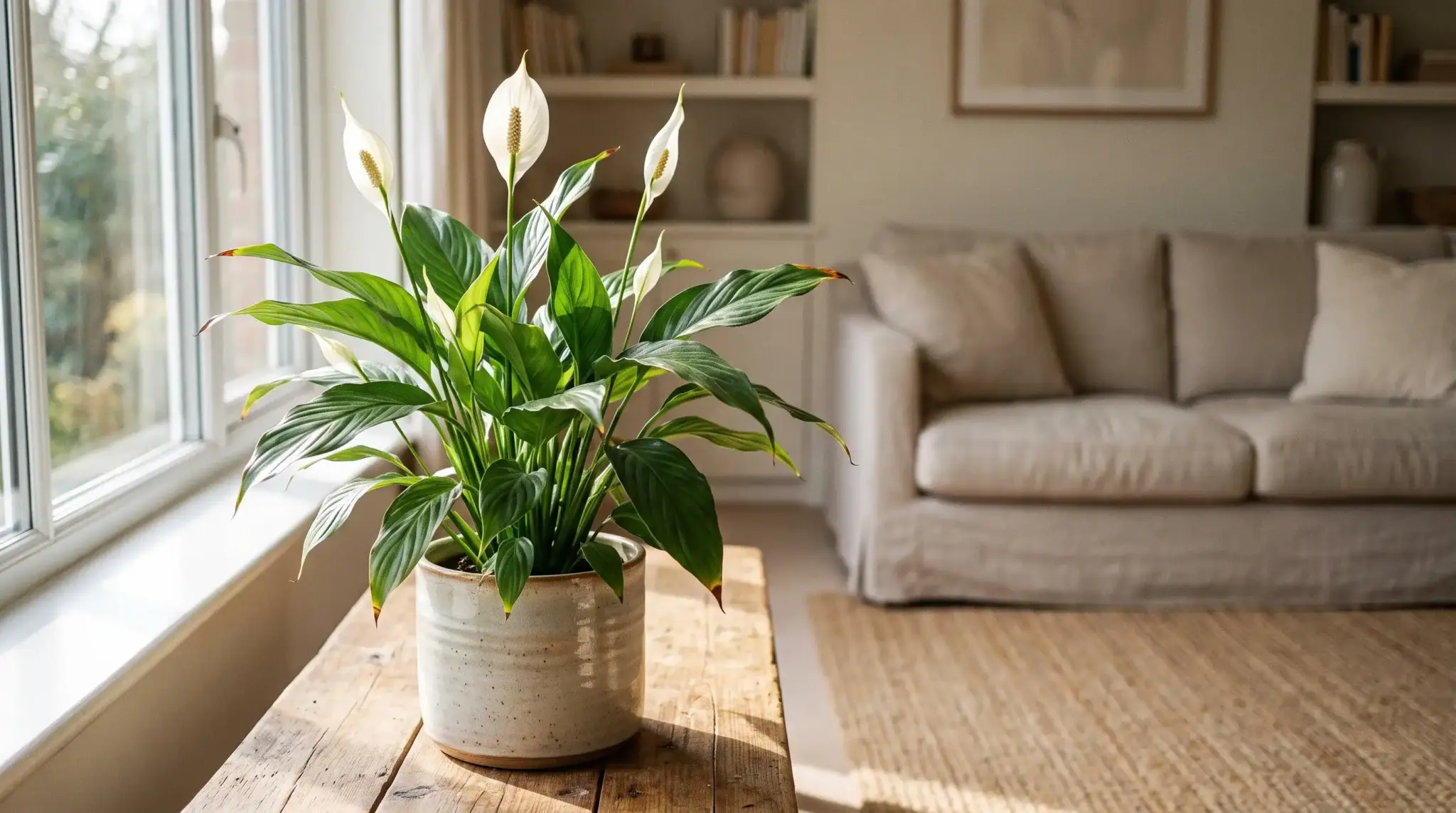
One of my peace lilies lived in the same 6-inch nursery pot for almost three years before I realized it was struggling.
The soil was drying out within a day of watering, roots were curling out of the drainage holes, and the leaves drooped even when the soil was still damp.
That plant taught me most of what I now know about how to repot a peace lily, and specifically, when to stop waiting. Peace lilies actually prefer being slightly root-bound, so the signs of a plant that has crossed the line are easy to miss.
Below is the exact process I use, from spotting the warning signs to getting the plant settled in fresh soil.
Signs Your Peace Lily Needs Repotting
Roots coming out of the drainage holes or pushing up through the soil surface
Soil that dries out within a day of watering, with water running straight through
New leaves noticeably smaller than the older ones
Drooping even when the soil is still moist
A cracked or bulging pot from root pressure
Not every problem is a repotting problem. Yellow leaves with green veins usually point to an iron deficiency, not a tight pot. And brown, crispy leaf tips almost always come from low humidity or fluoride in tap water. Repotting in either situation adds stress without fixing the real cause.
The Best Time to Repot
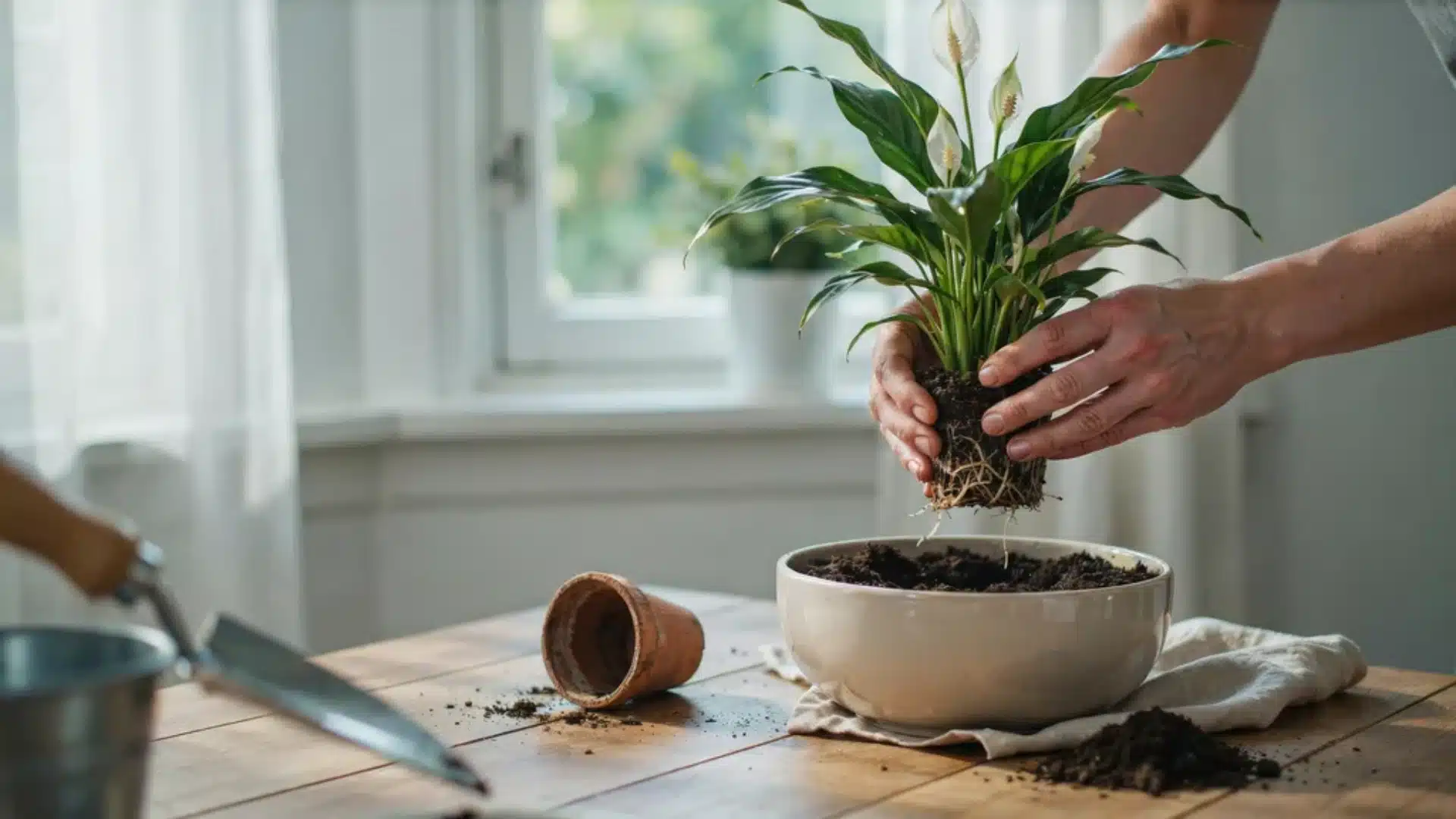
Spring, and specifically March through April, is the best time. The plant is coming out of its slower winter period and entering active growth, so it settles into fresh soil quickly. Early summer works too.
If your plant is in rough shape because the roots are severely compacted, do not wait for the perfect season. Repot it right away.
Most peace lilies need repotting every one to two years. A plant in a good-sized pot with quality soil can comfortably go two full years before showing any signs of needing to be moved. Let the plant tell you when it is ready, not the calendar.
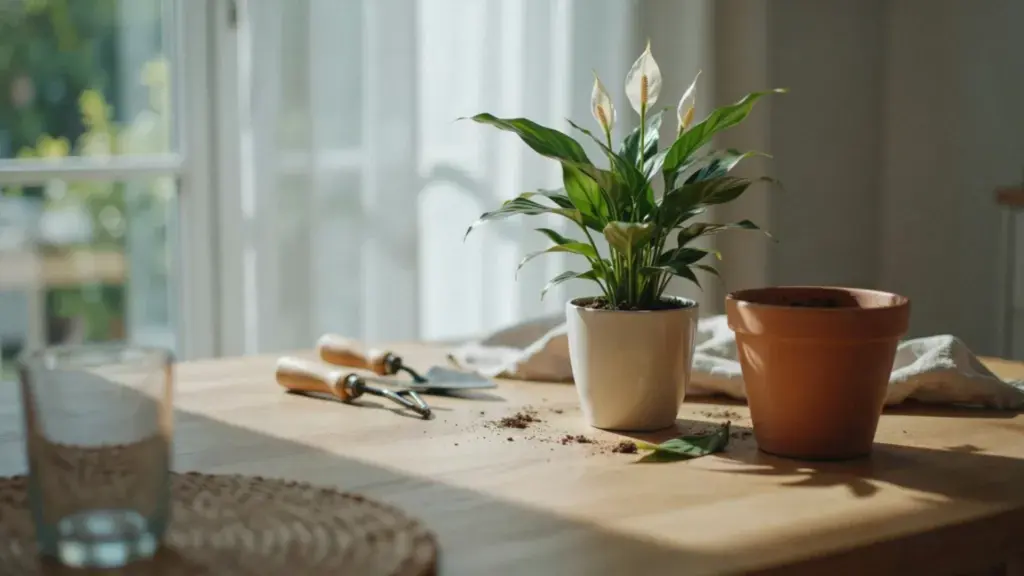
What You’ll Need Before You Start
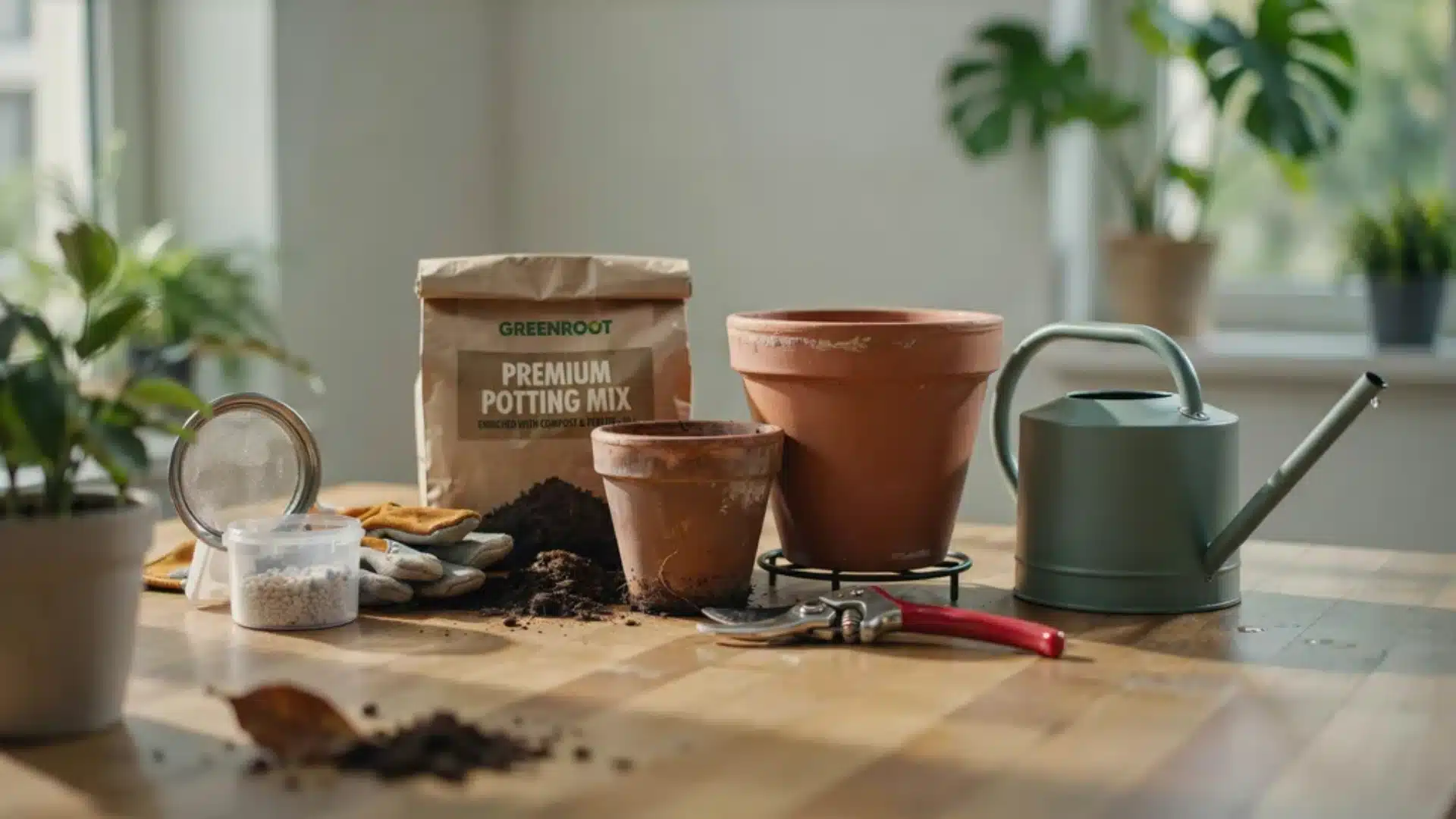
A new pot only 1 to 2 inches wider in diameter than the current one
Fresh potting mix (light, airy, slightly acidic, pH 5.5 to 6.5)
Clean scissors or pruning shears
Gardening gloves
A watering can
A small piece of mesh or a coffee filter to cover the drainage hole
How to Repot a Peace Lily, Step by Step
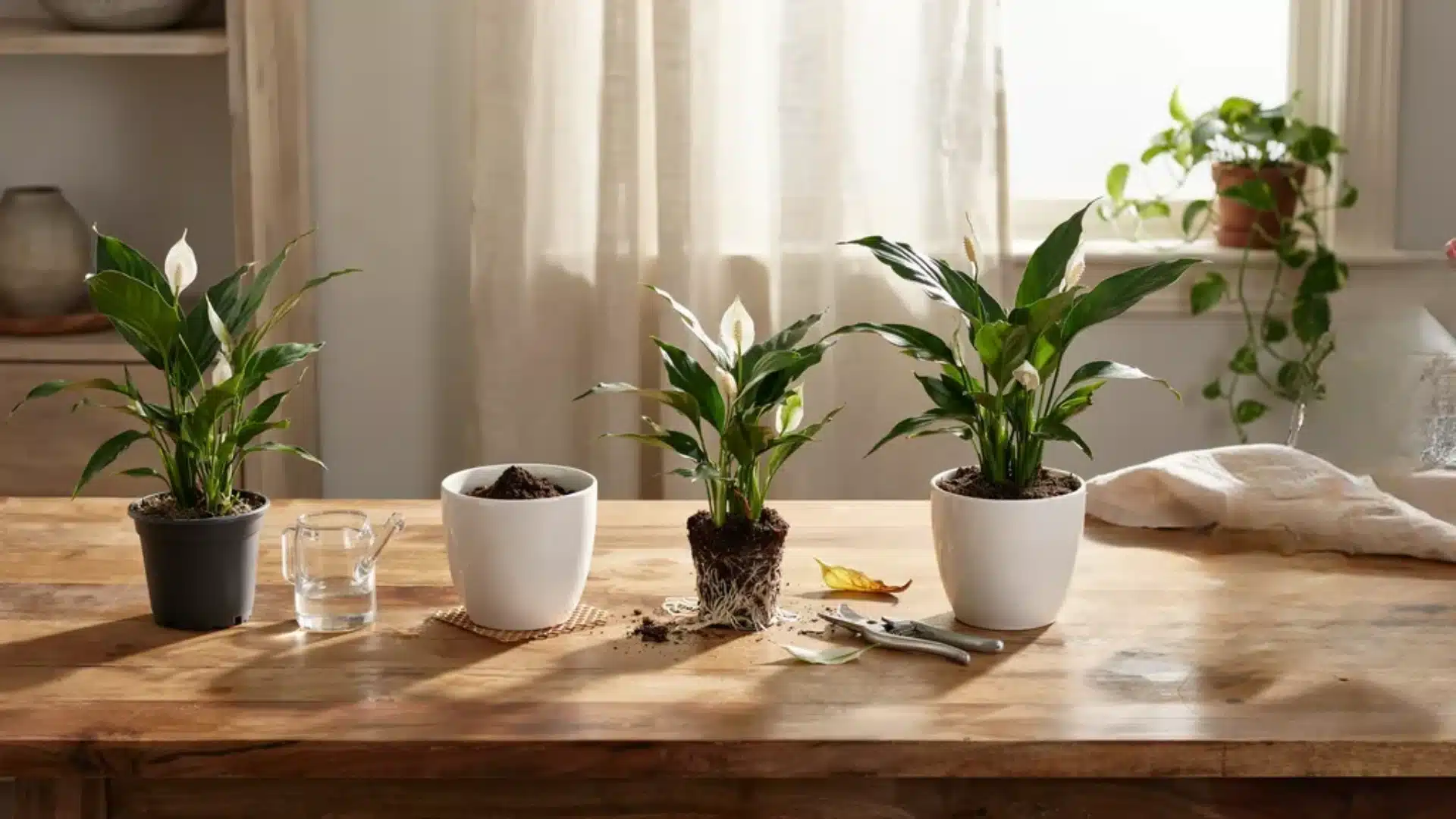
None of this is complicated. Take the steps in order and the whole process takes about twenty minutes.
Water the plant the day before: Give your peace lily a full watering 12 to 24 hours before repotting. Moist soil holds together better, the root ball slides out more cleanly, and the roots handle the move with less stress.
Prepare the new pot: Cover the drainage hole with a mesh piece or coffee filter, then add a layer of fresh potting mix to the bottom.
Remove the plant: Tilt the pot on its side and gently slide the plant out. If it is stuck, squeeze the sides of a plastic pot, or run a butter knife around the inner edge to loosen the soil. Hold the plant by its base, not the stems.
Inspect and clean the roots: Brush as much of the old soil off the root ball as you can. Healthy roots are white to cream in color. Anything soft, brown, or mushy needs to come off with clean scissors. If you see dark, slimy patches, that is root rot. Trim back all affected areas, let the roots air-dry for about 20 minutes, and use fully fresh potting mix in the new pot.
Prune before planting: Trim off any dead, brown, or faded leaves and spent flower stems before you place the plant in the new pot. A cleaner plant puts its energy into new growth instead of holding on to old tissue.
Place and fill: Set the plant in the center of the new pot. The top of the root ball should sit about one inch below the rim. Fill in around the roots with fresh potting mix and press gently to close air pockets, without packing it down hard.
Water thoroughly: Water until it drains freely from the bottom, then let all the excess drain out. Do not let the pot sit in standing water. This first watering helps the soil settle around the roots.
The First Two Weeks After Repotting
The first two weeks are when most plants either recover smoothly or start to struggle.
Peace lilies do fine in low to medium light, but they cannot handle direct sun while they are still recovering from the move. Keep the plant away from south-facing windows and heating vents for at least the first week. Bright indirect light is the target.
On watering, check the top inch of soil first, and only water when it feels dry. Overwatering right after repotting is the single most common reason plants droop and fail to bounce back. Once recovery is done, your normal peace lily watering routine takes over.
Hold off on fertilizer for three to four weeks. The roots are tender and still settling in, and fertilizer can burn them at this stage.
Some mild drooping in the first few days is normal. One of my own peace lilies droops for a full four days after every repot before it perks back up.
That is transplant shock, and it passes. Most peace lilies look noticeably better within seven to fourteen days. If drooping continues past two weeks, check the soil moisture and inspect the roots again for any rot you may have missed.
Common Repotting Mistakes to Avoid
Pot size is the biggest one, since a pot more than two inches wider holds extra soil that stays wet and invites root rot. Skipping drainage holes has the same effect, but faster. Watering hard right after the move is the third, since the new soil needs a chance to breathe between waterings while the plant is recovering.
Two smaller ones round out the list: packing the soil so tightly it cuts off airflow to the roots, and leaving damaged or rotting roots in place because you skipped the inspection step. Winter repotting is the last one. It will not do serious damage on its own, but it drags recovery out for months, since the plant is barely growing.
Repotting a peace lily comes down to catching the warning signs early, choosing a pot only slightly larger than the current one, using a well-draining soil mix, and handling the roots carefully on the way in. Once your plant is settled, the ongoing peace lily care routine takes over.
Have you spotted any of the signs above in your own plant? Drop your question in the comments and I’ll help you figure out the next step.
Frequently Asked Questions
Do peace lilies like shallow or deep pots?
Peace lilies prefer a shallow, wide pot. Their roots spread out rather than down, so extra depth just holds wet soil the roots do not reach.
Can I repot a peace lily while it is flowering?
Better to wait. Repotting during flowering usually shortens the bloom and can shock the plant. If the roots are severely bound, repot anyway and expect the current flowers to fade fast.
Should I water a peace lily from the top or the bottom?
Either works, but bottom watering avoids leaf spotting and gives the roots more even moisture. Top watering is fine as a monthly flush to clear any built-up salts.
What keeps a peace lily happy after repotting?
Steady bright indirect light, watering only when the top inch of soil is dry, and no fertilizer for three to four weeks. Skip cold drafts and direct sun.