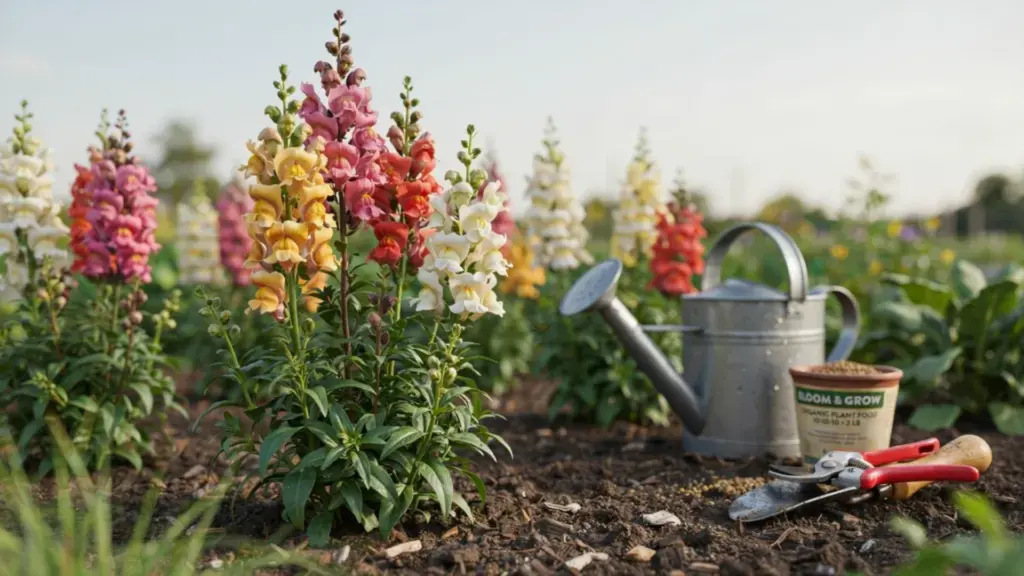
I’ve lost more snapdragons to bad timing than to any pest or disease. Plant them in the wrong season, and they fizzle out by July no matter how much you water them.
Snapdragon care comes down to a few habits around timing and light. Get those right, and they’re some of the easiest colors I grow on my flower farm in North Carolina.
These cool-season flowers thrive in spring and fall, not the heat of summer.
Get the timing and conditions right, and you will have bold, colorful spikes blooming from late winter all the way to the first frost.
This post covers planting, watering, feeding, and deadheading, plus the pests and diseases most likely to show up in your bed.
What Are Snapdragons?
Snapdragons (Antirrhinum majus) belong to the Plantaginaceae family. They are native to rocky areas of Europe, North Africa, and parts of the United States.
The name comes from the shape of each flower, which looks like a dragon’s mouth. Squeeze the sides of a fully open bloom gently, and it snaps open and shut like a puppet.
Technically, snapdragons are short-lived perennials. Gardeners grow them as annuals. In USDA hardiness zones 7 to 11, they can survive mild winters and return the following year.
I’m in zone 7b/8a, so mine act like true perennials in a mild winter and die back completely in a hard one. Either way, I always keep fresh seed on hand.
In colder zones, treat them as seasonal color plants and replant each spring or fall.
Quick facts:
- Botanical name: Antirrhinum majus
- Family: Plantaginaceae
- Native region: Mediterranean Europe, North Africa, western United States
- Hardiness: Perennial in zones 7–11; annual elsewhere
- Bloom time: Spring and fall (sometimes winter in mild climates)
Types of Snapdragons to Know Before You Plant
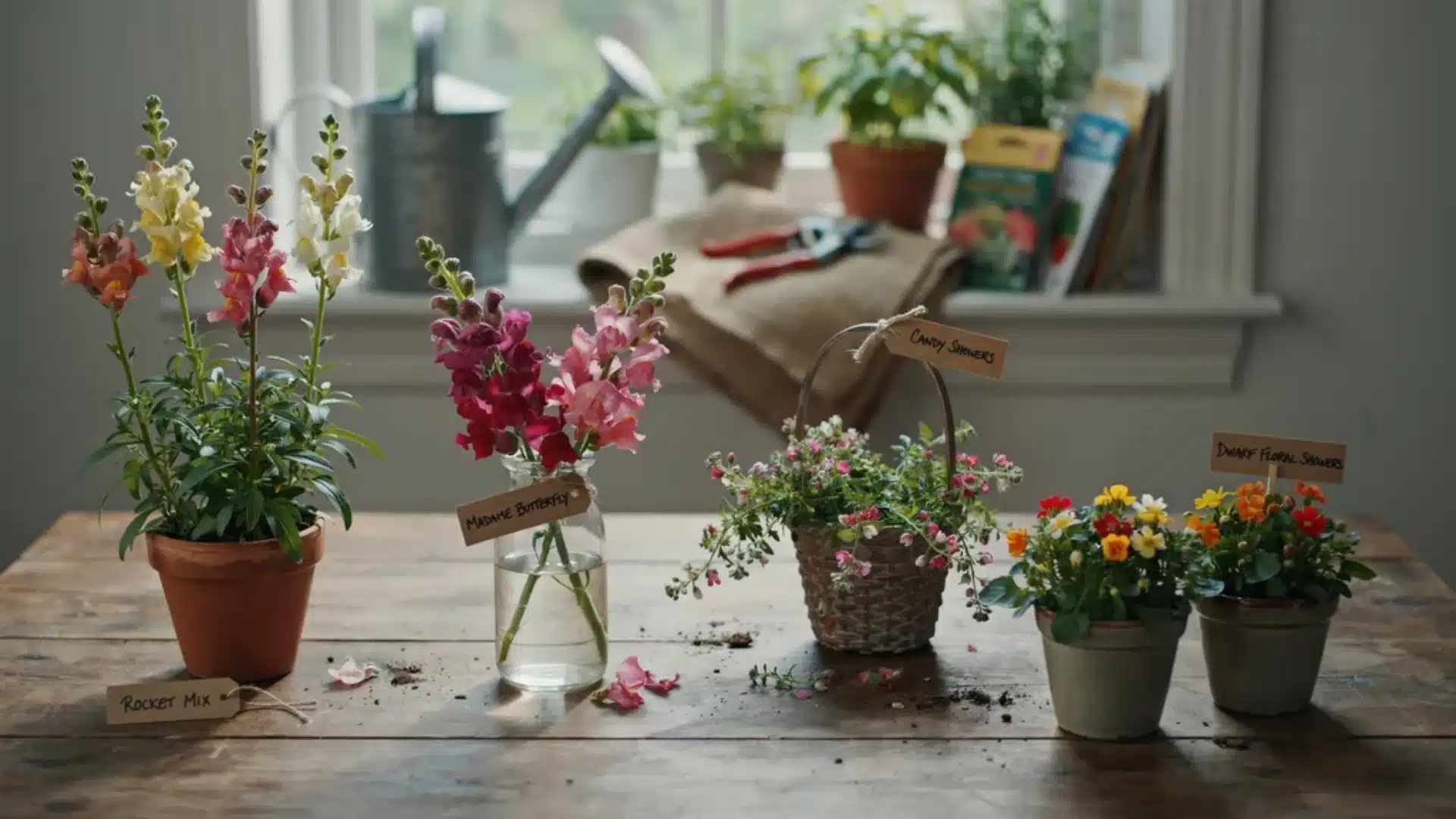
Snapdragons come in a wide range of sizes and bloom preferences. Choosing the right type for your space makes a big difference.
By height:
- Dwarf (4–6 inches): Good for borders, containers, and window boxes
- Short (9–12 inches): Works well in mixed beds
- Intermediate (1–2 feet): Versatile for both beds and cutting
- Tall (2–4 feet): Best for cut flower gardens and back-of-border planting
For comparison, zinnias can reach similar heights depending on variety, so I plant tall snapdragons and zinnias in the same back row and let the shorter types fill in front.
By Bloom Group:
Plant breeders group snapdragons by day length and temperature tolerance. This affects when they bloom and how well they handle heat.
- Groups 1 and 2: Prefer cool temperatures and shorter days. Bloom in fall, winter, and early spring.
- Group 3: Tolerates moderate warmth and medium-length days. Blooms in spring, summer, and fall.
- Group 4: Handles higher heat and longer days. Grows slower but blooms through summer.
I mix groups 1 and 4 to keep spikes coming from March through October instead of getting one short flush.
Popularly named varieties:
- Rocket Mix: Tall spikes, the backbone of my cut flower garden every spring
- Madame Butterfly: Double blooms, excellent as cut flowers
- Candy Showers: Trailing type, ideal for hanging baskets
- Dwarf Floral Showers: Compact, great for edges and small spaces
When and Where to Plant Snapdragons
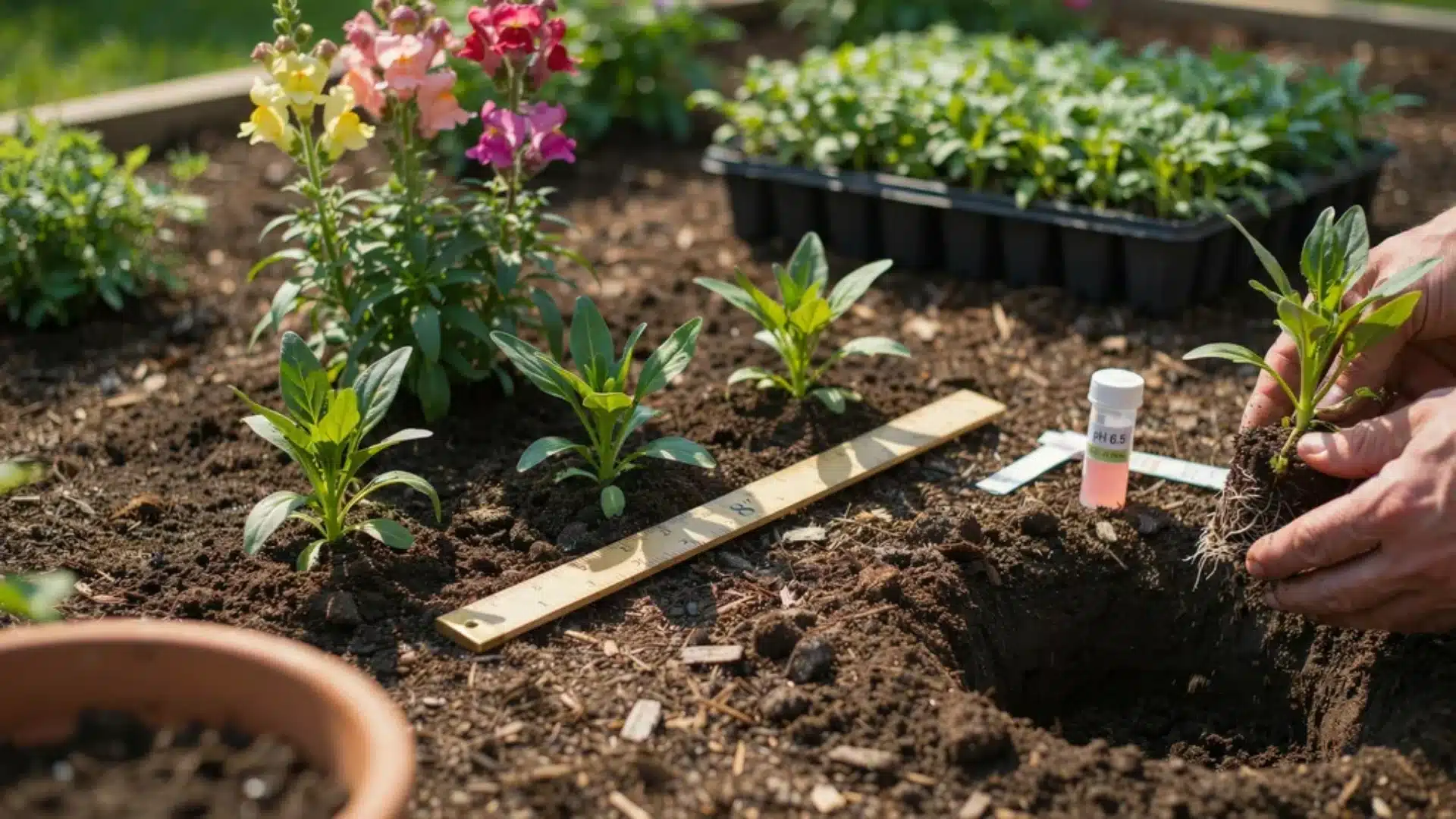
Getting the timing and location right is half the battle with snapdragons.
Plant them in the wrong season or the wrong spot, and they will struggle no matter how well you water or feed them.
Best planting time:
- Cold climates: early spring, a few weeks before the last frost
- Warm climates: fall, when summer heat starts to ease
Snapdragons prefer full sun, at least 6 to 8 hours of direct light each day. In regions with very hot summers, afternoon shade can reduce heat stress without hurting bloom quality.
Soil requirements:
- Well-draining soil with good organic content
- pH between 6.0 and 7.0 (slightly acidic to neutral)
- Add compost before planting to improve drainage and nutrients
Spacing: Space plants 6 to 12 inches apart, depending on the mature size of the variety. Closer spacing in containers is fine and creates a fuller look.
In garden beds, good spacing keeps air moving between plants and reduces the risk of disease.
How to Plant Snapdragons Step by Step
Getting the planting basics right sets your snapdragons up for a strong start. Here is what to do whether you are working with nursery transplants or starting from seed.
1. From Nursery Transplants
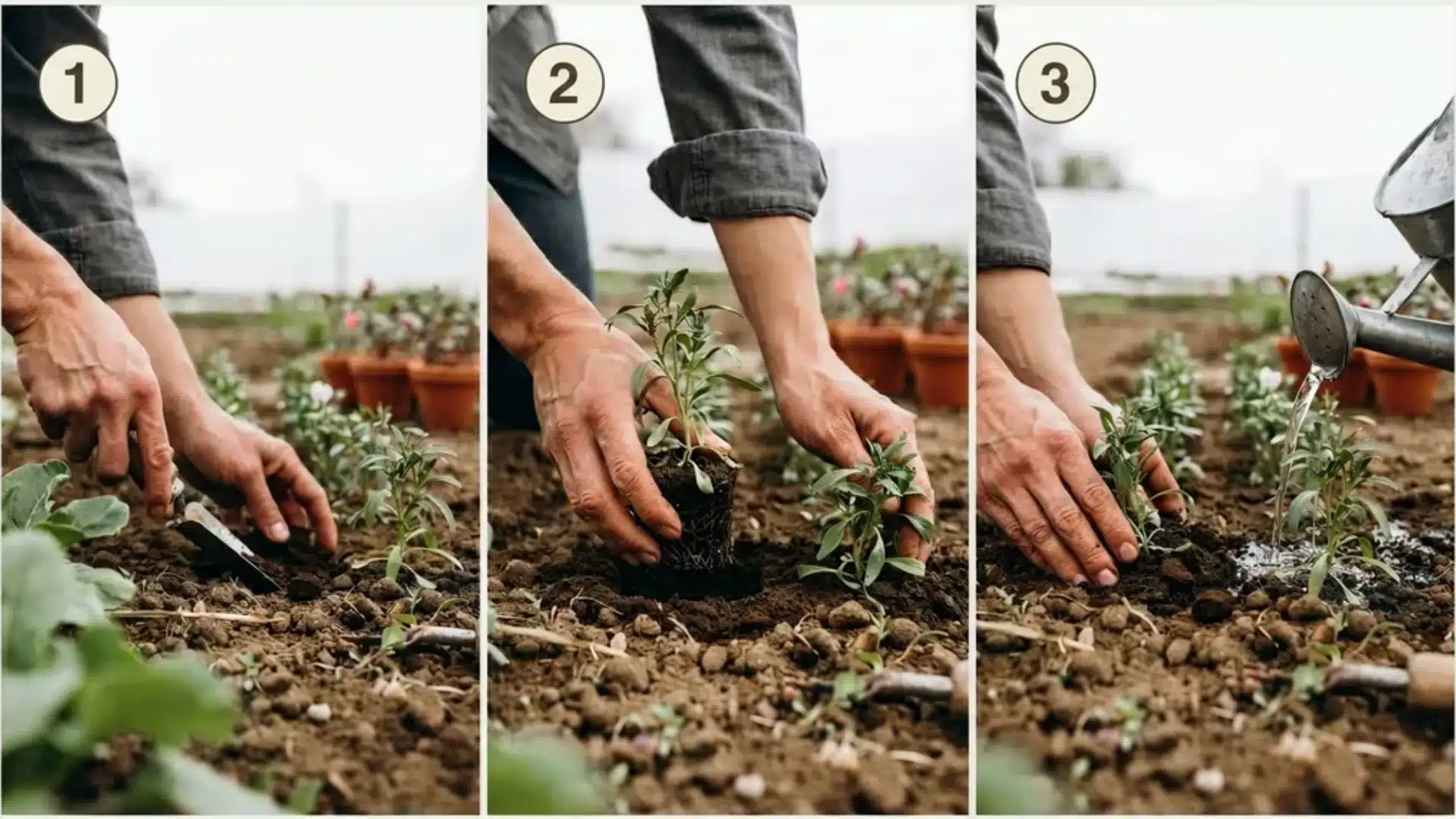
1. Dig a hole slightly larger than the root ball.
2. Set the plant so the top of the root ball sits level with the surrounding soil.
3. Backfill with soil, press gently, and water thoroughly.
4. If seedlings were grown indoors, harden them off for 10 to 14 days before planting outdoors.
Hardened snapdragons can handle light frost, down to 32°F, without harm. Avoid a hard freeze, especially right after transplanting.
2. From Seeds (Indoors)
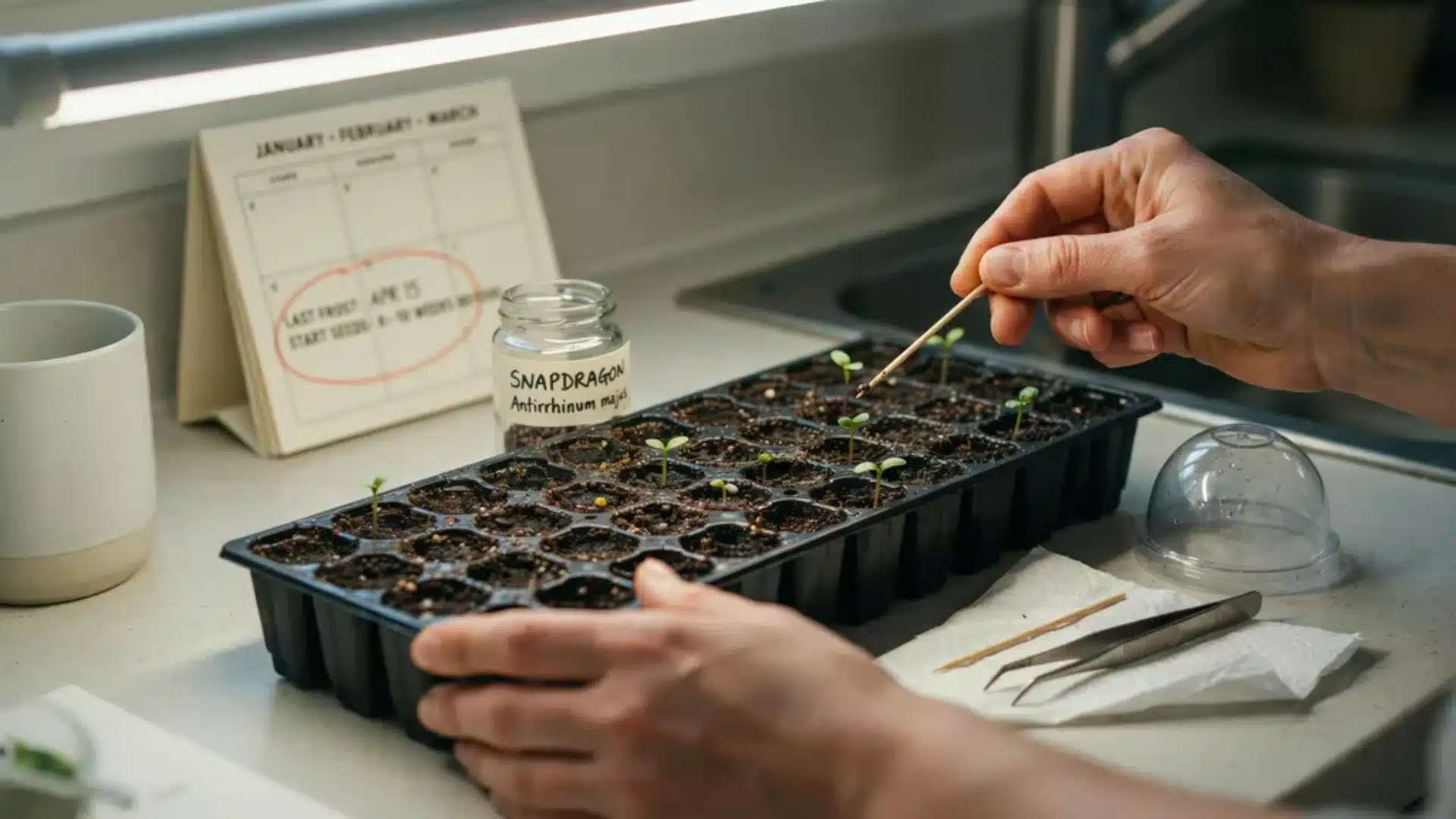
Starting from seed takes patience, but it gives you access to a wider variety.
- Start seeds indoors 8 to 10 weeks before the last frost date.
- Snapdragon seeds are extremely tiny; they look like dust.
- Use a moistened toothpick to pick up 1 to 2 seeds at a time and transfer them to seed cells.
- Do not cover seeds completely; they need light to germinate.
- Keep soil moist and warm. Germination takes up to 2 weeks.
- Thin out weak seedlings once they reach 5 to 10 cm tall.
- Transplant outdoors after hardening off.
Pro tip: I keep my snapdragon seed packets in the freezer until I’m ready to sow. The cold mimics natural stratification and gives me a noticeably better germination rate.
Snapdragon Care: Watering, Feeding, and Sunlight
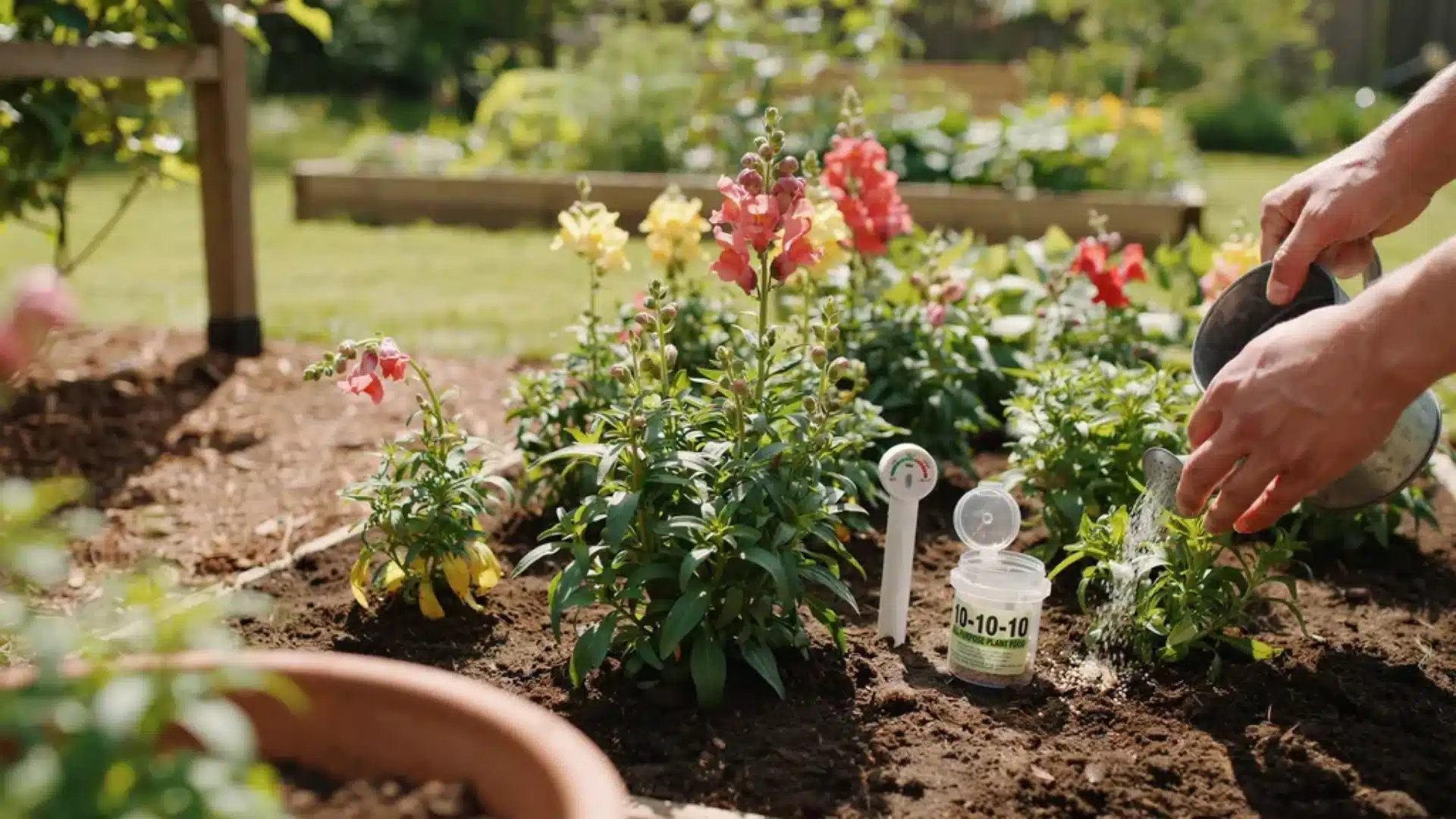
This is where Snapdragon Care either succeeds or falls apart. The basics are simple once you know them.
Watering:
- Keep the soil moist for the first few weeks after planting.
- Once established, water about 1 inch per week when there is no rainfall.
- Let the top inch of soil dry out before watering again.
- Always water at the base of the plant. Wet foliage stays wet longer and invites fungal disease.
Overwatering is a common problem. Yellowing leaves, soft stems, and soggy soil are warning signs. Underwatering shows up as drooping leaves and crispy edges.
Feeding:
- Start fertilizing when flower buds first appear.
- Use a balanced fertilizer such as 10-10-10 every 4 to 6 weeks during the growing season.
- Once plants are well established, switch to a low-nitrogen, high-potassium formula to encourage more blooms.
- Always water before applying fertilizer. This prevents root burn and helps nutrients reach the roots efficiently.
- Stop fertilizing during winter dormancy.
Sunlight:
Snapdragons need at least 6 hours of direct sunlight each day. Too little light results in weak, leggy stems and fewer flowers.
In hot climates, some afternoon shade during peak summer hours helps the plant stay healthy without sacrificing bloom quality.
Pinching and Deadheading Snapdragons for More Blooms
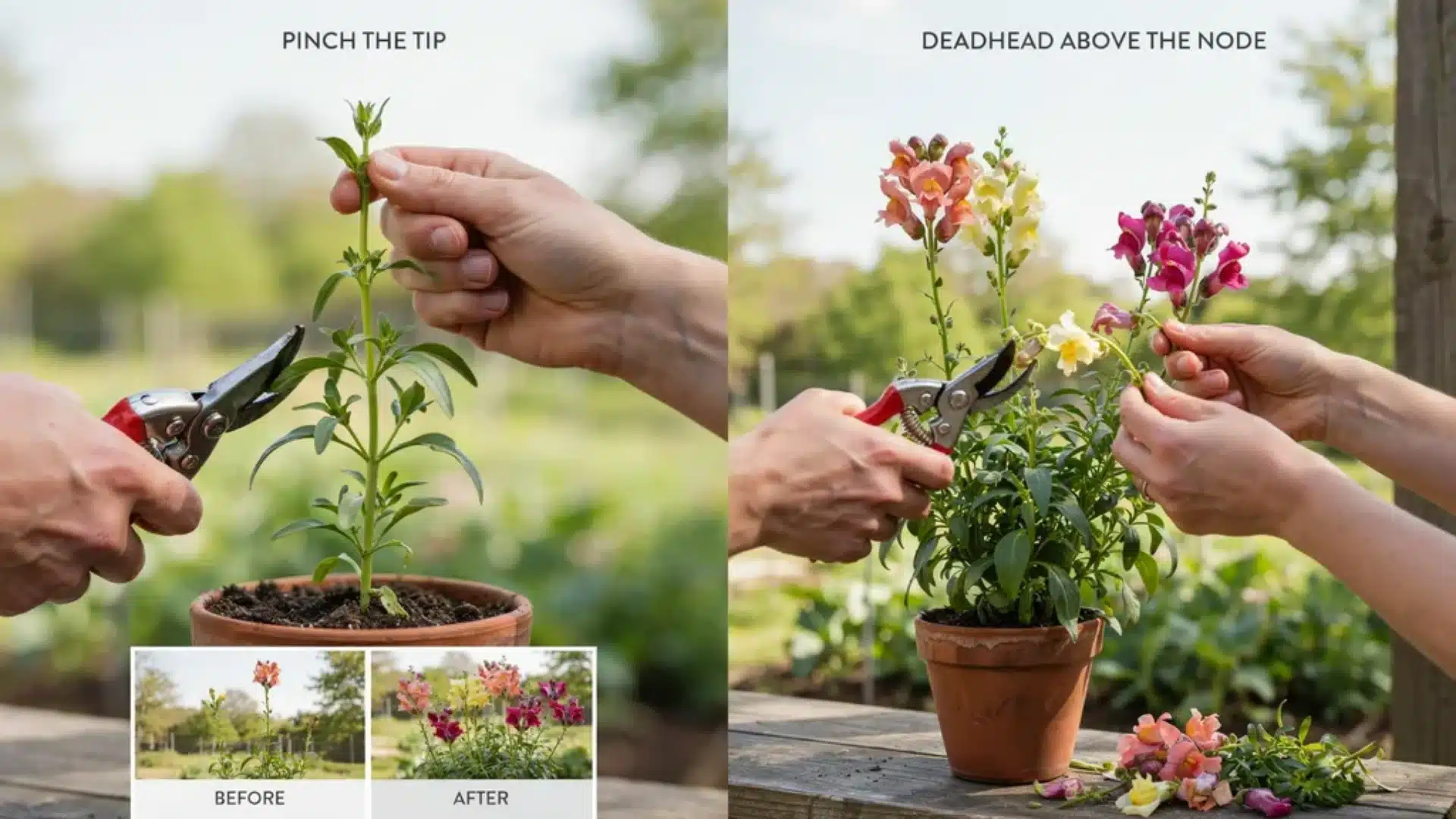
This step alone makes more difference than anything else I do for snapdragons. Skip it, and you’ll end up with sparse, short-lived flowering.
1. Pinching Young Plants: When young transplants are a few inches tall, pinch off the top growing tip and any long side shoots.
This tells the plant to branch out rather than grow straight up. The result is a bushier plant with more flowering stems.
2. Deadheading Mature Plants: Deadheading is the removal of spent flower spikes. Once a bloom fades, the plant puts energy into producing seeds.
Removing the faded flower redirects that energy back into producing new buds.
How to deadhead:
- Look for flower spikes where most blooms have faded or wilted.
- Follow the stem down to the first healthy set of leaves below the spent spike.
- Cut cleanly just above that leaf node using clean pruning shears.
- Repeat weekly during peak bloom season.
Regular deadheading can keep snapdragons flowering for many weeks longer than plants left untended. It also improves air circulation and reduces the chance of decaying flowers attracting disease.
3. Mid-Summer Cutback: When summer heat slows or stops blooming, cut the plant back by one-third to one-half of its height. Water it well and wait. Cooler fall temperatures trigger a second round of blooms.
Common Snapdragon Problems and How to Fix Them
Check the undersides of leaves regularly. Most pest and disease problems show up there first before spreading to the rest of the plant.
1. Aphids leave behind a sticky residue and cause leaves to curl. Blast them off with a strong stream of water or apply insecticidal soap directly to the affected areas. Marigold companion planting is my first line of defense, and it’s also how I got into companion planting in the first place.
2. Spider mites appear as fine webbing on leaves, with tiny pale spots scattered across the surface. Treat with neem oil or insecticidal soap as soon as you spot them.
3. Whiteflies form a small white cloud when you disturb the plant. Use yellow sticky traps alongside insecticidal soap to bring numbers down.
4. Thrips cause distorted flowers and leaves that look twisted or silvery. Neem oil works well here. You can also introduce beneficial insects like ladybugs and lacewings, which naturally feed on thrips and aphids and help keep pest populations in check.
5. Snapdragon rust is the most common disease to watch for. It appears as orange or brown pustules on the undersides of leaves.
Remove affected foliage right away and apply a fungicide. If rust shows up in a bed, move your snapdragons to a different spot the following year to break the cycle.
6. Powdery mildew and leaf spot both thrive when air circulation is poor and foliage stays wet. Space plants properly and always water at the base. A mild fungicide like neem oil helps in bad cases.
7. Anthracnose and blight spread quickly and cause stem girdling. Apply a copper-based fungicide at the first sign of infection. Remove and destroy any infected plant parts immediately. Don’t compost them.
8. Too little light causes leggy stems and sparse blooms. Move containers to a sunnier spot or choose a better garden location next season.
Snapdragons Reward a Little Attention
Good snapdragon care comes down to a few consistent habits: the right timing, watering at the base, regular deadheading, and staying ahead of rust.
These aren’t fussy plants. On my farm, they’re one of the most reliable pops of color I get in spring and fall, and cutting a few for the kitchen table never gets old.
Get one growing cycle under your belt, and you’ll wonder why you ever found them tricky.
Do you grow snapdragons in beds, containers, or both? Tell me in the comments below.
Frequently Asked Questions
Do Snapdragons Come Back Every Year?
In most regions, no. They’re grown as annuals. In zones 7 to 11, hardened plants can act as short-lived perennials and return for a season or two.
Are Snapdragons Better in Pots or in the Ground?
Both work well. In-ground plants tend to get bushier and self-seed more readily. Pots give you more control over soil and drainage.
Can I Direct-Sow Snapdragon Seeds Outdoors?
You can, but germination is slower and less reliable than starting indoors. Starting seeds inside under lights gives blooms a real head start.
Do Snapdragons Make Good Cut Flowers?
Yes. Strong stems and a long vase life make them a cut-flower-garden staple, especially the taller Rocket and Chantilly types, which last nearly as long as tulips do.