You bought a schefflera because it looked lush and low-fuss. Then the leaves started dropping, or the stems went tall and floppy, and you started to worry.
The good news is your umbrella plant is one of the most forgiving houseplants you can own.
Problems come down to two things: light and water, both of which are easy to fix once you know what to look for.
This post walks you through Schefflera plant care from top to bottom, including light, watering, soil, pruning, feeding, and the common issues that make your plant look sad.
By the end, you will know exactly how to keep it thriving.
What Is a Schefflera?
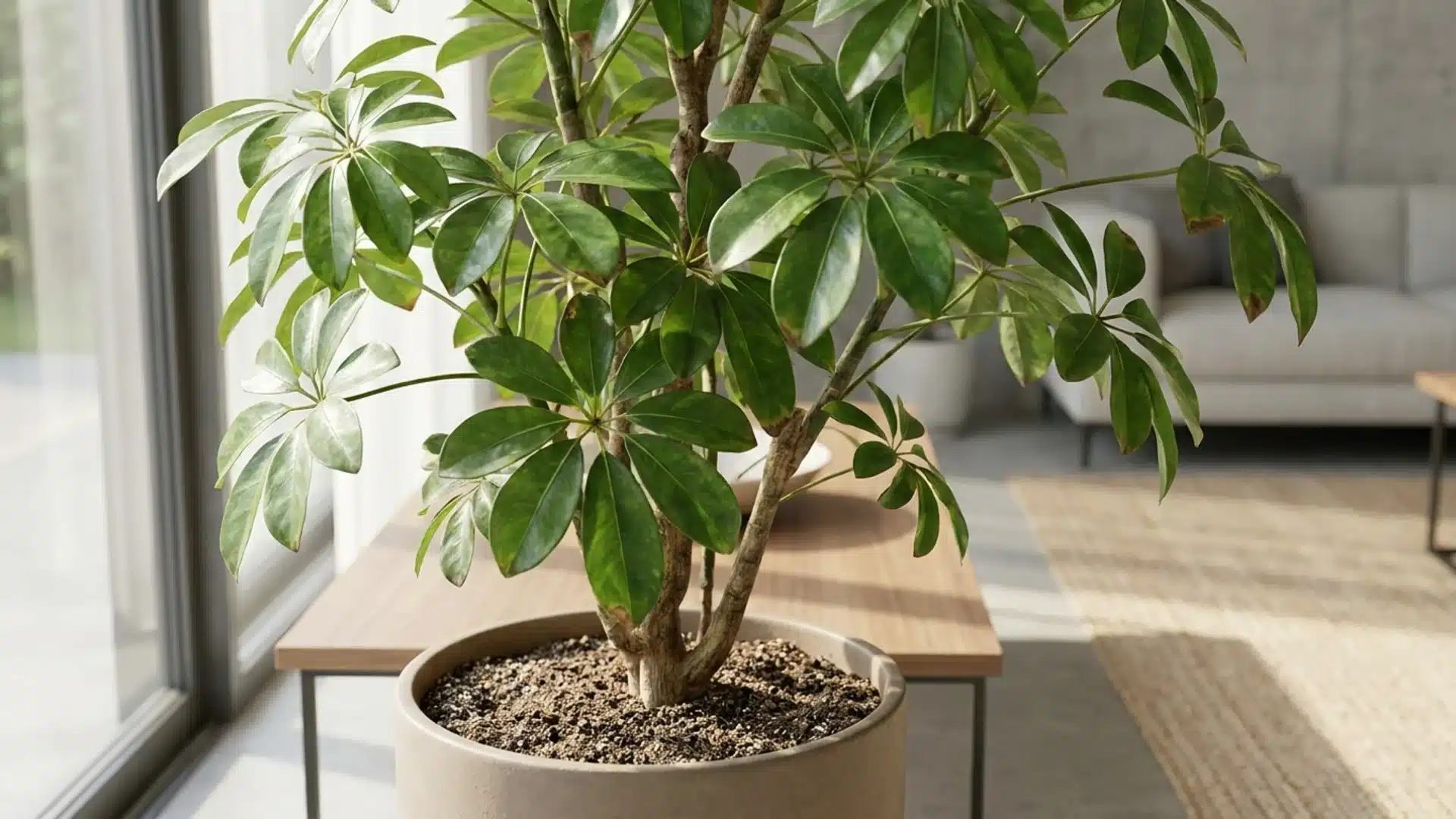
A Schefflera, often called the umbrella plant or umbrella tree, is a tropical plant with glossy leaves that fan out from a central point like the spokes of an umbrella.
It comes from warm regions including Taiwan, Hainan, Southeast Asia, and Australia.
Two types show up most in homes and garden centers:
- Schefflera arboricola, the dwarf umbrella tree. It has smaller leaves, sometimes with creamy variegation, and stays more compact.
- Schefflera actinophylla, the larger umbrella tree, is also called the octopus plant. It has big, drooping leaves and can reach several feet indoors.
Both belong to the same family and want nearly identical care, so the tips below apply to either one.
Schefflera Light Needs
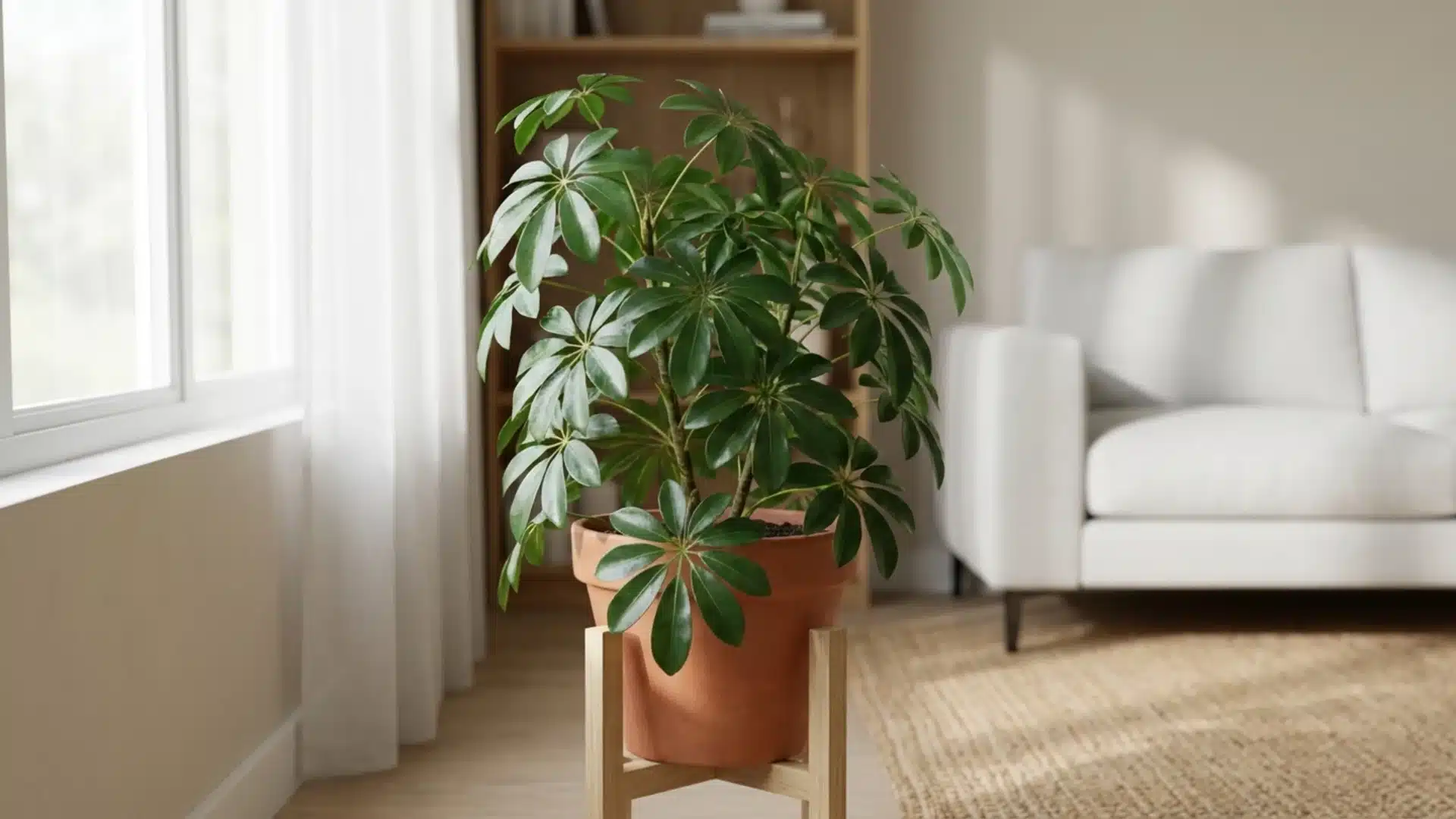
Give your schefflera bright, indirect light, and it will reward you with full, upright growth. An east or west window works beautifully, and a spot a few feet back from a south window does too.
Light is the most common reason an umbrella plant looks unhappy. Too little of it, and the plant stretches toward the window, growing tall and spindly with wide gaps between leaves.
This is what people mean by “leggy.” If you notice thin, stretched-out stems, move your plant to a brighter spot.
Avoid harsh midday sun through glass, since it can scorch the leaves and leave brown patches.
Rotate the pot a half turn every month or so. This keeps the plant from leaning toward the light and helps it grow evenly on all sides.
How to Water a Schefflera
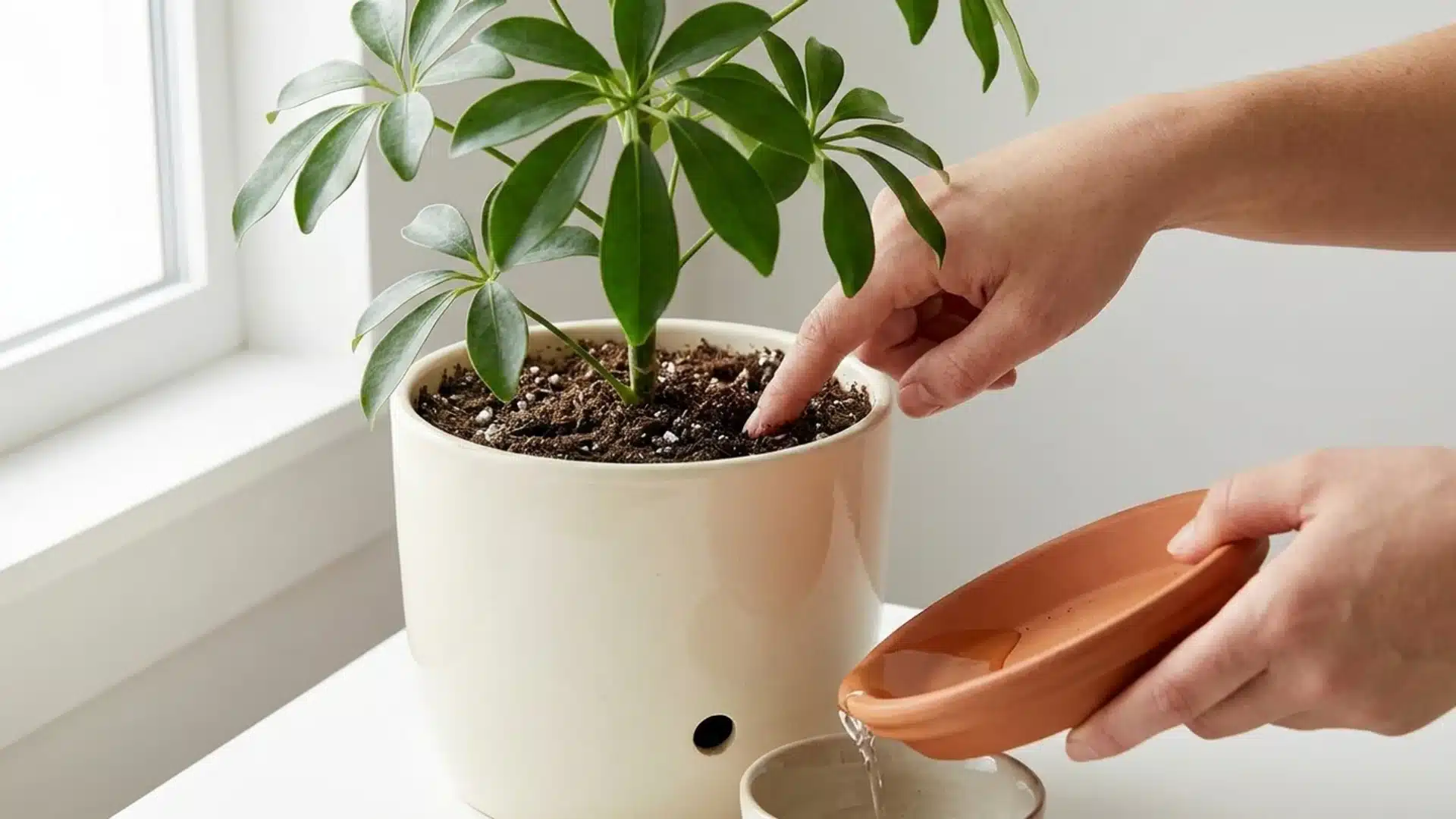
Watering trips up more plant owners than anything else, so this part matters most. Your schefflera likes soil that dries out slightly between drinks, never soggy and never bone dry for long.
Here is the simple method: stick your finger about an inch into the soil. If it feels dry at that depth, water thoroughly until the water runs out of the drainage hole.
If it still feels damp, wait a few more days. Always empty the saucer afterward, because roots left sitting in water will rot.
Cut back in winter, when growth slows, and the soil stays wet longer.
Overwatering is the number one killer of this plant, so when in doubt, wait.
A thirsty umbrella plant recovers far more easily than a waterlogged one. The same watering rhythm keeps most of your houseplants healthy too.
Best Soil and Pot for a Schefflera
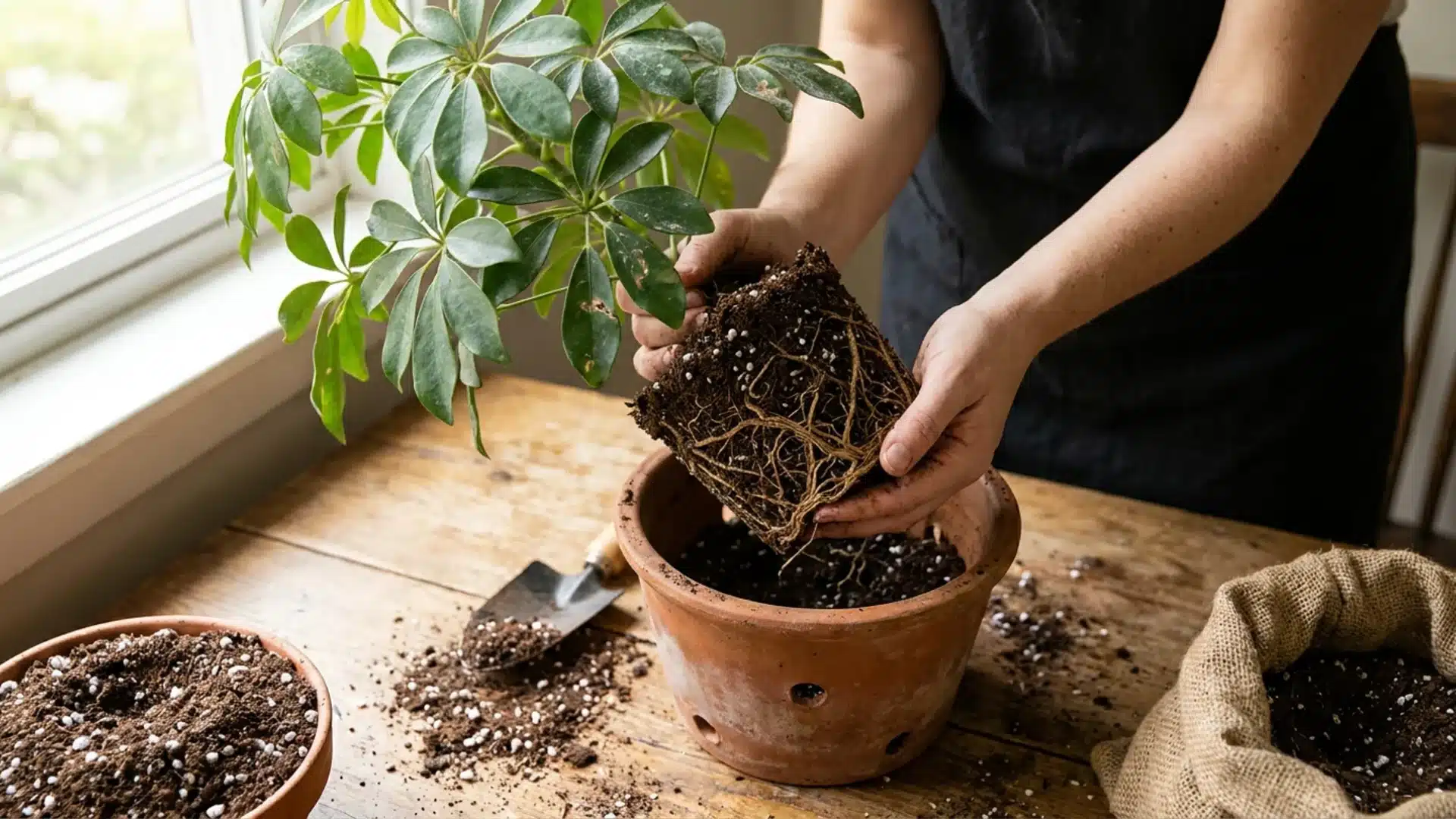
Your plant needs a well-draining potting mix that holds some moisture without staying soggy. A standard houseplant mix works well, and stirring in a handful of perlite improves drainage even more.
Dense, compacted soil is a quiet cause of trouble. When soil packs down, water cannot flow through, and roots struggle to breathe, which often shows up as dropped leaves.
Refreshing the mix every couple of years keeps things loose. Whatever pot you choose, make sure it has drainage holes. Without them, water pools at the bottom, inviting root rot.
Schefflera Temperature and Humidity
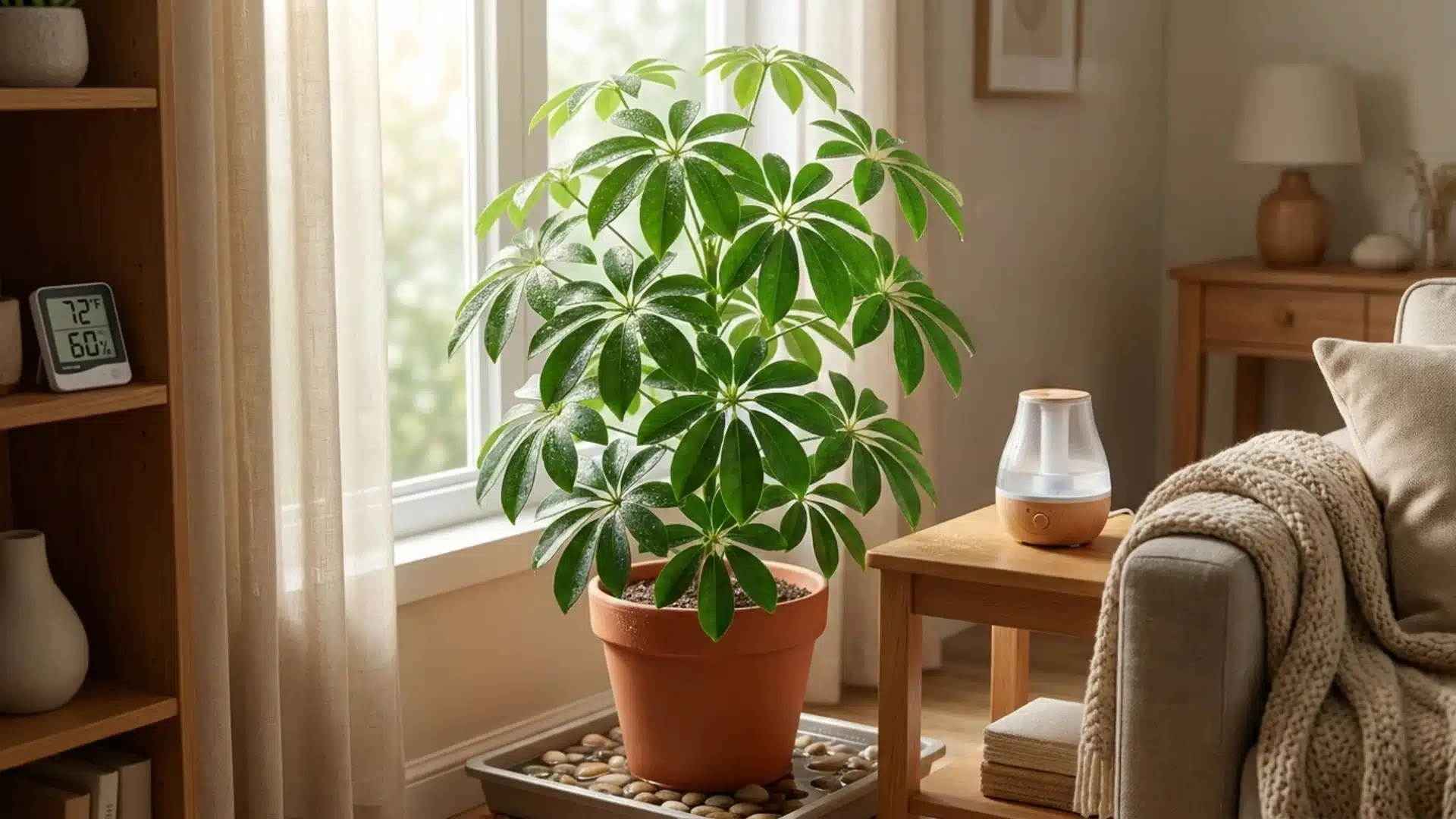
As a tropical plant, your schefflera is happiest between 60 and 80°F. It handles normal room temperatures with ease, but it dislikes sudden swings.
Keep it away from cold drafts, heating vents, and air conditioners. A blast of hot or cold air can shock the plant and trigger a wave of leaf drop.
Temperatures below 60°F stress it quickly, so bring outdoor plants inside before autumn turns cold.
Humidity is less fussy. Average household air suits it fine, but it enjoys a boost if your home runs dry.
Mist the leaves now and then, set the pot on a pebble tray with water, or run a small humidifier nearby. Grouping plants also raises the moisture in the air around them.
Feeding Your Schefflera Plant
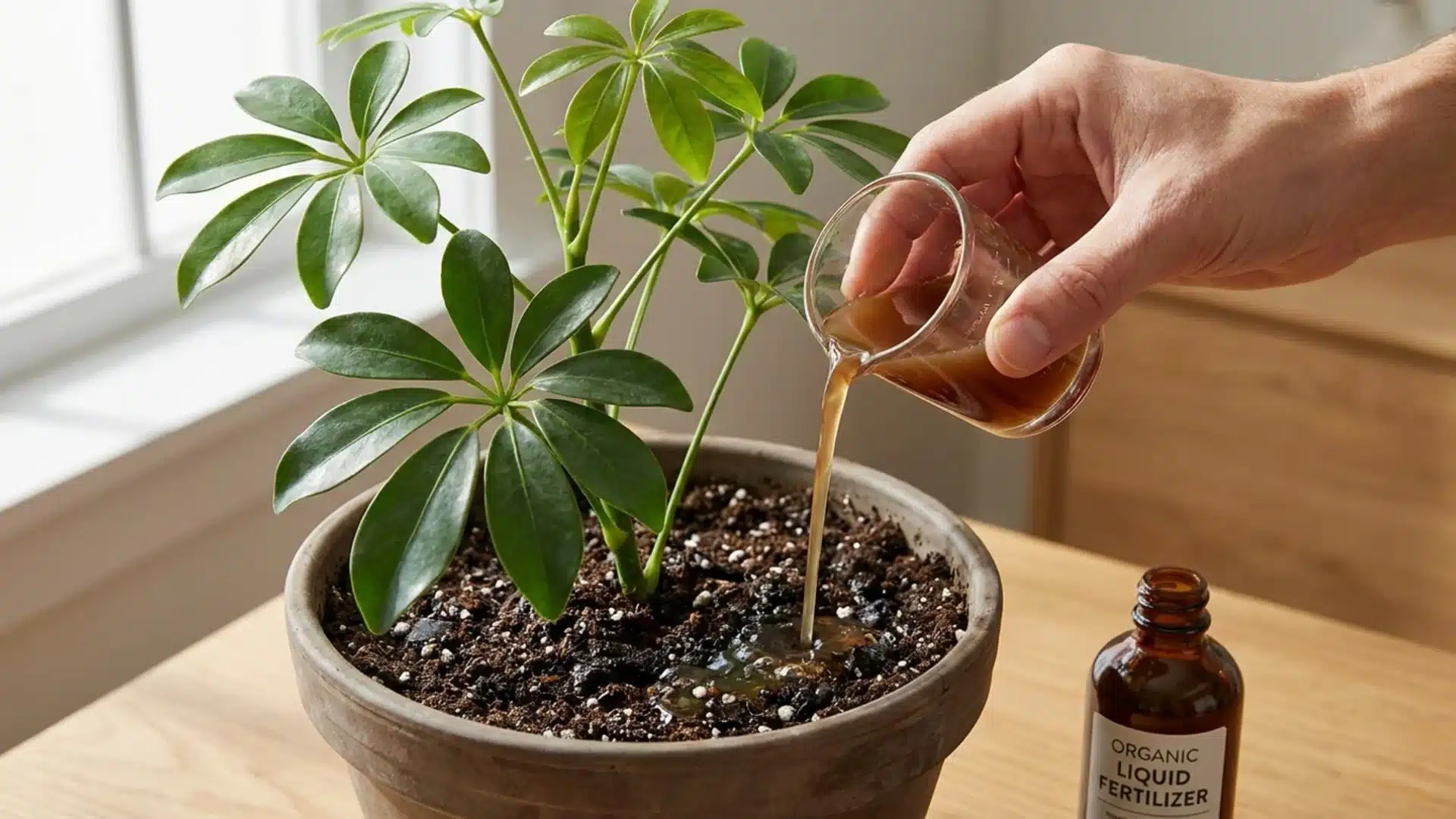
Your umbrella plant is a light feeder, so it does not need much.
During the spring and summer growing season, feed it a balanced liquid fertilizer diluted to half strength, roughly every two to three weeks.
Skip feeding entirely in winter, when the plant is resting.
More is not better here. Too much fertilizer can burn the roots and cause leaf drop, and it may show up as browning leaf edges.
If that happens, flush the soil with plenty of water and ease off the feeding.
Pale or patchy leaves, on the other hand, can signal a nutrient deficiency that a regular feeding schedule fixes.
Pruning and Cleaning Your Schefflera
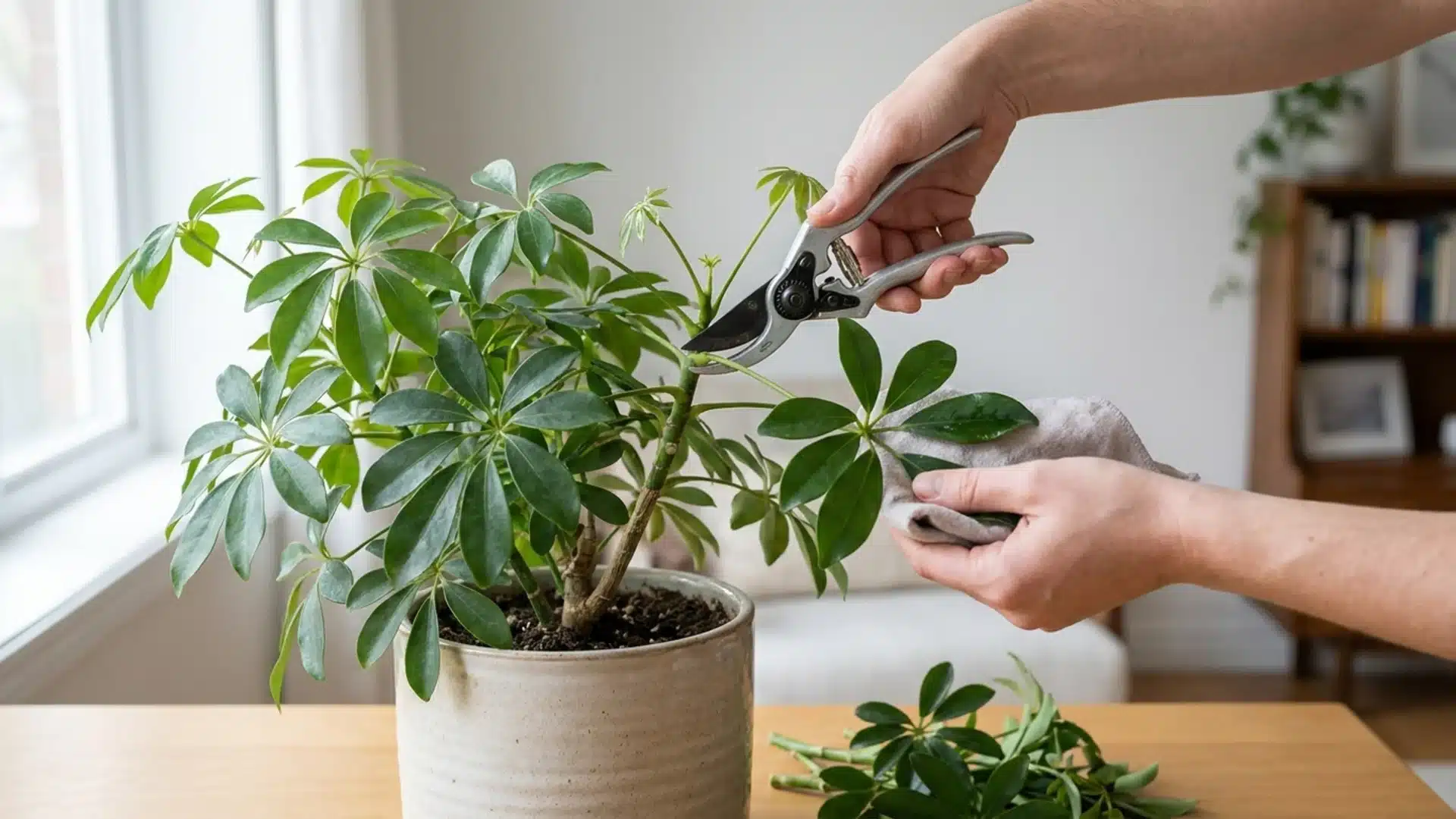
Pruning keeps your Schefflera bushy and shapely, and it is easy to do. Using clean, sharp shears, cut back overgrown or leggy stems to the height you like, snipping just above a leaf node.
New growth sprouts from there, and the plant fills out fuller than before. Umbrella plants bounce back fast, so do not be shy.
The best time to prune is spring or early summer, during active growth. Never remove more than about 30 percent of the plant at once, since heavier cutting can shock it.
Wipe the leaves with a damp cloth every so often. Dust blocks light and gives pests a place to settle, so clean foliage is healthier foliage.
How to Propagate a Schefflera
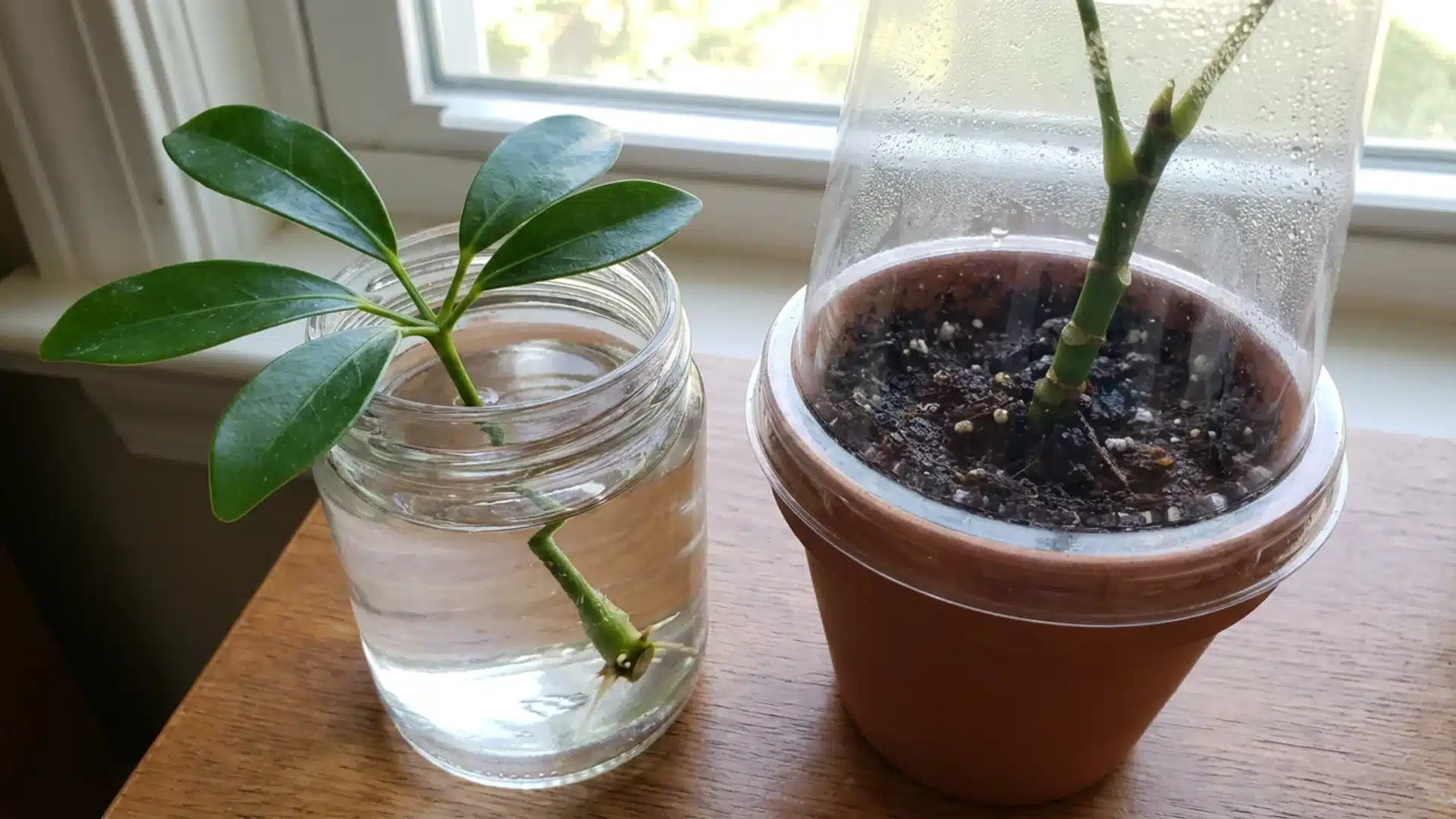
Want more plants for free? Stem cuttings are the easiest route. Choose a healthy stem with a couple of leaf nodes and cut it about four to six inches long, just below a node. Remove the lower leaves, leaving two or three at the top.
Dip the cut end in rooting hormone if you have it, though it is optional. Plant the cutting in a moist, well-draining mix, or set it in a glass of water.
Keep it warm and lightly damp, and cover a soil-potted cutting with a clear plastic bag to hold humidity. Roots usually form within a few weeks.
Spring and early summer, when the plant has the most energy, give you the best success rate.
Repotting a Schefflera: When and How
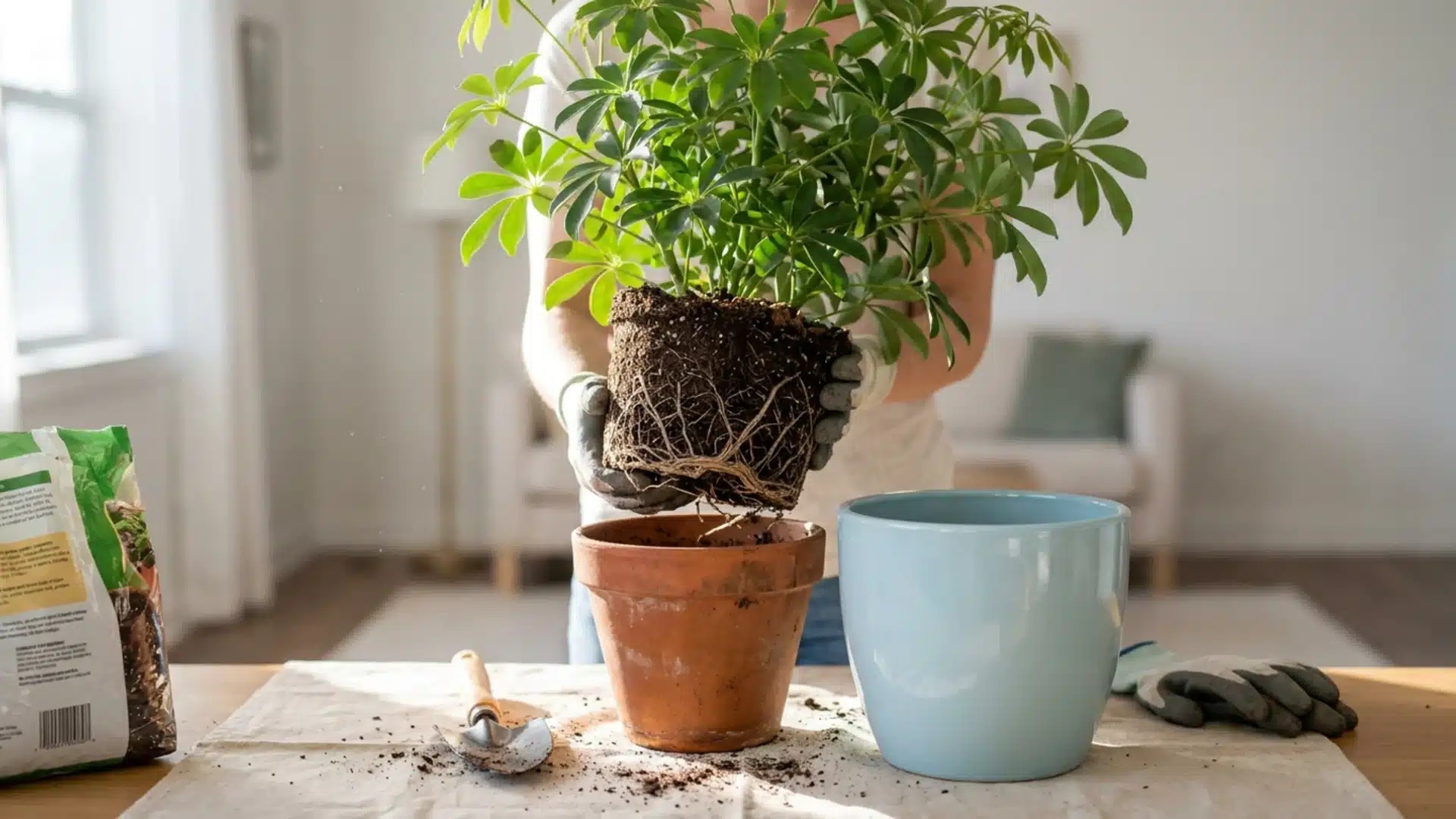
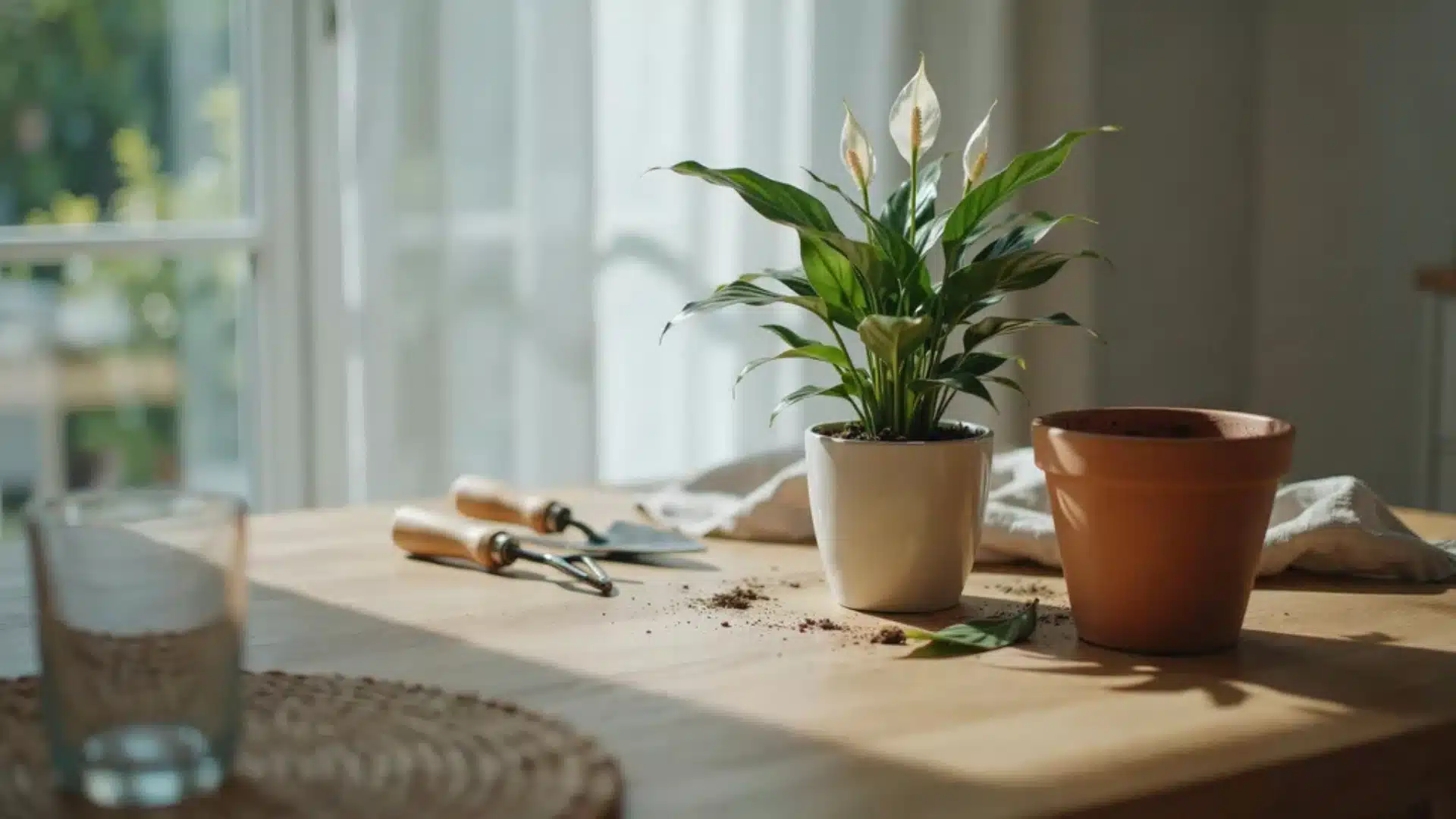
Repot your schefflera when it outgrows its pot, usually every two to three years. Telltale signs include roots circling the bottom, roots poking out of the drainage holes, and soil that dries out very fast after watering.
Spring is the ideal time, since the plant recovers quickly during active growth.
Pick a pot only slightly larger than the old one, because too much extra soil can retain moisture and increase the risk of root rot.
Ease the plant out, settle it into fresh mix, and water it in. Keep watering moderately for the first week or two while the roots adjust.
Schefflera Arboricola Care: What to Know
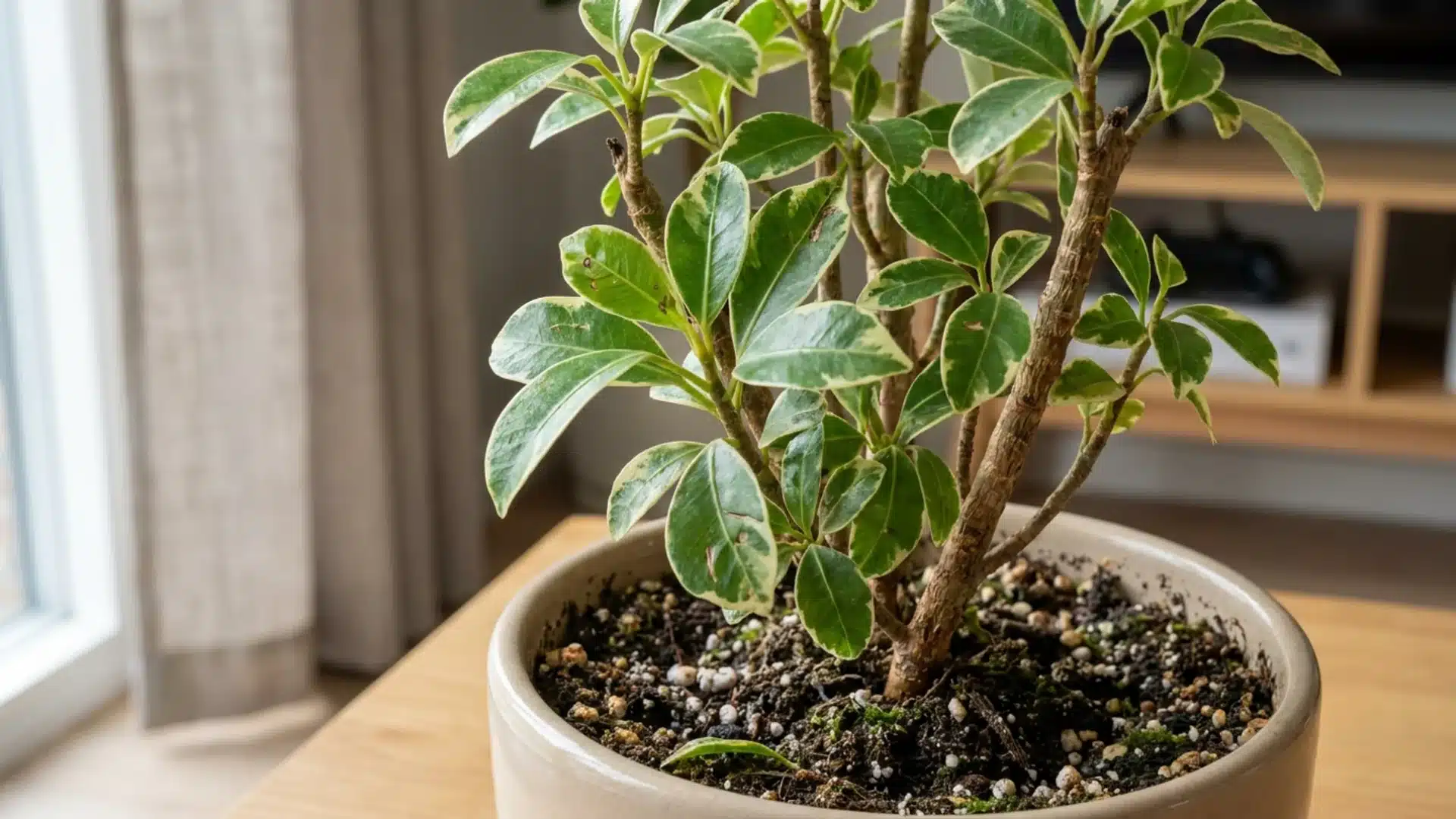
Schefflera arboricola care follows the same rules, with a few small notes.
The dwarf variety has smaller leaves and a tidier shape, which makes it a favorite for tabletops and even bonsai.
If your arboricola has variegated, cream-splashed leaves, give it slightly brighter, indirect light to keep the coloring strong.
In dim spots, variegation fades and growth slows. Otherwise, water, feed, and prune it exactly as you would the larger umbrella tree.
Common Schefflera Problems and Fixes
Even an easy plant sends distress signals. Here is how to read them.
1. Yellow leaves: Usually, overwatering, soft, yellow leaves with damp soil mean too much water, so let the soil dry more.
Yellow and dry leaves point to underwatering instead; a few yellow lower leaves on an otherwise growing plant are just natural aging.
2. Leaf drop: Often stress from a sudden temperature change, a draft, or a recent move. Overwatering and underwatering both cause it, too. Keep conditions stable and consistent, and the plant settles down.
3. Leggy, stretched growth: A clear sign of too little light; move it to a brighter spot and prune the straggly stems to encourage a fuller shape.
4. Pests: Watch for spider mites, mealybugs, scale, and aphids, especially in dry air or on a stressed plant. Wipe the leaves, remove damaged ones, and treat with insecticidal soap or neem oil.
5. Root rot and leaf spot: Root rot comes from soggy soil and poor drainage. Brown or black spots signal fungal or bacterial disease, so remove affected leaves and keep the foliage dry when you water.
Is Schefflera Toxic to Pets and Kids? Yes, so place it thoughtfully. The plant is mildly toxic to humans and can cause stomach upset if leaves or stems are eaten. It is more dangerous to cats and dogs.
Conclusion
Your Schefflera does not ask for much. Get the light right and water only when the top inch of soil is dry, and you have handled the two things that matter most in Schefflera plant care.
Everything else, from feeding and pruning to repotting and propagation, builds on that foundation.
When your plant looks off, read the leaves: yellowing usually means water trouble, legginess means more light, and sudden leaf drop means something changed.
Fix the cause, give it a little patience, and your umbrella plant will reward you with years of lush, tropical greenery. Have a question about your own plant? Drop it in the comments below.
Frequently Asked Questions
How Long Does a Schefflera Plant Last?
With consistent care, a Schefflera (umbrella plant) can live for 25 to 50 years.
Are Coffee Grounds Good for Schefflera?
Yes, Schefflera(Umbrella plants) can benefit from coffee grounds because they appreciate the nitrogen boost.
How to Make Schefflera Bushy?
To make a Schefflera(umbrella plant) bushy, you need to trigger its lateral buds by removing the dominant top shoots.