One of the things I love most about Sansevieria (other than how easygoing they are) is how much variety exists in this group of plants commonly called snake plants.
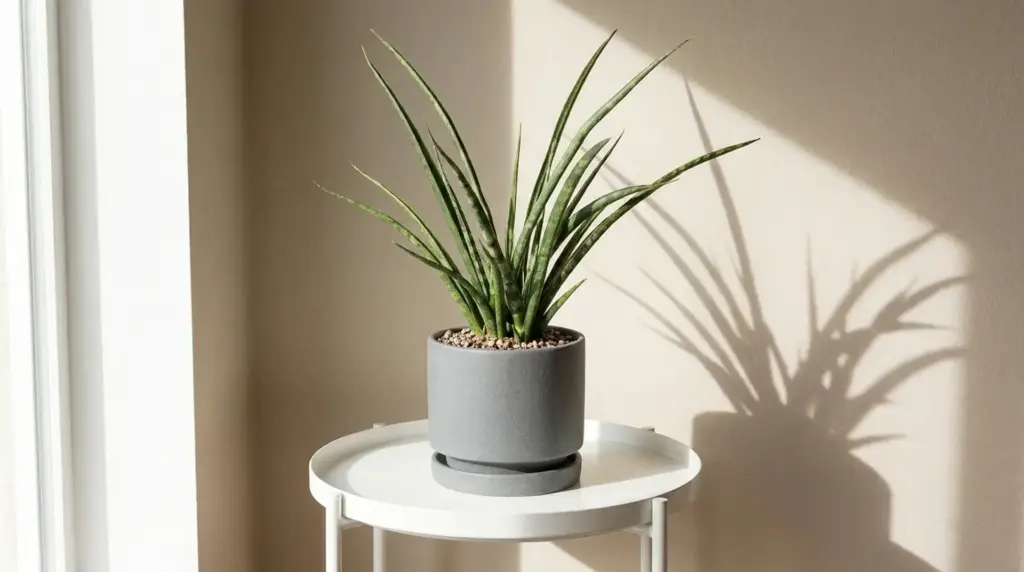
Today’s feature, Sansevieria Fernwood’, makes a great addition to a group of snake plants, and it holds its own as a sculptural plant too.
Its stiff, striped green leaves grow in an almost fountain-like shape when the plant is young, then twist and turn in unexpected ways as it matures.
This cultivar is a hybrid of S. parva and S. suffruticosa, developed in California by hybridizer Rogers Weld at Fernwood Nursery (hence the name), and is often labeled as “Sansevieria Fernwood Mikado”, but S. Fernwood is its registered name.
Like other snake plants, ‘Fernwood’ belongs on any list of easy-care houseplants. Here’s how to keep yours thriving.
How to Care for Sansevieria Fernwood
Good light, fast-draining soil, and a patient watering hand cover most of what Fernwood needs. It forgives a missed watering far more easily than an extra one.
1. Light Requirements for Sansevieria Fernwood
Bright filtered light is best for all snake plants, though they tolerate lower light for a time. In medium or low light, expect the plant to lose some leaves and the colors to fade a little over time.
The leaves also become less rigid as the plant stretches to take in more light. Fernwood can handle some direct sun too, but all-day full sun can bleach the leaves and leave sunburnt patches.
2. Watering Tips for Sansevieria Fernwood
Fernwood sits at the dry end of houseplant watering, so let the soil dry all the way to the bottom of the pot between waterings. The fine roots and the thicker rhizomes they grow from are both sensitive to soggy soil.
The leaves store water too, so when in doubt, wait another week. A short stretch of dryness does far less harm than too much water. If you can’t tell how dry the soil is, a moisture meter takes out some of the guesswork.
3. The Best Soil for Sansevieria Fernwood
Most Sansevieria are native to arid climates, so a chunky, fast-draining mix is closest to what they grow in naturally. A cactus or succulent mix works well.
What matters is that the roots get plenty of air and the soil doesn’t stay wet for long.
4. Repotting Sansevieria Fernwood
Fernwood doesn’t need frequent repotting. A Colorado State University horticulturist recommends repotting snake plants every three to four years, into a pot only 1 to 2 inches wider than the old one.
Go sooner if the plant is severely root-bound, since cramped roots can make the leaves droop.
How Big Does Sansevieria Fernwood Get?
Fernwood is a compact snake plant, which is part of why it fits shelves and small corners so easily. Plant references list a mature height of about 12 to 24 inches, and the shape gets less predictable as the plant ages.
How to Style Sansevieria Fernwood
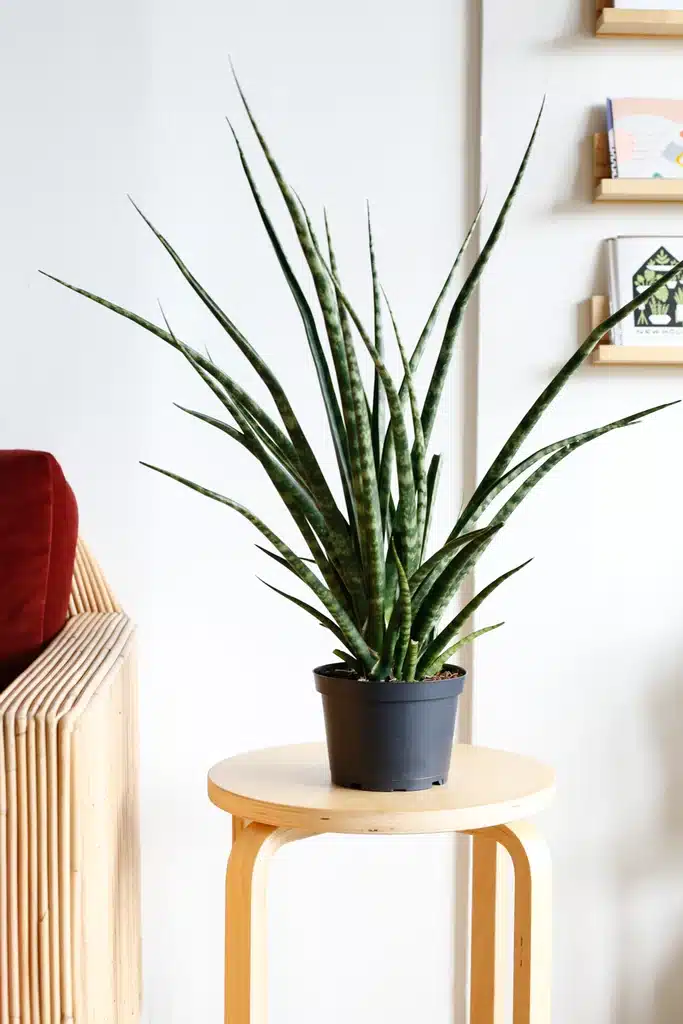
Younger specimens fit nicely into groupings of Sansevierias and other plants. They also work well on their own in an interesting planter, or placed in a cluster of decorative objects.
A plant that shrugs off a missed watering and still looks sculptural earns its spot on any shelf. Fernwood has that quiet, forgiving charm, and a few pups later you’ll have plants to share.
Is Sansevieria Fernwood Pet-Safe?
No, Fernwood isn’t pet-safe. The ASPCA lists the snake plant (Sansevieria trifasciata) as toxic to dogs and cats because of its saponins, which can cause nausea, vomiting, and diarrhea.
‘Fernwood’ isn’t listed by name, but it belongs to the same group, so keep it out of reach of curious chewers.
Common Sansevieria Fernwood Problems
Most of the Fernwood problems trace back to too much water or too little light, and both show up in the leaves.
Soft, mushy base or floppy leaves: Check where the leaves meet the soil, because rotting tissue feels soft instead of firm. When you repot a plant with root rot, remove most of the soil from around the roots.
Leaning or limp leaves: Low light is the other common cause, so try a brighter spot.
Pale or scorched patches: These point to too much direct sun, so pull the plant back from the window.
The genus Sansevieria was recently folded into the genus Dracaena, according to World Flora Online, so you may also see this plant listed as Dracaena Fernwood.
I use the more familiar Sansevieria name here. The change puts ‘Fernwood’ in the same genus as plants like Dracaena reflexa.
Frequently Asked Questions
What is the difference between snake plant fernwood and mikado?
“Fernwood” and “Mikado” are not two completely different plant species. Rather, Fernwood is the plant type/hybrid, while Mikado refers to a specific styling or commercial presentation method.
What is the most sought-after snake plant?
The Whale Fin (Dracaena angolensis or Sansevieria masoniana) is widely considered one of the most expensive and sought-after snake plant varieties, prized for its massive, single paddle-shaped leaves.
Are coffee grounds good for snake plants?
Coffee grounds can be used very sparingly on snake plants, but they are generally not recommended as a primary or direct fertilizer.