I get a version of the same text almost every week: “there are tiny flies everywhere, help.” Nine times out of ten, the first thing people try is an apple cider vinegar trap. And nine times out of ten, they set it up wrong.
A working ACV trap needs three things: raw, unfiltered vinegar, dish soap to break the surface tension, and placement close to where the gnats are actually breeding.
Skip any one of those and the flies just keep hovering around your kitchen counter.
Here’s how to build one that works, how to fix a trap that isn’t catching anything, and how to tell if what’s in your kitchen is even a fruit fly to begin with.
Why Gnats Are Drawn to Apple Cider Vinegar
Apple cider vinegar works because of what’s inside it. It contains acetic acid and ethanol, two compounds that fermented fruit produces naturally.
Fruit flies are hardwired to find fermenting fruit to feed and lay eggs. ACV smells exactly like that to them.
Raw, unfiltered ACV works far better than the clear, filtered kind. The unfiltered version contains more of the organic compounds that draw gnats straight to your trap.
White vinegar lacks the fruity scent entirely. That’s why swapping one for the other gives you zero results.
Dish soap is the part most people skip. Without it, gnats land on the vinegar surface and walk right off.
The soap breaks surface tension, so the moment a gnat touches the liquid, it sinks and drowns. Skip the soap, and you’re just serving them a drink.
How to Make an Apple Cider Vinegar Trap for Gnats
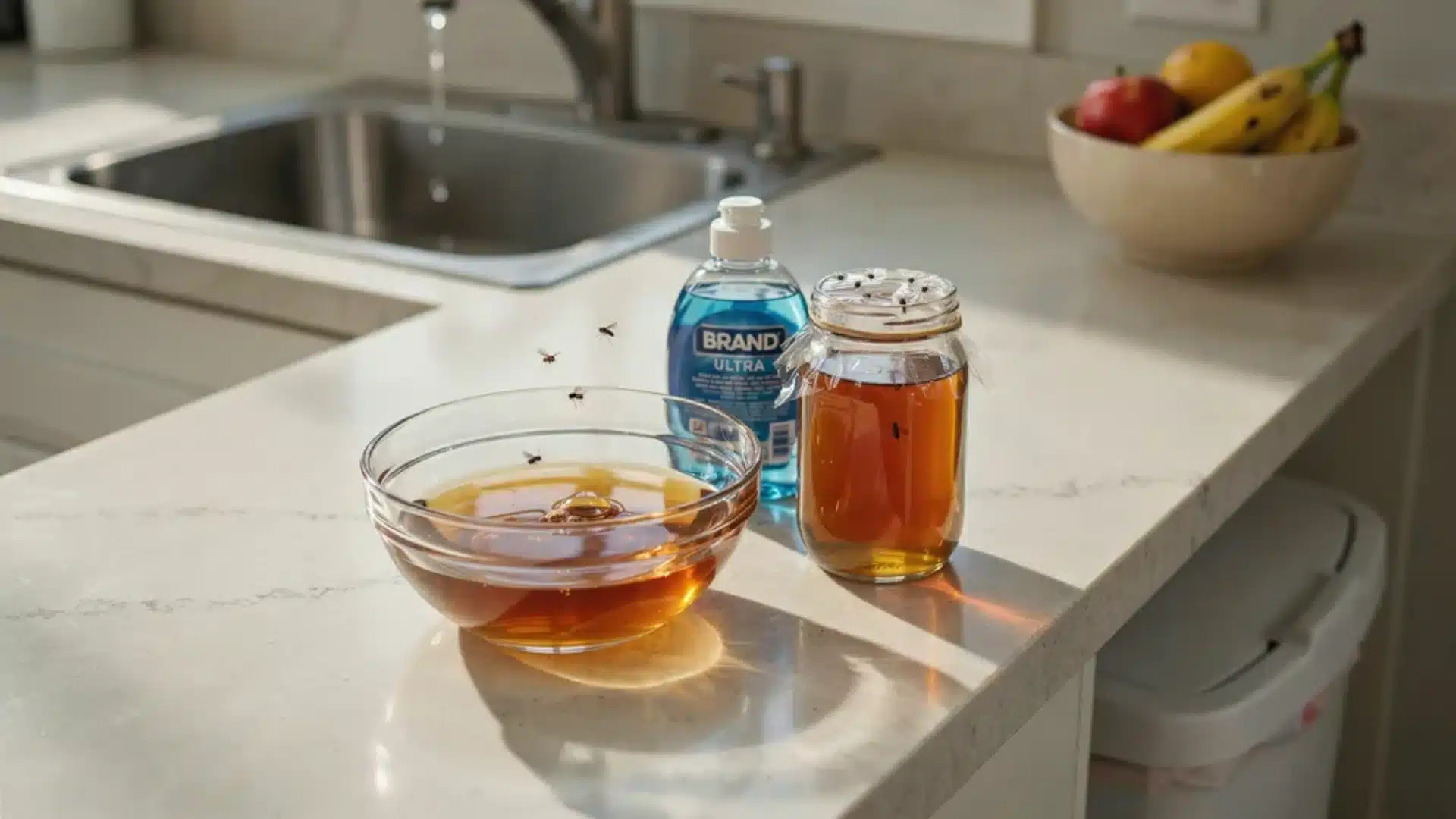
Getting the trap right takes about two minutes. Here’s what works:
What you need:
- Raw, unfiltered apple cider vinegar
- Liquid dish soap
- A shallow bowl or mason jar
- Plastic wrap and a toothpick (optional, but more effective)
Steps:
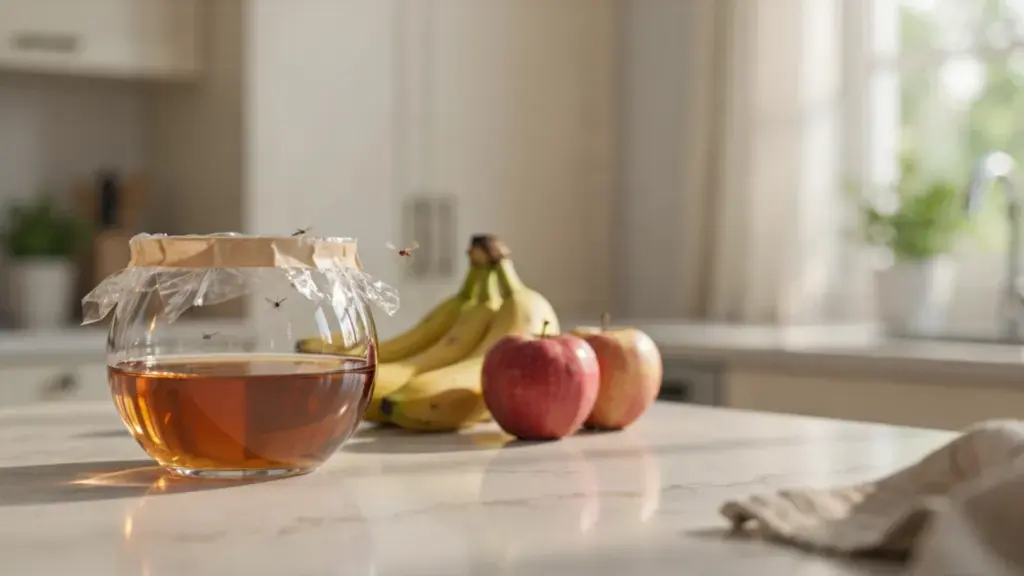
1. Pour half a cup of apple cider vinegar into a shallow bowl, or fill a mason jar one-third full.
2. Add 2 to 3 drops of liquid dish soap. Stir gently. Do not create bubbles.
3. Optional: stretch plastic wrap tightly over the top, then poke 5 to 8 small holes with a toothpick. Holes should be roughly pencil-tip size.
4. Place the trap where you see the most gnat activity, near fruit bowls, the trash can, or the kitchen sink.
5. Replace the vinegar every 48 hours. After that point, the scent weakens and the trap stops pulling them in.
One placement note worth remembering: gnats typically hover 12 to 18 inches above surfaces. Setting your trap on the counter at that height, or on a small raised stand, improves catch rates.
Fruit Flies, Fungus Gnats, or Drain Flies? How to Tell the Difference
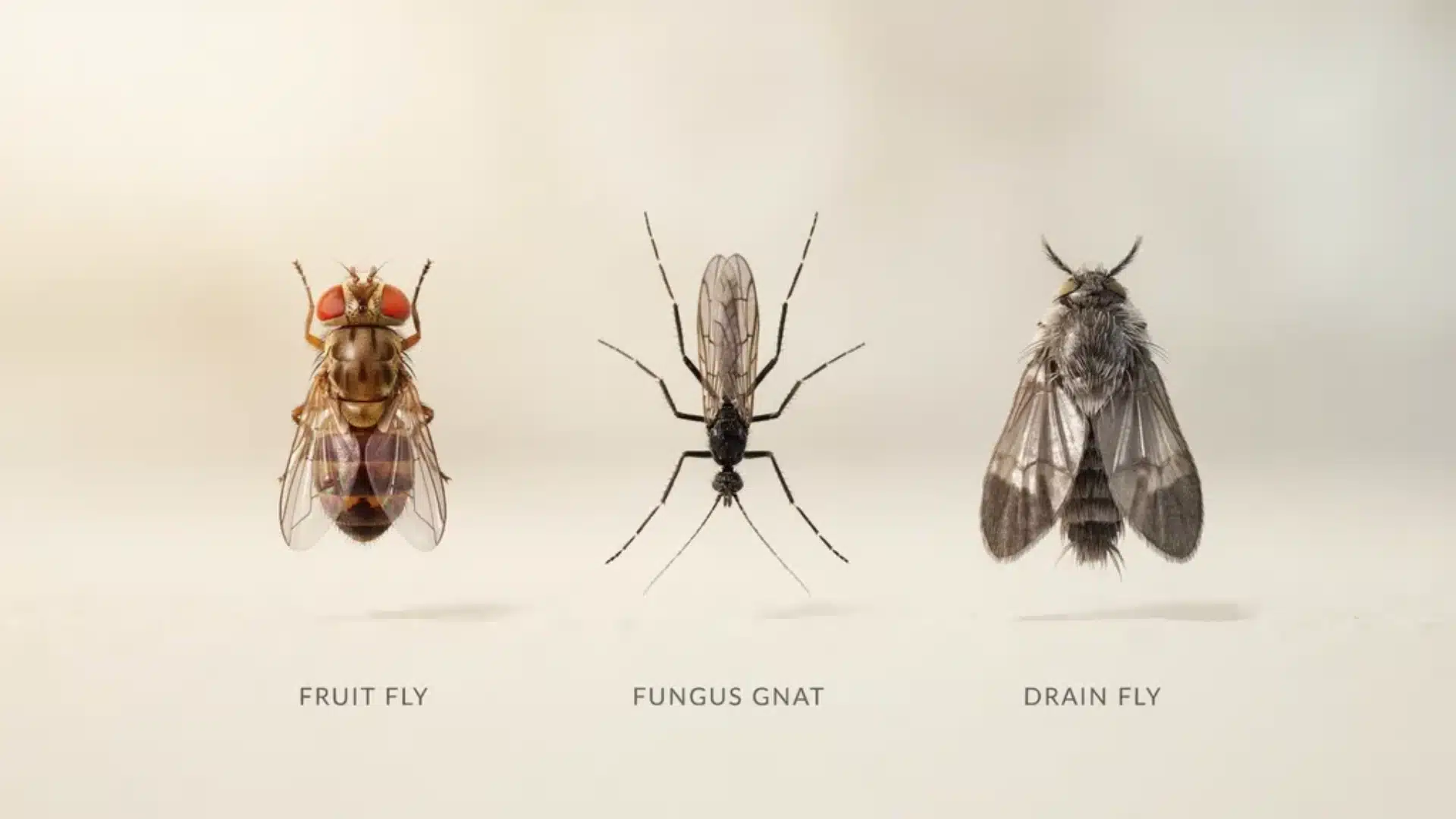
Not everything that looks like a tiny fly is a fruit fly. Three common pests get lumped under the word “gnats,” and only one of them responds well to an apple cider vinegar trap.
1. Fruit flies have tan or brownish bodies and bright red eyes if you look closely. They hover around ripe fruit, wine glasses, and trash. ACV traps work very well on these.
2. Fungus gnats are darker, almost black, and shaped a bit like tiny mosquitoes. You’ll find them crawling on plant soil or flying low around your houseplants. They’re one of the most common indoor plant pests, and an ACV trap barely puts a dent in them.
Fungus gnats are somewhat attracted to the smell of vinegar, but they rarely climb into a hole to reach it. The ACV trap catches a few adults at best, while the larvae stay safe in the soil and keep hatching.
What actually works is treating the soil directly, the same approach covered in gnat control for houseplants. Something as simple as cinnamon on the soil can disrupt the larvae without harming the plant.
3. Drain flies are gray with wide, moth-like wings. They live in the organic buildup inside your drains and pipes. ACV does not attract them at all.
If the flies scatter when you tap your plant pot or run across surfaces instead of taking flight, they’re almost certainly fungus gnats. Fruit flies take to the air immediately when disturbed.
Reasons Your Apple Cider Vinegar Trap Is Not Working
Traps fail for a handful of predictable reasons. Check these before you give up on ACV entirely.
1. You’re using filtered ACV: Clear, filtered vinegar doesn’t have enough of the fermented scent to pull gnats in. Switch to raw, unfiltered ACV with the mother. It’s darker and cloudier, and it works far better.
2. You skipped the dish soap: Gnats hover over the bowl, land on the surface, and leave. Without dish soap breaking that surface tension, they don’t drown. Add 2 to 3 drops and stir.
3. The holes in your plastic wrap are the wrong size: Too small, and gnats can’t get through. Too large, and they fly back out easily. Aim for holes roughly the diameter of a pencil tip, big enough to crawl through, hard to exit from.
4. The vinegar has gone stale: ACV loses its smell after 48 hours, especially in a warm kitchen. If you set the trap and forget it for a week, it’s no longer attracting anything. Refresh it every two days.
5. The trap is in the wrong spot: If you put the trap far from where gnats are feeding or breeding, they won’t find it fast enough. Place it as close as possible to the fruit bowl, trash can, or plant pots where you see them most.
6. You might be dealing with the wrong type of gnat: This is easy to miss, and it’s often the real reason a trap fails. See the identification breakdown above.
How to Make Your Apple Cider Vinegar Trap More Effective
If your trap is getting gnats to hover nearby but isn’t catching many, a few additions can change that quickly.
1. Add a piece of overripe fruit: A small chunk of banana or peach dropped into the vinegar produces extra fermentation gases that pull gnats from farther away.
2. Add a splash of red wine: The yeast compounds in wine are highly attractive to certain gnat species. Leftover wine you’d otherwise pour out works perfectly.
3. Warm the vinegar slightly before pouring: Ten seconds in the microwave increases the release of aromatic compounds. Don’t overheat it, just take the chill off.
4. Set out multiple traps: One bowl in one corner handles a small number of gnats. For a real infestation, place traps in several spots across the kitchen.
5. Try the covered jar version: A mason jar with plastic wrap and small holes consistently outperforms an open bowl. Gnats follow the scent in through the holes and can’t find their way back out.
A moderately infested kitchen should yield 20 to 50 gnats in the first bowl overnight. If you’re catching far fewer than that, work back through the six reasons above.
Put This to Work Tonight
An apple cider vinegar trap for gnats works, but only when you use raw ACV, add dish soap, keep the vinegar fresh, and place the trap where gnats are actually active.
Most failed traps come down to one of those things. The bigger catch: ACV mainly targets fruit flies. If your gnats are coming from plant soil or your drains, you need a different fix entirely.
Set the trap up tonight. If you’re still seeing gnats in a week, confirm what type you’re dealing with and go after the breeding source instead. That combination is what actually ends an infestation.
What worked for your gnat problem? Drop it in the comments.
Frequently Asked Questions
What will kill gnats immediately?
A fine mist of insecticidal soap knocks down adult gnats fast without leaving harsh residue. Skip aerosol sprays if you keep bees, pets, or small kids nearby.
Why isn’t vinegar killing my gnats?
Your trap may be using filtered vinegar, missing the dish soap, or targeting a gnat species that ignores fermentation, like drain flies.
Why is my house full of gnats all of a sudden?
Your house is suddenly full of gnats because they’ve found a warm, moist spot with decaying organic matter to lay their eggs.
Does apple cider vinegar get rid of fungus gnats?
Not on its own. ACV catches a few adults, but fungus gnat larvae live in the soil, so treating the soil directly works better.