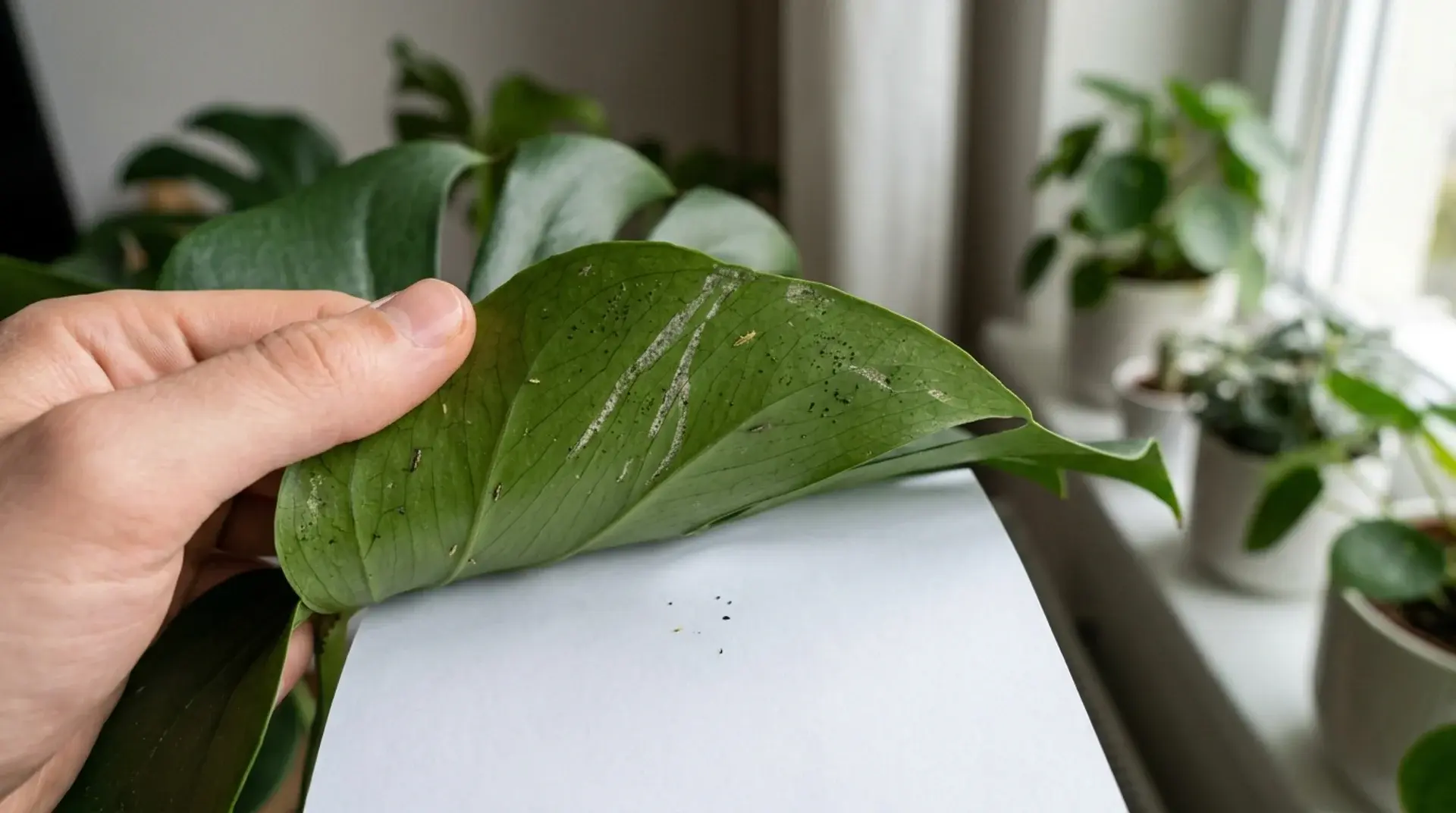
A friend texted me a photo last week: her monstera’s soil, dotted with a haze of tiny black flies. Fungus gnats. I get that photo a lot, usually around 11 pm, because everyone with a bug problem eventually finds their way to me.
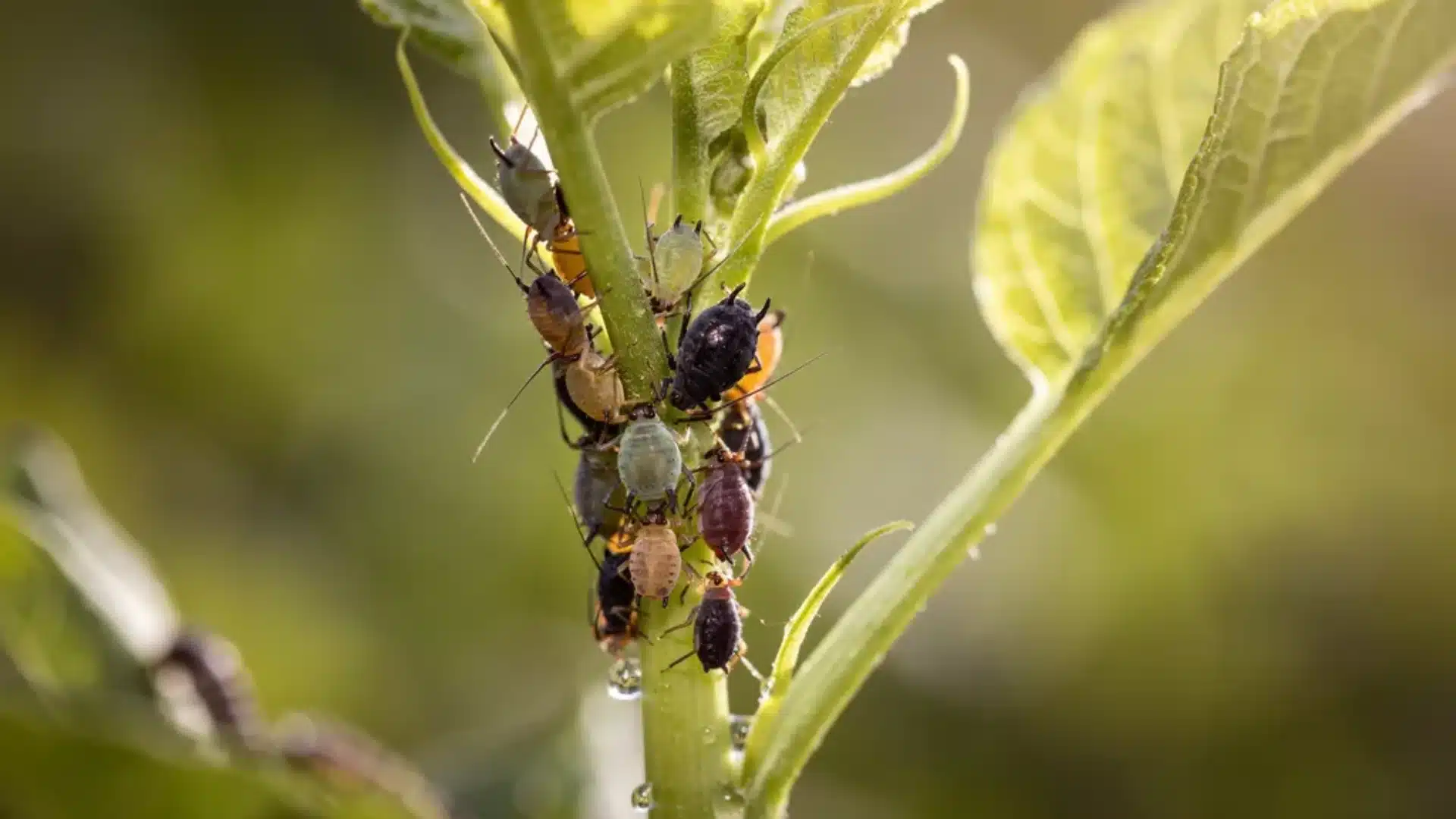
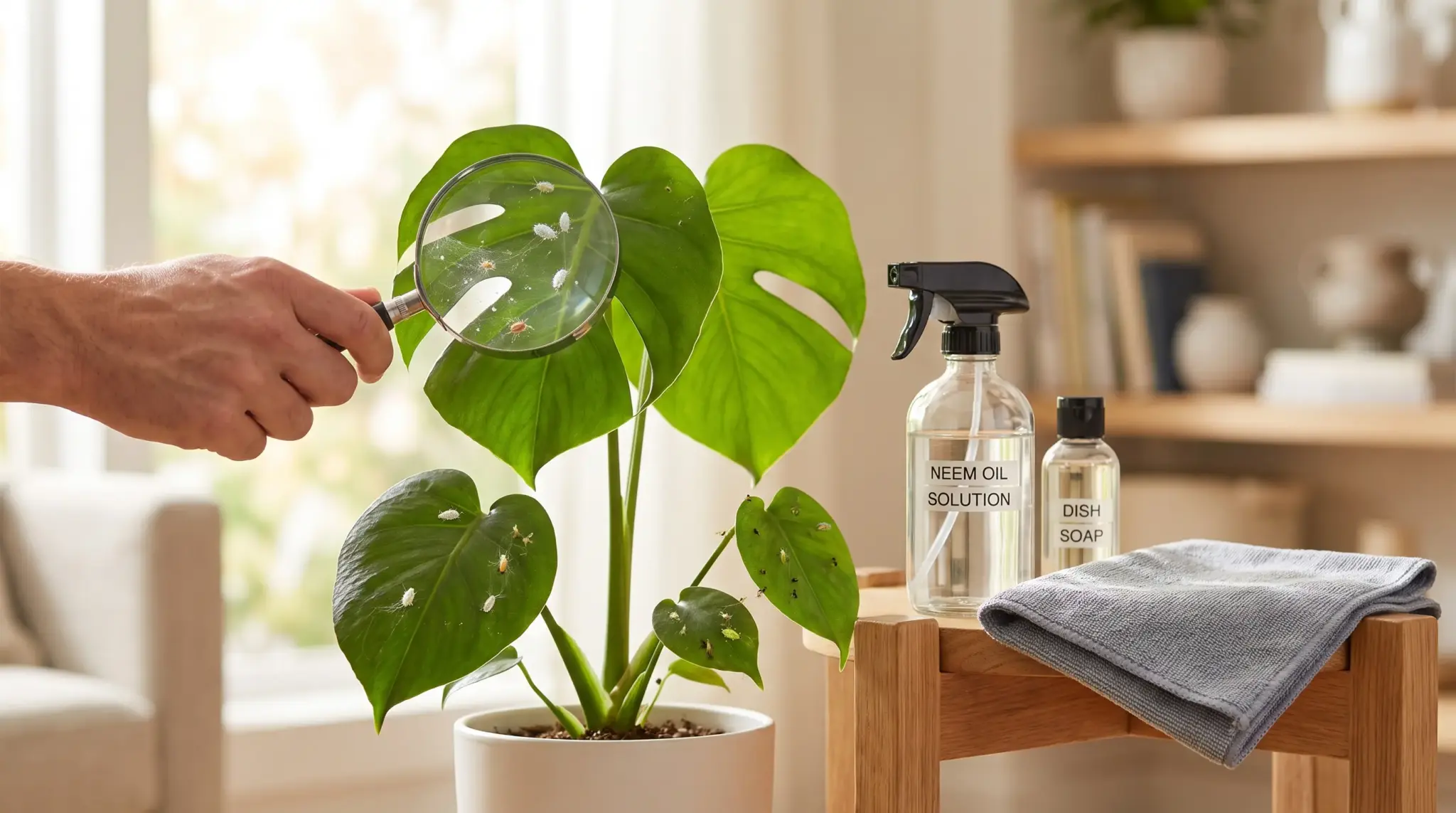
My answer is almost always the same: cinnamon. It’s cheap, it won’t hurt the plant when you use it right, and it’s already in most kitchen cabinets. As a beekeeper, I lean toward the least-toxic fix that actually works, whether that’s cinnamon here or neem oil sprays for aphids.
Cinnamon only earns its keep when you understand what it’s doing to the gnats, use the right type, and back it up with a couple of other steps. Here’s how I use it.
Why Fungus Gnats Spread So Fast
Fungus gnats are small black flies in the family Sciaridae. They look like tiny mosquitoes, and they go straight for damp potting soil.
Adult females lay up to 200 eggs just under the soil surface. Those eggs hatch into larvae within a few days, and the larvae feed on fungi and decaying organic matter, including the fine root hairs your plant depends on.
The full lifecycle runs three to four weeks. That’s fast enough for one infested pot to spread through an entire plant shelf before you notice anything. For every adult gnat you see flying around, there are usually hundreds of larvae still working through the soil.
Larvae do the real damage. They strip nutrients from the roots, slowing growth and weakening the plant. Seedlings are especially at risk.
What Cinnamon Actually Does to Fungus Gnats
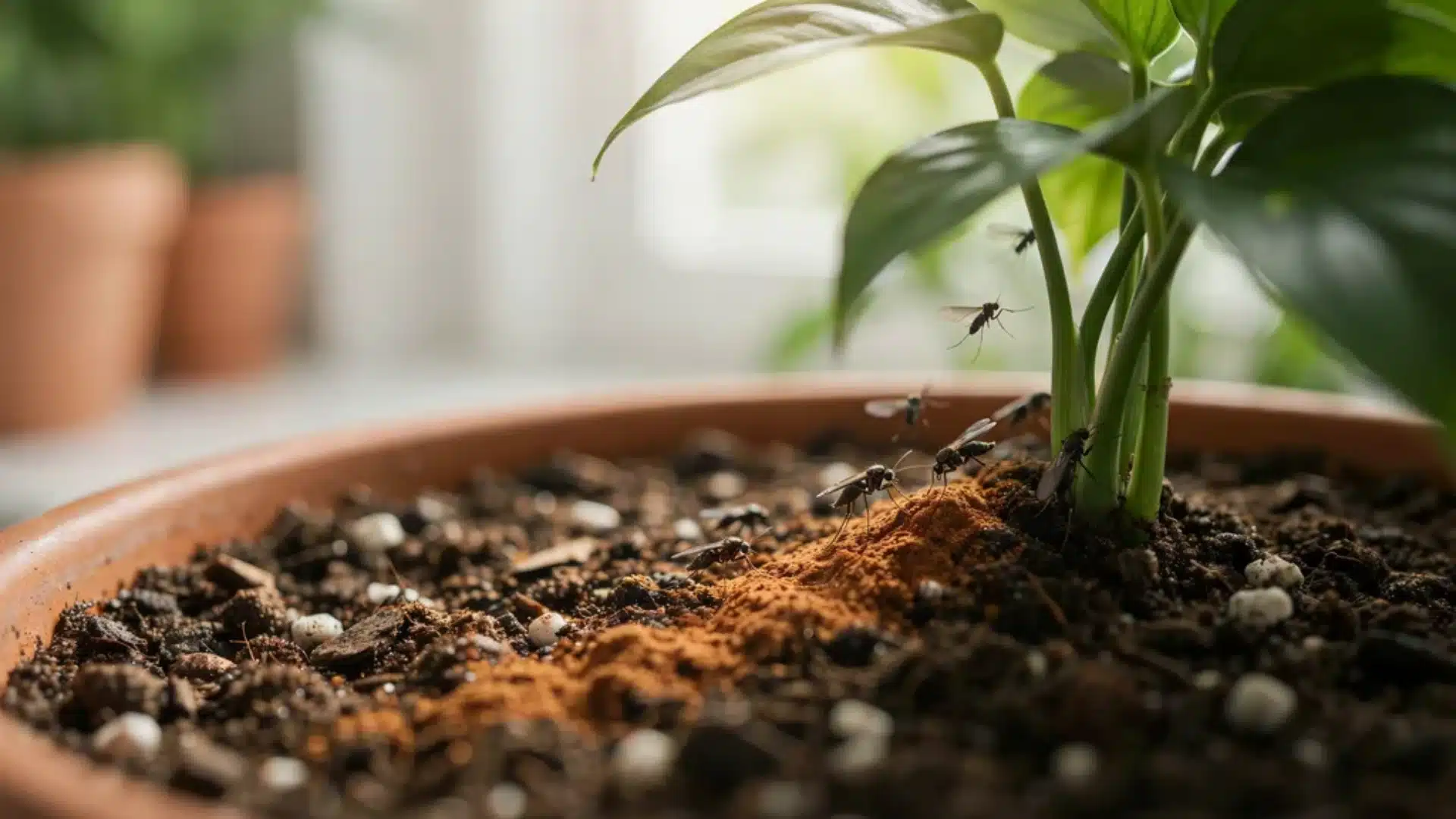
Cinnamon does not kill adult fungus gnats or larvae on contact. If you’re expecting a spray-and-done fix, this isn’t it.
What cinnamon does is starve the fungus that gnat larvae eat. Cinnamaldehyde, the compound behind cinnamon’s smell, breaks down fungal cell membranes in the soil. Two other compounds, eugenol and phenolic acids, support it.
Once the fungus is gone, larvae lose their food source and survival rates drop. Fewer larvae means fewer adults laying the next round of eggs, and the strong scent keeps new adults from laying eggs in treated soil in the first place.
Cassia vs. Ceylon: Which Cinnamon Works Better?

Whatever’s in your spice rack will do something, but knowing the difference matters here.
Cassia: the most common type sold in grocery stores, made from the bark of the Cinnamomum aromaticum tree. It carries a higher concentration of cinnamaldehyde, which is the part doing the work against soil fungus.
Ceylon: a milder, more expensive cinnamon made from the bark of the Cinnamomum verum tree, often called “true cinnamon.” It has less cinnamaldehyde, so it does less against the fungus your gnat larvae depend on.
| Feature | Cassia (Cinnamomum aromaticum) | Ceylon (Cinnamomum verum) |
|---|---|---|
| Common name | Standard grocery store cinnamon | “True cinnamon” |
| Cinnamaldehyde level | High | Low |
| Effectiveness for gnats | Stronger | Weaker |
| Coumarin content | Greater (not a concern at soil-surface doses) | Lower |
| Best use | Fungus gnat control | Cooking and health uses |
| Reapplication frequency | Every 1–2 weeks | More often needed |
| Availability | Widely available, lower cost | Less common, higher cost |
Buy organic cinnamon where you can. Conventional cinnamon can carry pesticide residue from processing, and that’s not something I want sitting in a plant’s soil, let alone near my bees if the plant’s outdoors.
How to Apply Cinnamon for Fungus Gnats: 3 Methods
Which method you pick depends on how bad the infestation is and how the plant is set up.
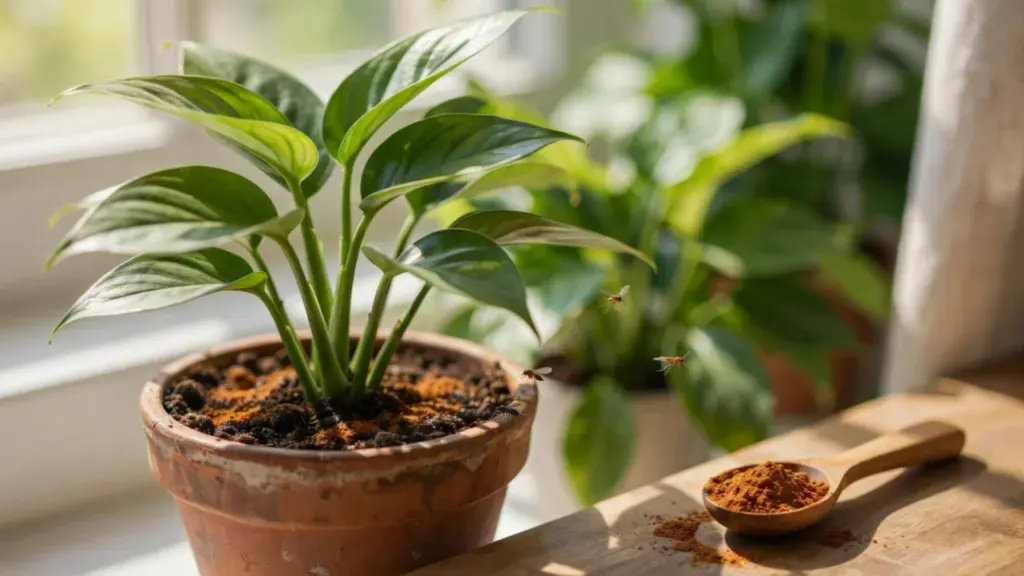
Method 1: Powder Dusting (Best for Most People)
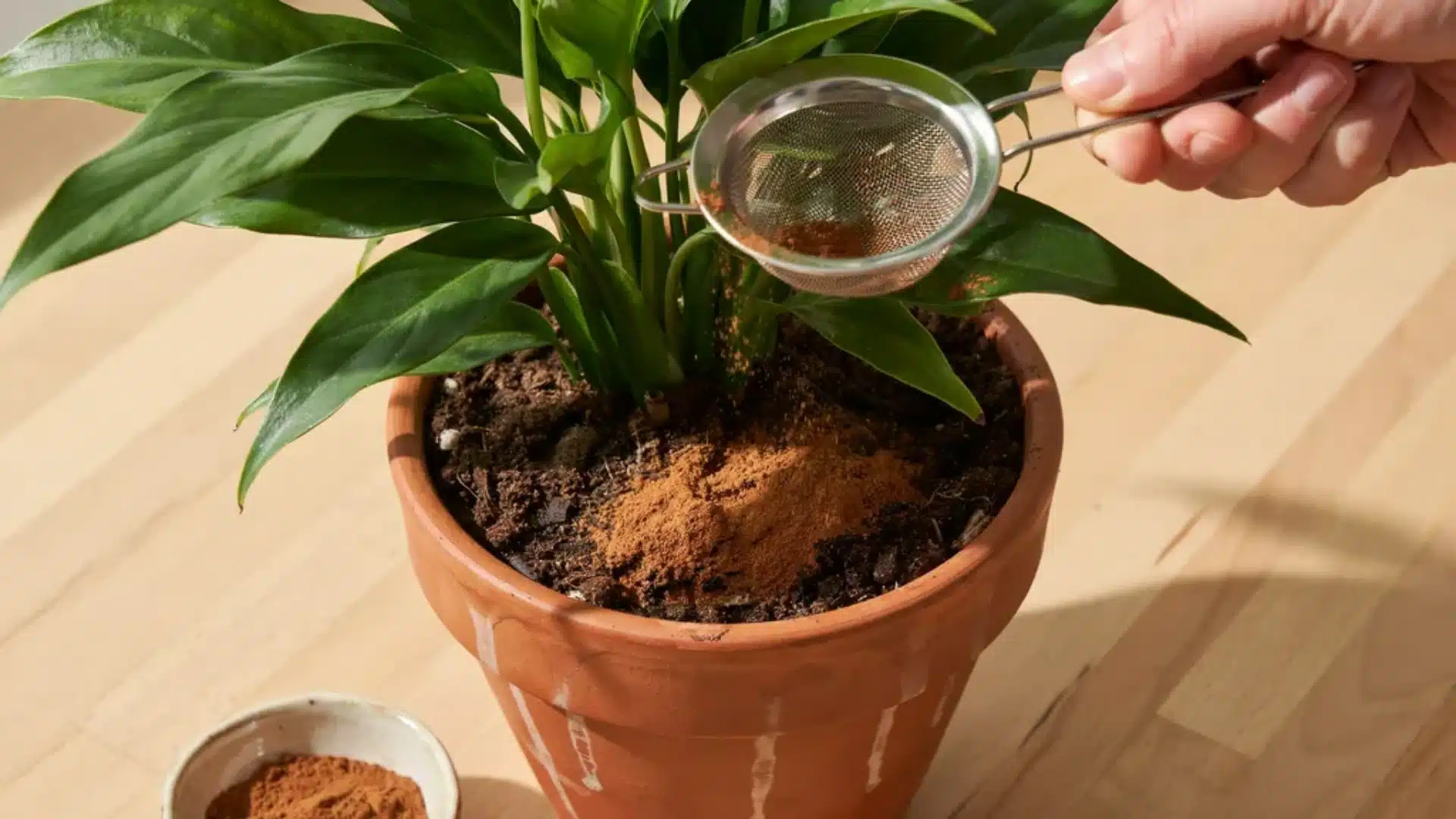
- Let the top inch of soil dry completely before applying
- Use a fine sifter (a small matcha sifter works well) for an even, thin layer
- Cover the soil surface with a light coating you can still see through
- Work the top quarter-inch in gently with a chopstick or skewer
- Reapply once a week during an active infestation, then switch to once a month once gnats are gone
Key point: less is more. Cinnamaldehyde gets slightly phytotoxic at high doses, so dust the soil, don’t pile it on.
Method 2: Cinnamon Stick in Soil
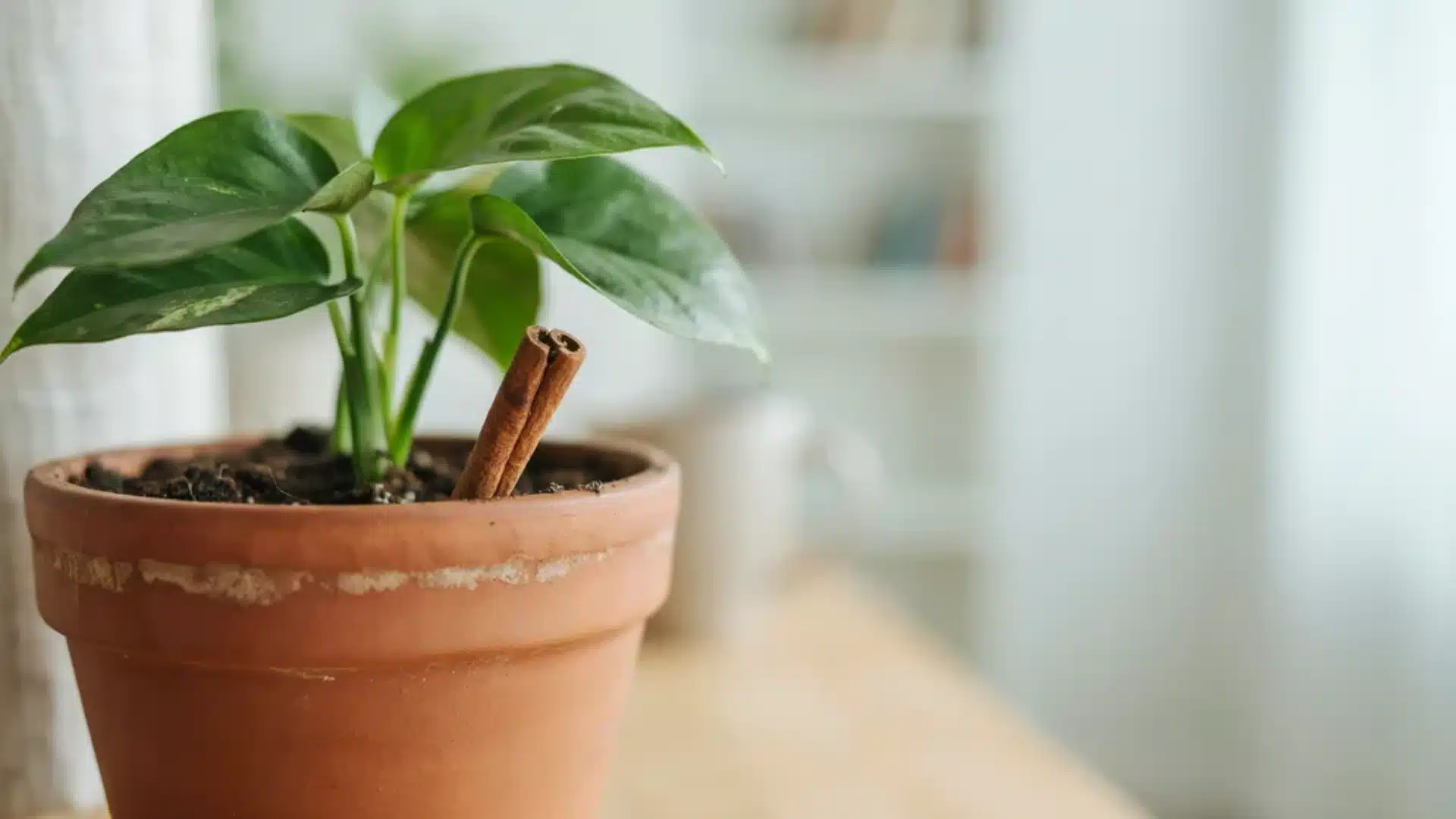
- Push one cinnamon stick about two inches deep into the soil, halfway between the stem and the pot rim, where gnats lay most of their eggs
- Each watering releases compounds slowly into the root zone
- Replace the stick every four to six weeks as the scent fades
This works well for maintenance between dustings. Skip the powder for this one; it washes out too fast.
Method 3: Cinnamon Water Spray
- Mix a small amount of cinnamon powder with water in a spray bottle
- Apply directly to the soil surface, avoiding flowers and new growth
- Reapply after each watering, since it rinses through fast
None of these methods work instantly. Give it one to two weeks before you judge results, and don’t expect cinnamon alone to knock out a heavy infestation or catch adults already in flight.
What to Pair Cinnamon With for Faster Results
Cinnamon does its best work as one piece of a bigger plan. Here’s what actually moves the needle alongside it:
1. Let the soil dry out: This matters more than anything else on this list. Adult gnats need moist soil to lay eggs, so letting the top one to two inches dry between waterings removes the reason they showed up.
2. Yellow sticky traps: One flat on the soil, one standing upright in the pot, catches adults before they lay more eggs. That keeps the cycle from restarting even while the larvae are struggling.
3. A hydrogen peroxide drench: Mix one part hydrogen peroxide with six parts water and use it to water the soil once. It kills larvae on contact. Let the soil dry fully afterward, and keep it off the leaves.
4. Food-grade diatomaceous earth: Mixed into the top layer of soil, the sharp silica particles damage larvae on contact. A thin layer of fine sand on top hides the white powder if that bothers you.
5. An apple cider vinegar trap: If adults are flying around the room and not just hovering near pots, a shallow dish of vinegar with a drop of dish soap pulls them in and traps them.
Bacillus thuringiensis israelensis (BTi) is the most effective larval treatment I’ve used, and it’s safe around bees, which matters to me. It’s worth reaching for once an infestation outlasts everything above.
Keeping Fungus Gnats From Coming Back
Getting rid of them is one thing. Keeping them out is the part most people skip.
1. Don’t overwater. This one change removes the root cause.
2. Empty saucers within 30 minutes of watering. Standing water feeds the problem.
3. Add perlite to your potting mix (one part perlite to three parts soil) to improve drainage.
4. Quarantine new plants for two weeks before they join your collection.
5. Remove dead leaves and decaying organic matter from pots regularly.
6. Check new bags of potting soil before use. Peat-heavy mixes are the worst offenders.
7. Keep up a light monthly cinnamon dusting once you’ve got gnats in houseplants under control, as ongoing maintenance.
Give It Two Weeks
Cinnamon works. It cuts off the fungus larvae eat and keeps adult gnats from laying new eggs in treated soil. Use cassia over Ceylon, apply it lightly and consistently, and let the soil dry out between waterings.
Pair it with sticky traps and a hydrogen peroxide drench for faster results during a bad infestation. Most plant owners already have half of this on hand.
If fungus gnats aren’t your only houseplant pest problem this season, my full guide to bugs on indoor plants covers the rest.
What’s worked for your plants? Share it in the comments below.
Frequently Asked Questions
Is It Safe to Sprinkle Cinnamon on Plants?
Yes, in a light dusting. Heavy layers can coat the soil surface too thickly and mildly stress the plant, so keep the coat thin.
What Plants Don’t Like Cinnamon?
Skip it around tomatoes, peppers, and garden cress, plus delicate houseplants like ferns, prayer plants, and orchids.
What Else Kills Fungus Gnat Larvae Naturally?
Hydrogen peroxide drenches, food-grade diatomaceous earth, and BTi all target larvae directly. Pair one with cinnamon for faster results.