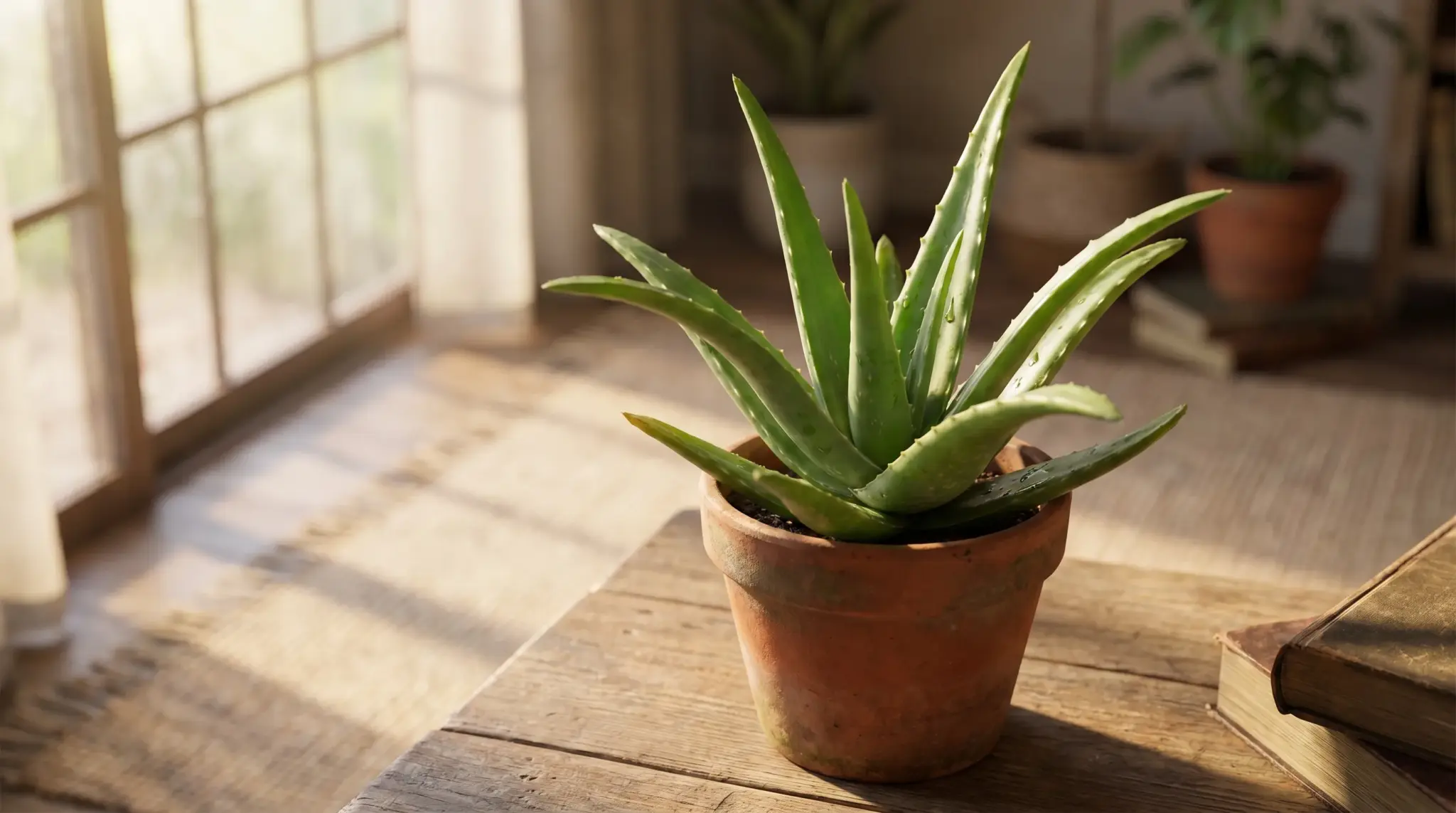
That aloe on your windowsill holds two completely different substances inside every leaf.
One is the clear, soothing gel you want. The other is aloin, a yellow latex that sits just beneath the green skin. It is a skin irritant and a stimulant laxative. In 2002, the US Food and Drug Administration ruled that aloe is not generally recognized as safe and effective in over-the-counter laxatives.
Cut a leaf and scoop straight away, and you get both. Drain it first, and you get only the good part.
I have kept the same aloe on a Portland windowsill for six years, and out of about seventy plants it is the only one I cut into on purpose. This guide covers how to harvest aloe vera gel correctly, from picking the right leaf to storing what you do not use.
When an Aloe Plant is Ready to Harvest
Cutting the wrong leaf, or working on an underdeveloped plant, yields very little gel and stresses the aloe for no return.
A plant is ready for harvest when it has at least five or six firm, plump leaves at the base, which usually means two to three years of growth.
The best leaves are thick, smooth, bright green, and firm when pressed. Thin, yellowing, or shriveled leaves hold very little gel.
Gel thickness varies between aloe species. The one grown for harvesting is true Aloe vera, also sold as Aloe barbadensis miller, and ornamental aloes hold far less flesh.
The ideal time to cut is a few days after watering when the leaves are fully hydrated. In Portland, my aloes barely move between November and February, so I stop cutting entirely once the light drops.
How to Harvest Aloe Vera Gel
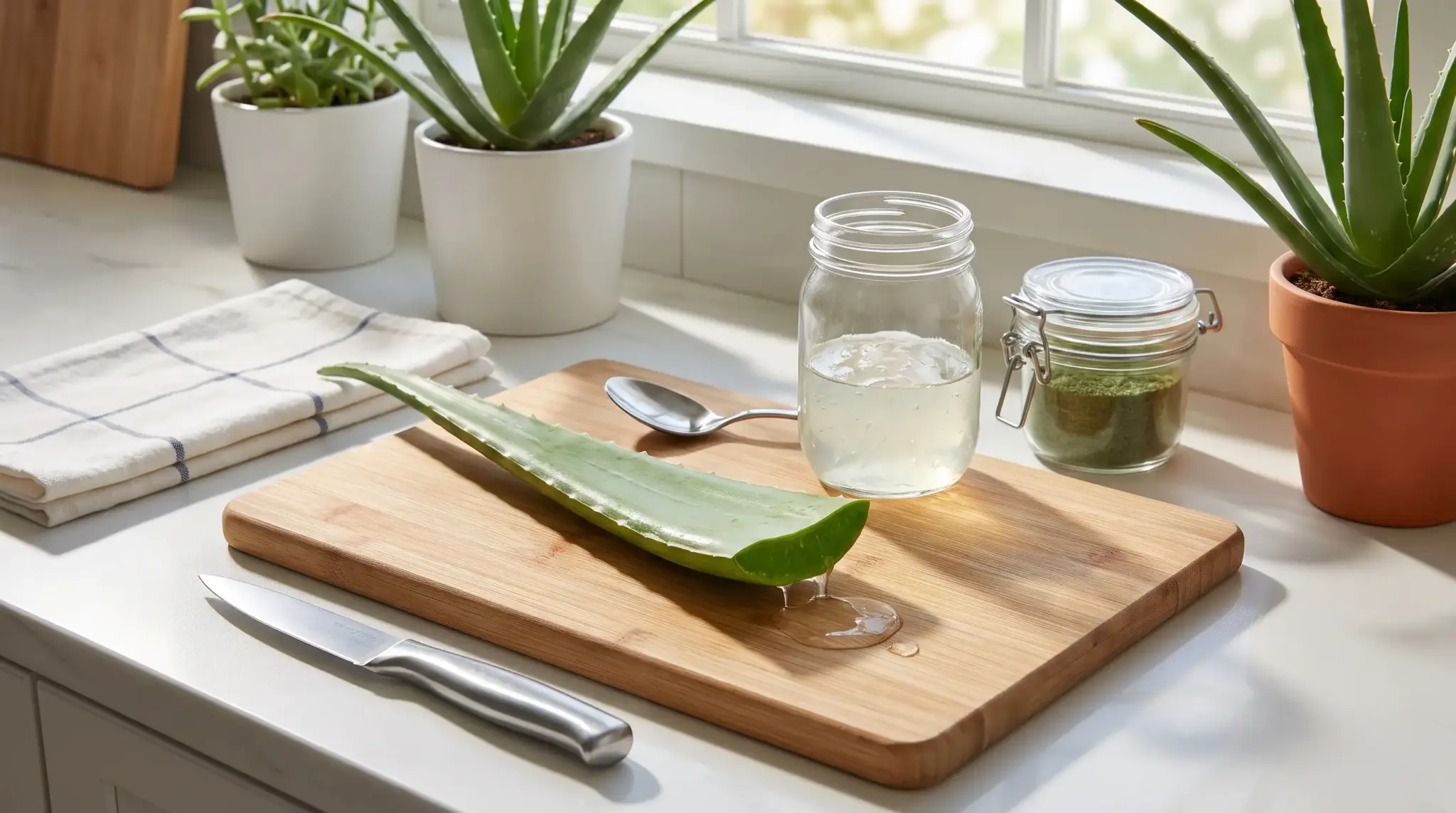
The process takes about 20 minutes and needs basic kitchen tools.
An aloe kept on a steady watering and light routine seals its wound and resumes growth much faster than one limping along in a dark corner.
What you need
A sharp knife or kitchen shears
Rubbing alcohol to wipe the blade
A cutting board
A small cup or jar for draining
A clean spoon
An airtight container
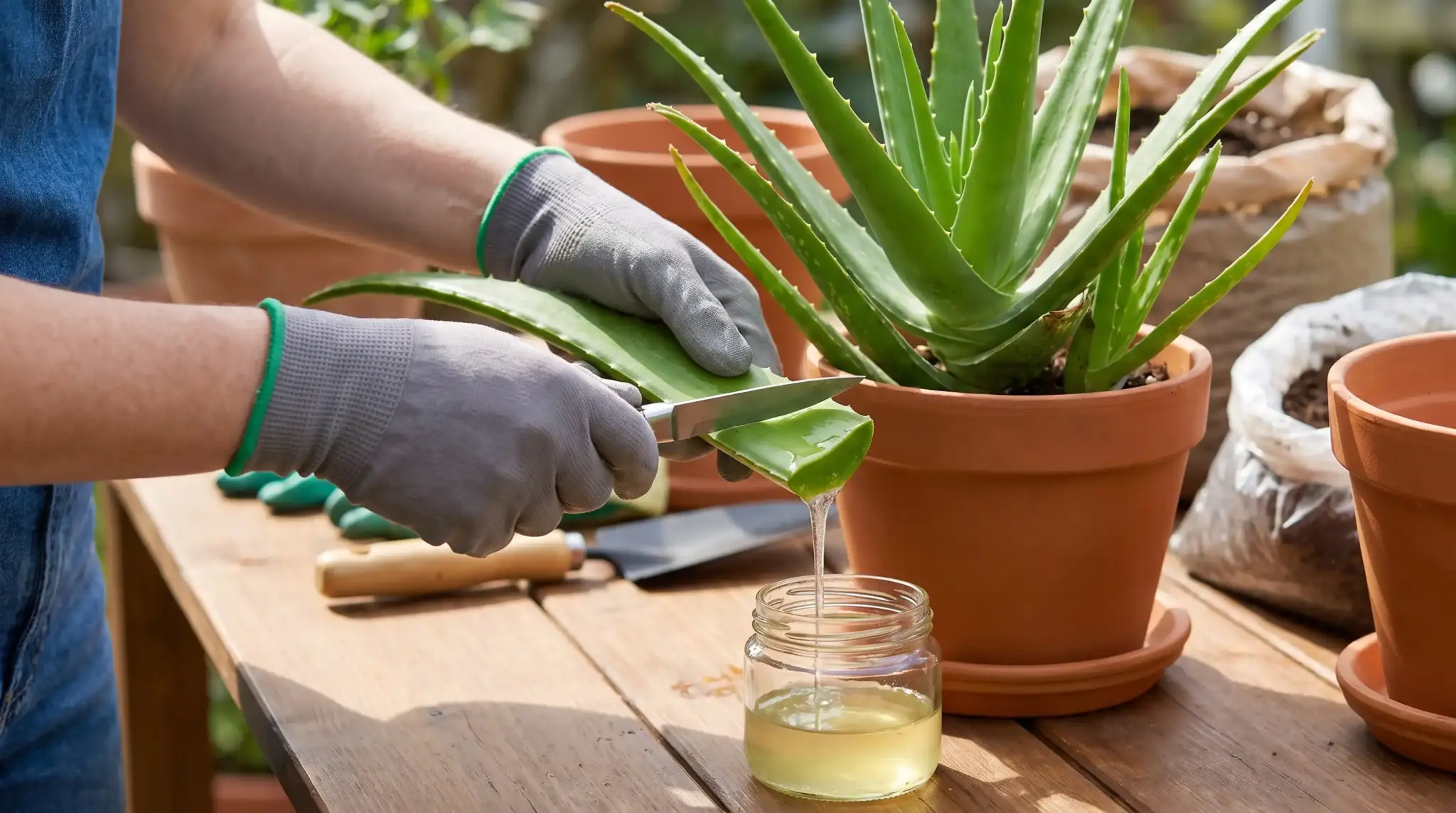
Gloves, if you have sensitive skin. The leaf edges are sharp and the latex stings on contact.
Step 1. Select the Right Leaf
Always cut from the outer, lowest part of the rosette. These are the oldest leaves with the most developed gel. Choose one that is thick and firm, at least four to six inches long.
Never take from the center. Those inner leaves are still growing.
You can cut part of a leaf if you only need a small amount. The cut end seals itself within a day or two.
Step 2. Cut Cleanly at the Base
Wipe your knife with rubbing alcohol, then cut as close to the base as possible. A clean cut heals faster.
Never twist or tear the leaf off by hand. That leaves a ragged wound that browns and can invite rot.
Step 3. Drain the Aloin
Hold the leaf upright, cut end down, over a cup or the sink and let it drain for ten to fifteen minutes. Yellow or reddish liquid will drip out.
That is the aloin. Do not squeeze the leaf to speed this up. Once dripping stops, rinse the cut end under cool water and discard the liquid.
Step 4. Trim the Serrated Edges
Lay the leaf flat and slice off both rows of serrated teeth along the edges. A single lengthwise stroke on each side does it.
Step 5. Remove the Skin and Scoop
Slide your knife just under the top green layer and peel it away. Flip the leaf and repeat, or scoop the gel off the bottom skin with a spoon.
You will be left with a clear, slightly opaque slab of aloe gel. Rinse it under cool water before use. Latex still clinging to the outside is the usual reason home-harvested gel tastes bitter or stings.
For a more fluid consistency, a few short pulses in a blender will do it.
How to Store Fresh Aloe Vera Gel
Fresh aloe gel has no preservatives. How long it lasts depends on how you handle it after harvest.
Short-term (up to one week): Scoop the gel into an airtight container and refrigerate right away. It keeps about seven days. A whole leaf, trimmed end wrapped in plastic, keeps up to ten days.
Medium-term (up to one month): Blend the gel smooth, then stir in about an eighth of a teaspoon of powdered vitamin C (roughly 500 mg) per quarter cup before sealing and refrigerating. Do not apply this batch to irritated or broken skin.
Long-term (up to twelve months): Blend the gel and pour it into an ice cube tray. Freeze solid, then transfer the cubes to a labeled airtight bag. Light breaks down aloe gel, so keep it dark. Thaw at room temperature, never in the microwave.
Signs the gel has gone bad: Discard it if it turns brown or yellow, smells sour, develops a film, or feels slimy. Fresh gel is clear and smells mild.
How Often Can You Harvest Aloe Vera Gel
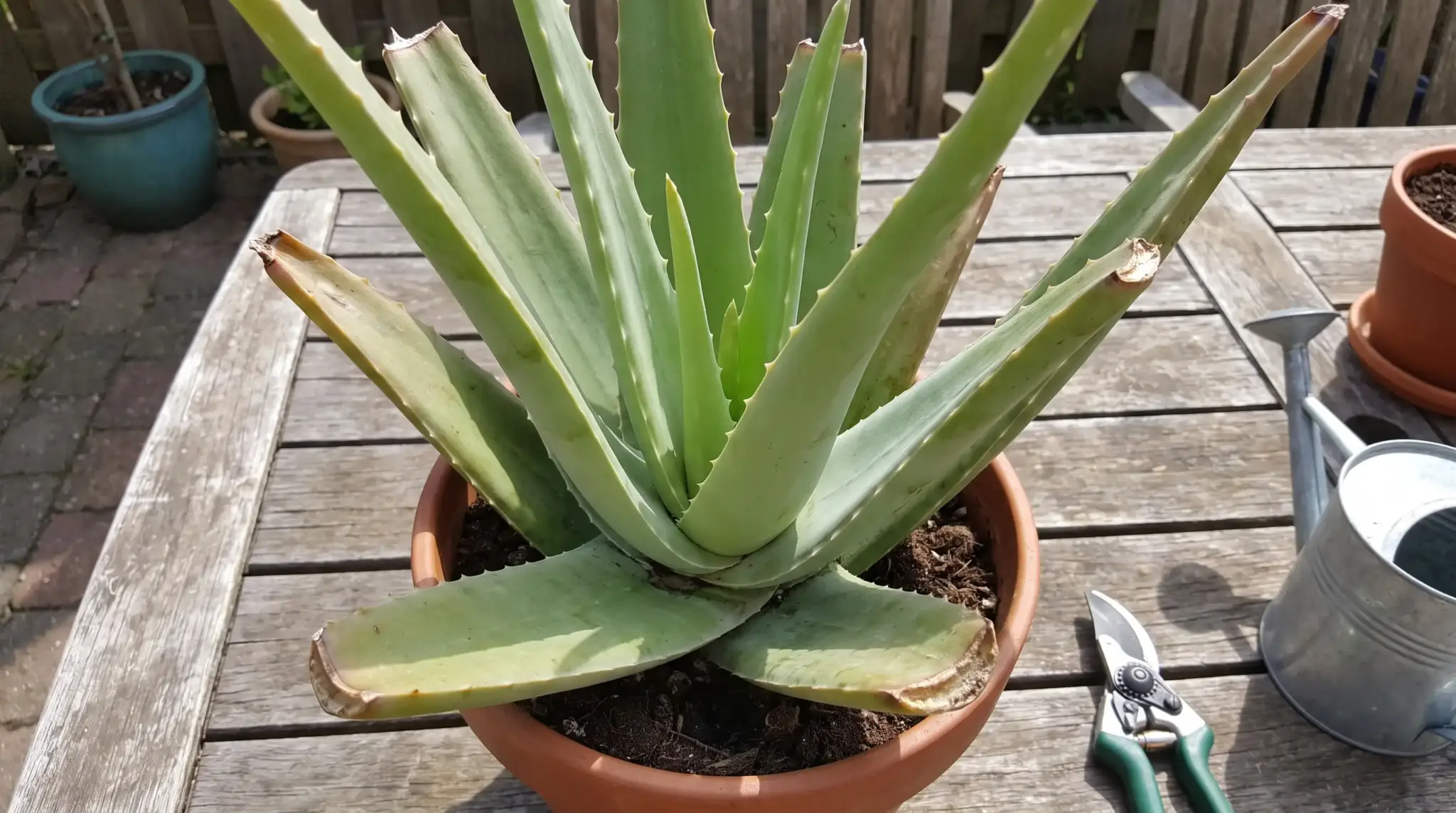
One rule covers every harvest: never remove more than a third of the plant’s total leaves at once.
There is no fixed number of weeks between harvests. The rule is biological, not calendar-based. Wait until your plant has grown two to three new leaves before cutting again.
Growth rate varies by season, light level, and pot size. In summer, a healthy plant in good light might be ready again in six to eight weeks.
I keep three aloes and rotate between them, which is the only reason I can cut as often as I do. No single plant is ever under pressure to recover fast.
Running a few costs almost nothing, since aloe asks for less than most beginner-friendly houseplants. The offsets around the base of a mature plant can be separated and grown into new plants rather than bought.
How to Use Fresh Aloe Vera Gel
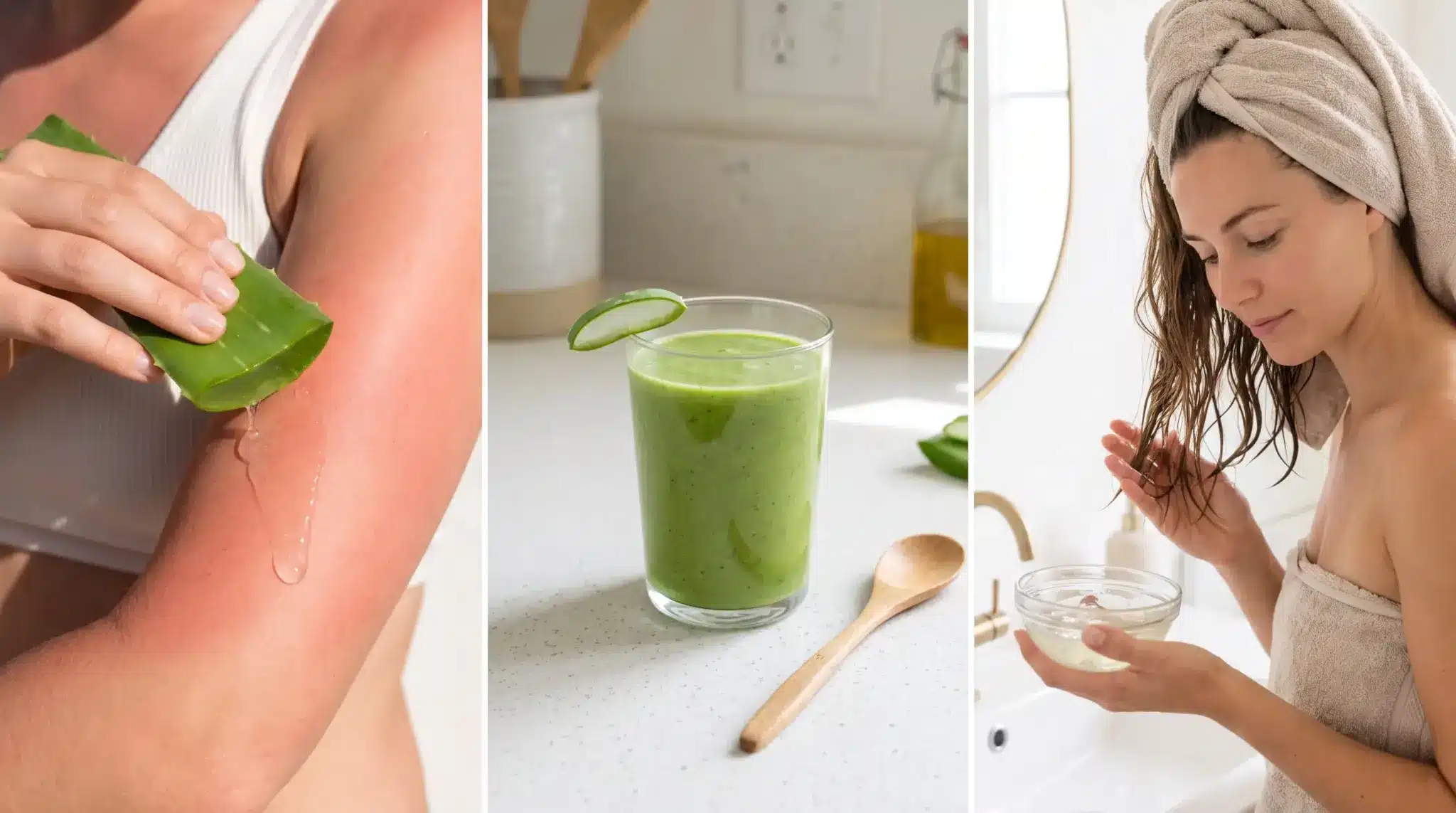
1. On skin
Apply it to minor burns, sunburn, dry skin, or small cuts and let it absorb without rinsing.
A 2019 systematic review in the Iranian Journal of Medical Sciences found consistent evidence for aloe vera’s role in skin wound healing across multiple clinical trials. Patch test on your inner forearm the first time you use gel from a new plant.
2. On hair
Massage a small amount into the scalp or along the lengths. Leave fifteen to twenty minutes, then rinse with cool water. A very small amount on dry hair works as a residue-free finish.
3. In smoothies
Add a tablespoon to a smoothie or glass of water. Start small. Home-harvested gel is not processed like commercial aloe juice, and anyone with digestive sensitivity should go slowly.
The safety concerns around oral aloe center on non-decolorized whole leaf extract, which still contains aloin.
A two-year National Toxicology Program study in rats found clear evidence of carcinogenic activity for that form. Draining properly is what keeps home gel out of that category.
Safety: The ASPCA lists aloe as toxic to dogs, cats, and horses. Keep trimmings, skins, and drained latex out of reach.
Does Cutting Hurt the Plant
A cut leaf does not regrow from the same spot. The severed end seals over and stops growing. The plant replaces cut leaves by pushing new growth from the center of the rosette outward.
This is why the outer leaves are the correct ones to cut. They have already done their work. After a cut, carry on with normal care.
Signs of over-harvesting: pale or thin new growth, slow recovery, or leaves that stay small and weak. Stop harvesting for a few weeks and let the plant settle. Pale growth can also point to a nutrient deficiency, so check when you last fed the plant before you blame the knife.
The first aloe I cut into stalled for almost two months, because I took four leaves off a six-leaf plant in one afternoon. It recovered, slowly.
What to Do After Your First Harvest
Mark the date somewhere. The gap between your first and second harvest tells you more about your plant’s light and pot size than any general rule can.
How long did your aloe take to push two new leaves? Drop it in the comments with your growing zone.
Frequently Asked Questions
Can you use the gel straight from the aloe vera plant?
Only after draining and skinning it. Gel taken straight from an undrained leaf carries yellow latex on the outside, which irritates skin and tastes bitter.
How much gel does one leaf give you?
A mature leaf six to eight inches long yields roughly two to three tablespoons. Three or four leaves fill about half a cup of usable gel.
Can you harvest gel from any aloe?
Not reliably. Aloe vera is the species grown for gel. Most ornamental aloes have thinner leaves with far less flesh inside them.
Can you eat aloe vera gel straight from the leaf?
Only the clear inner gel, rinsed clean. Skip it while pregnant or nursing, or if you take prescription medication, without asking your doctor first.