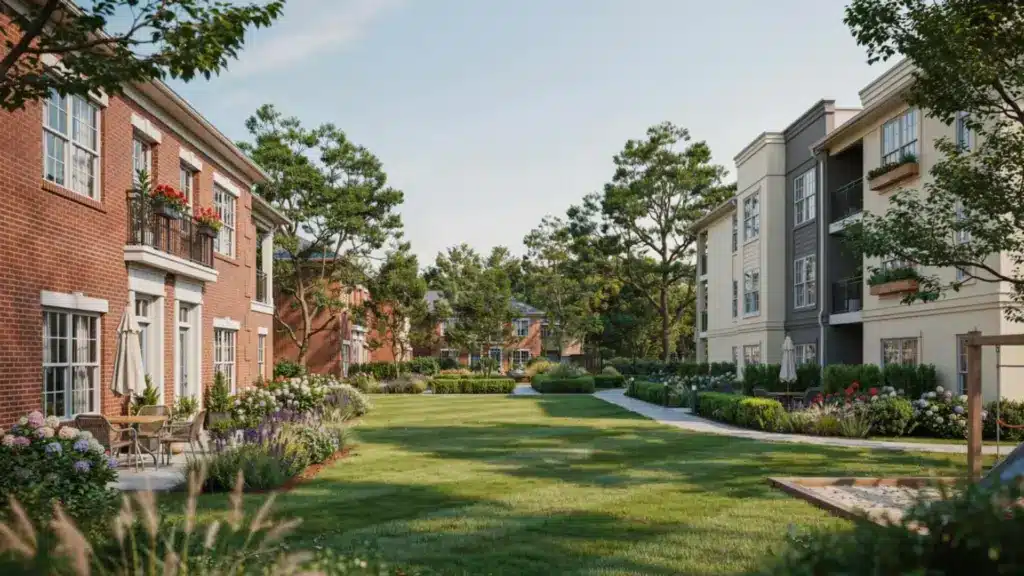
You scroll through apartment listings and keep seeing the term “garden style apartments.”
But nobody explains what it actually means. Is it just a marketing word for ground-floor units? A type of building? Something else entirely?
I hear this question a lot from friends apartment hunting outside Manhattan. It is none of those things and all of them at once.
Garden-style apartments are among the most common rental housing types in the United States, yet they confuse many renters.
This post breaks down what they are, where they came from, what you gain and give up by living in one, and what to check before you sign a lease.
What Is a Garden-Style Apartment?
A garden-style apartment is a low-rise residential community. Buildings are typically one to three stories tall.
Multiple buildings sit across a landscaped property rather than stacking everything into a single tower.
You walk outside to reach your unit. There are no shared interior corridors, the way you find in a mid-rise or high-rise building.
The term refers to the property layout, not to a specific feature inside your unit. The greenery and open grounds are what define the category.
Here is what most garden-style apartment complexes have in common:
- Buildings spread across a large plot with shared green space between them
- Exterior-facing unit entrances (you step outside, not into a hallway)
- Surface parking close to each building
- Landscaped courtyards, lawns, and walking paths
- One to three floors with no elevators in most cases
- Shared outdoor amenities like pools, BBQ areas, and playgrounds
One thing to get right before you start searching: a garden-style apartment is not the same as a garden-level apartment. A garden-level unit sits at or slightly below ground level inside any type of building, including high-rises.
A garden-style apartment refers to the entire community layout. You can find garden-level units inside a garden-style complex, but the two terms describe very different things.
Garden-style apartments are also different from patio homes, which are usually owned rather than rented. If you are weighing a rental community against a for-sale property.
How Garden-Style Apartments Became So Popular
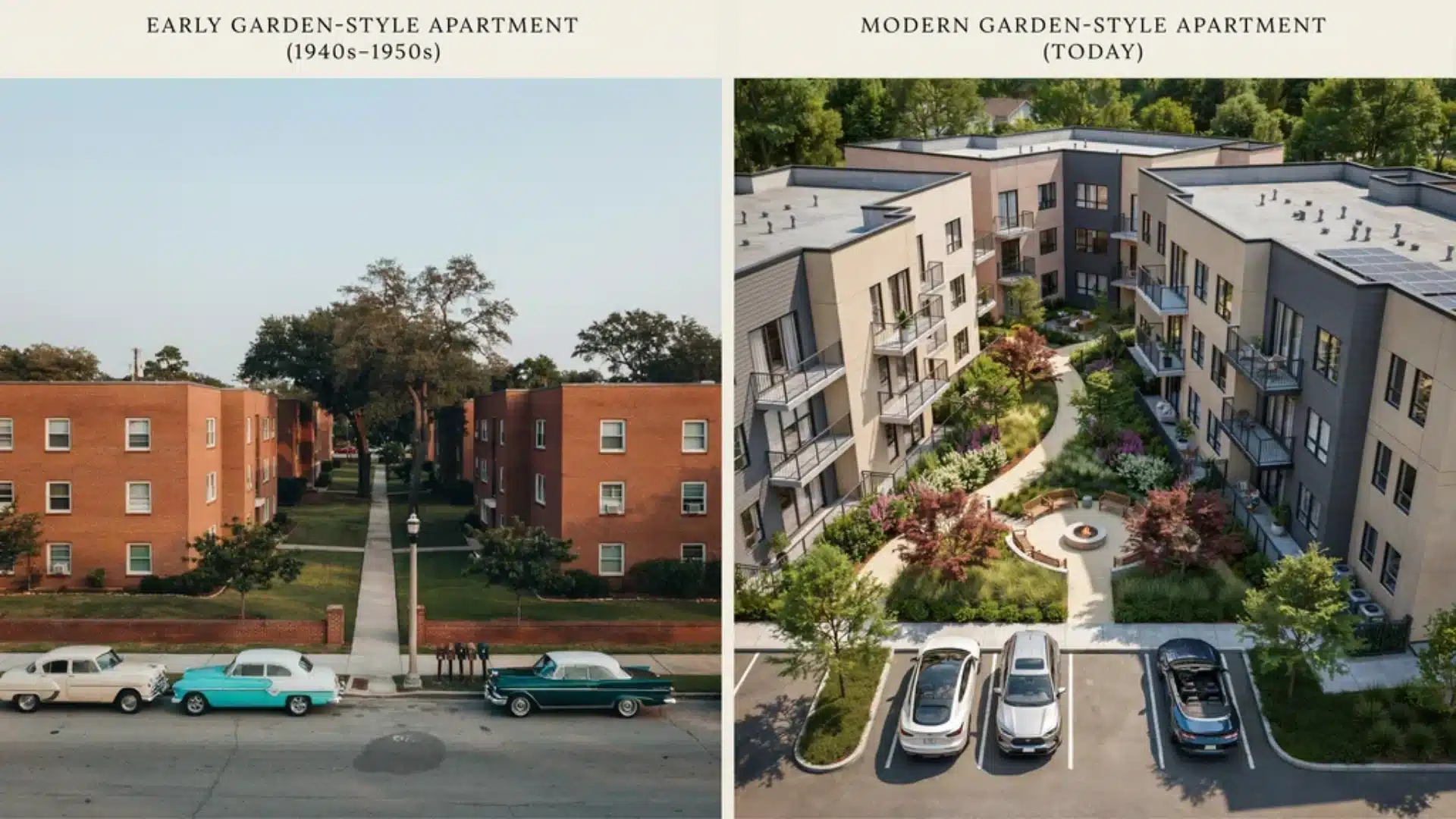
Garden-style apartments did not appear overnight.
Their roots go back to the early 20th-century “garden city” planning movement, which advocated housing that provided residents with access to open space and greenery rather than crowded urban tenements.
The real growth happened after World War II. Cities were overcrowded. Apartments were small, old, and often in poor condition.
Millions of families wanted something new, quieter, and closer to nature. Suburban land was cheap and available. Builders responded by spreading low-rise buildings across large plots instead of building upward.
Some of the earliest large-scale garden apartment communities in the United States were built between 1942 and 1944 to house defense workers near Washington, D.C. Communities like Colonial Village and Buckingham Village in Arlington, Virginia, are early examples that still stand today.
Through the 1950s, 1960s, and 1970s, garden-style apartments spread across suburban America. They matched what people wanted at the time: a quiet neighborhood feel, outdoor space, surface parking, and lower rent than city apartments.
Today, garden-style apartments make up around 30 percent of all rental housing units in the United States. That is roughly one in three rental units nationwide.
The demand has not changed much since the 1950s. Renters still want more room to spread out without paying city rent.
Garden-Style vs. Mid-Rise vs. High-Rise: The Key Differences
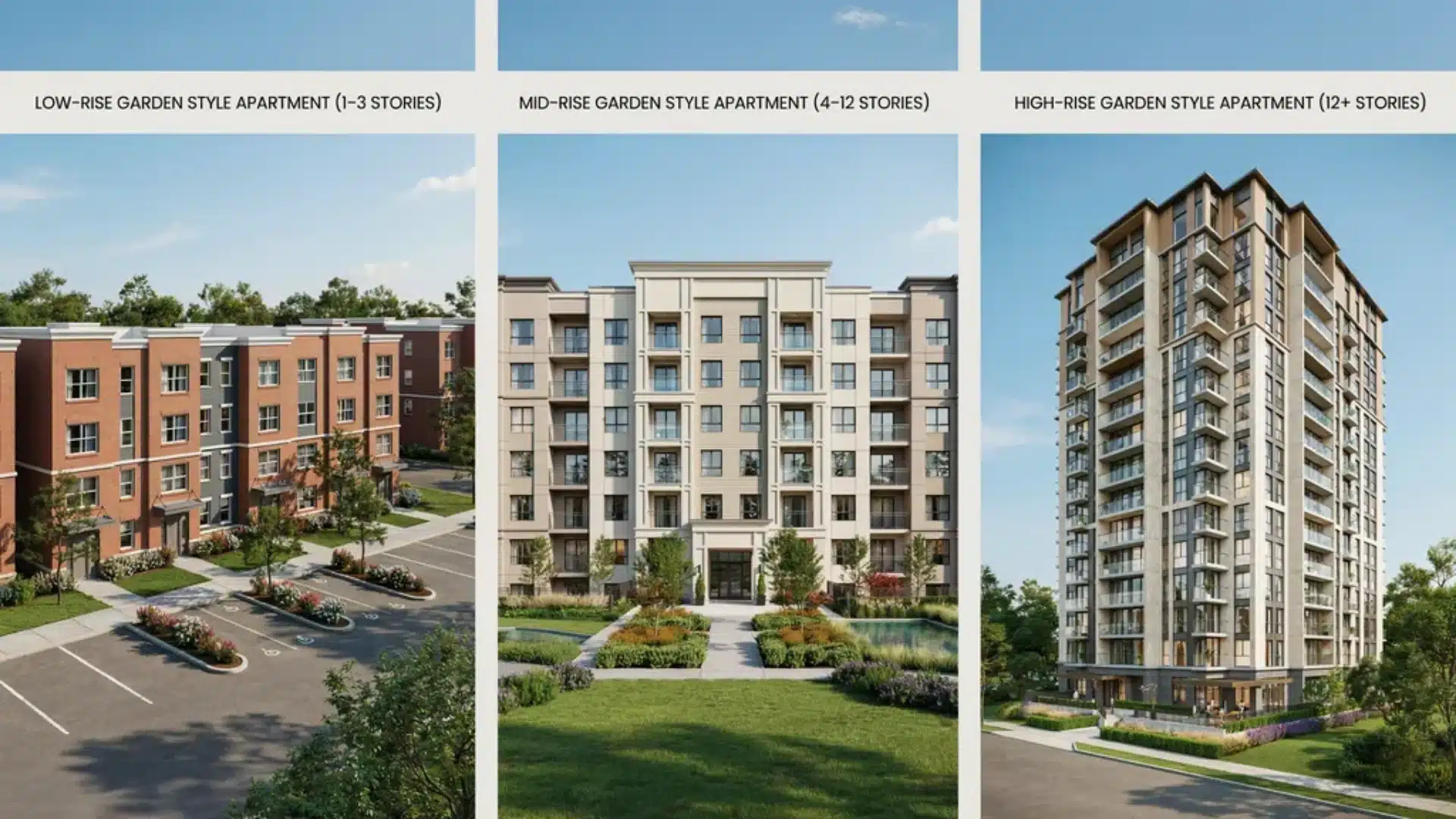
Before you decide if a garden-style apartment is right for you, it helps to see how it compares to the other main apartment types.
Mid-rise apartments are buildings with 4 to 12 floors, typically found in semi-urban areas, offering a balance between city convenience and moderate density.
High-rise apartments are buildings with 12 or more floors, located in dense urban centers, known for panoramic views and a high concentration of units.
Garden-style units sometimes have simpler, more spread-out layouts than mid-rise or high-rise floor plans, which matters if you are trying to make a small living room feel bigger instead of just adding square footage.
Here is a quick comparison table:
| Feature | Garden Style | Mid-Rise | High-Rise |
|---|---|---|---|
| Number of Stories | 1 to 3 | 4 to 12 | 12 or more |
| Location | Suburban | Semi-urban | Urban/Downtown |
| Green Space | Lots | Moderate | Little to none |
| Typical Rent | Lower | Mid-range | Higher |
| Parking | Surface lot near your unit | Garage or shared lot | Paid garage structure |
| Noise Level | Generally lower | Moderate | Generally higher |
| Elevator | Usually none | Yes | Yes |
| Unit Entrance | Exterior (outside access) | Interior corridor | Interior corridor |
The Real Benefits of Living in a Garden-Style Apartment
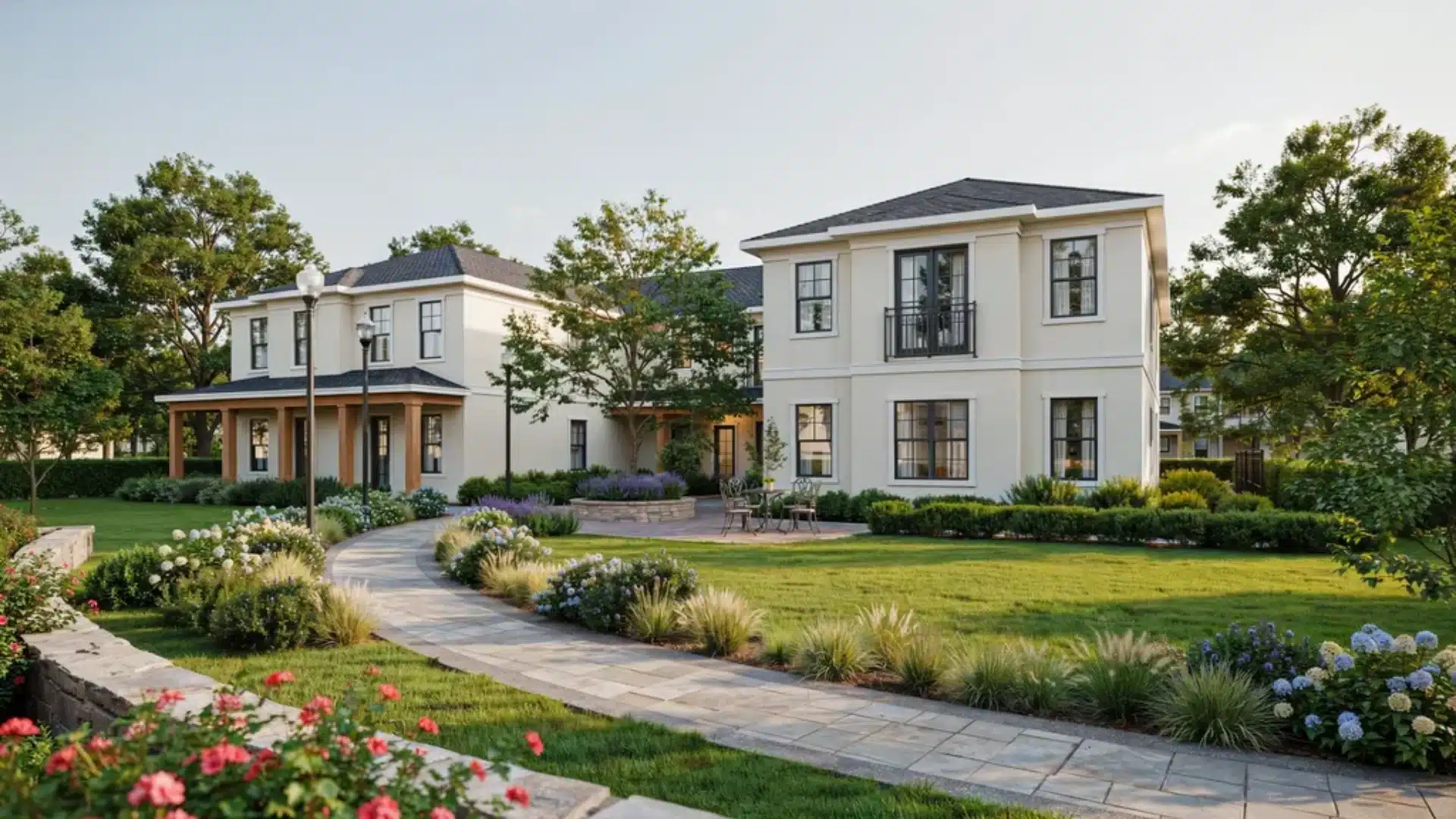
Garden-style apartments give you more for less: more space, more quiet, and more green without pushing your rent through the roof.
1. You get outdoor space that is actually usable: Many units have a private patio or small yard. The shared grounds give you room to sit outside or walk your dog without going far. Kids get space to run around too, and you can set up a simple DIY patio furniture project instead of buying a full outdoor set.
2. Rent is generally lower: Construction and maintenance costs for low-rise buildings are lower than for high-rises. That saving often shows up in your monthly rent. Garden-style apartments are common in Class B and Class C properties, which keep pricing competitive.
3. Your cooling costs can be lower: Hot air rises. Ground-floor and lower-level units in a garden-style community tend to stay cooler in summer than upper floors in a high-rise tower. That can cut your electricity bill during warm months.
4. It is easier if you have a pet: Direct outdoor access from ground-floor units means no elevator trips and no long hallway walks at 6 a.m. Garden-style communities are pet-friendly for exactly this reason.
5. You deal with fewer immediate neighbors: A garden-style building might house eight to twelve units. A high-rise tower can house hundreds. Fewer units per building usually means less noise coming through the walls and less competition for amenities.
6. You get a more neighborhood-like feel: Residents tend to stay longer in garden-style apartments, and you are more likely to know the people who live near you. That shared greenery is also why design that brings nature indoors works so well in garden-style communities, indoors and out.
What to Check Before You Rent a Garden-Style Apartment
Touring a garden-style apartment calls for a different checklist than touring a high-rise unit. The property spans multiple buildings, so you are evaluating the entire site, not just one hallway.
Here is what to look for:
1. Check for natural light: Stand in each room. Look at how light enters and whether plants or structures block the windows.
2. Look for signs of moisture: Check corners, baseboards, and the area under sinks for water stains, soft drywall, or any mildew odor.
3. Ask about pest control: Find out how often the property is treated and whether you handle it yourself or the management does.
4. Count the entry points: Walk the perimeter. Note how many exterior doors lead into common areas. Ask whether they lock automatically.
5. Ask about security cameras and lighting: Check parking areas and walkways at night if possible.
6. Check parking: Ask whether your unit has a designated spot or is on a first-come, first-served basis.
7. Ask how maintenance requests are handled: Find out the average response time and whether there is an emergency contact for after hours.
8. Confirm the pet policy: Get the specific fees, any breed restrictions, and which outdoor areas are designated for pets.
9. Ask when the locks were last changed: This is standard practice between tenants, but it is not always followed.
10. Find out the average tenant stay: Long average tenancy usually means the property is well managed and residents are satisfied.
Frequently Asked Questions
Is a garden-style apartment the same as a garden-level apartment?
No. Garden-style describes the whole community layout. Garden-level refers to one unit at or below ground level, in any type of building.
Are garden-style apartments safe?
Safety depends on the property, not the style. Multiple buildings mean more entry points, so check exterior lighting, door locks, and camera coverage before you sign.
Can you find garden-style apartments in big cities?
Yes, though they are more common in suburbs. Some older city neighborhoods, including parts of Brooklyn and Queens, have garden-style courtyard buildings from the mid-20th century.
Do garden-style communities have elevators?
Rarely. Most are one- to three-story and rely on stairs. If you need an elevator, look at mid-rise or high-rise buildings instead.
Are garden-style apartments pet-friendly?
Usually, yes. Ground-floor exterior entrances make it easy to quickly get pets outside, which is why many garden-style communities welcome dogs and cats.
Is a Garden-Style Apartment Right for You?
Garden-style apartments offer real outdoor space and a quieter setting than a big-city tower, often for less rent.
They are not perfect. Ground-floor living trades some natural light and privacy for that outdoor access, and pest control matters more when your unit sits closer to the ground.
But for pet owners, families, remote workers, and anyone who values green space over city views, they are worth serious consideration.
Walk through the checklist above and ask the questions that matter. The right garden-style community can feel like a neighborhood, not just a rental address, and that is worth looking for.
Have you lived in a garden-style apartment? Share what surprised you most in the comments below.